The Watch List For 11/14/12
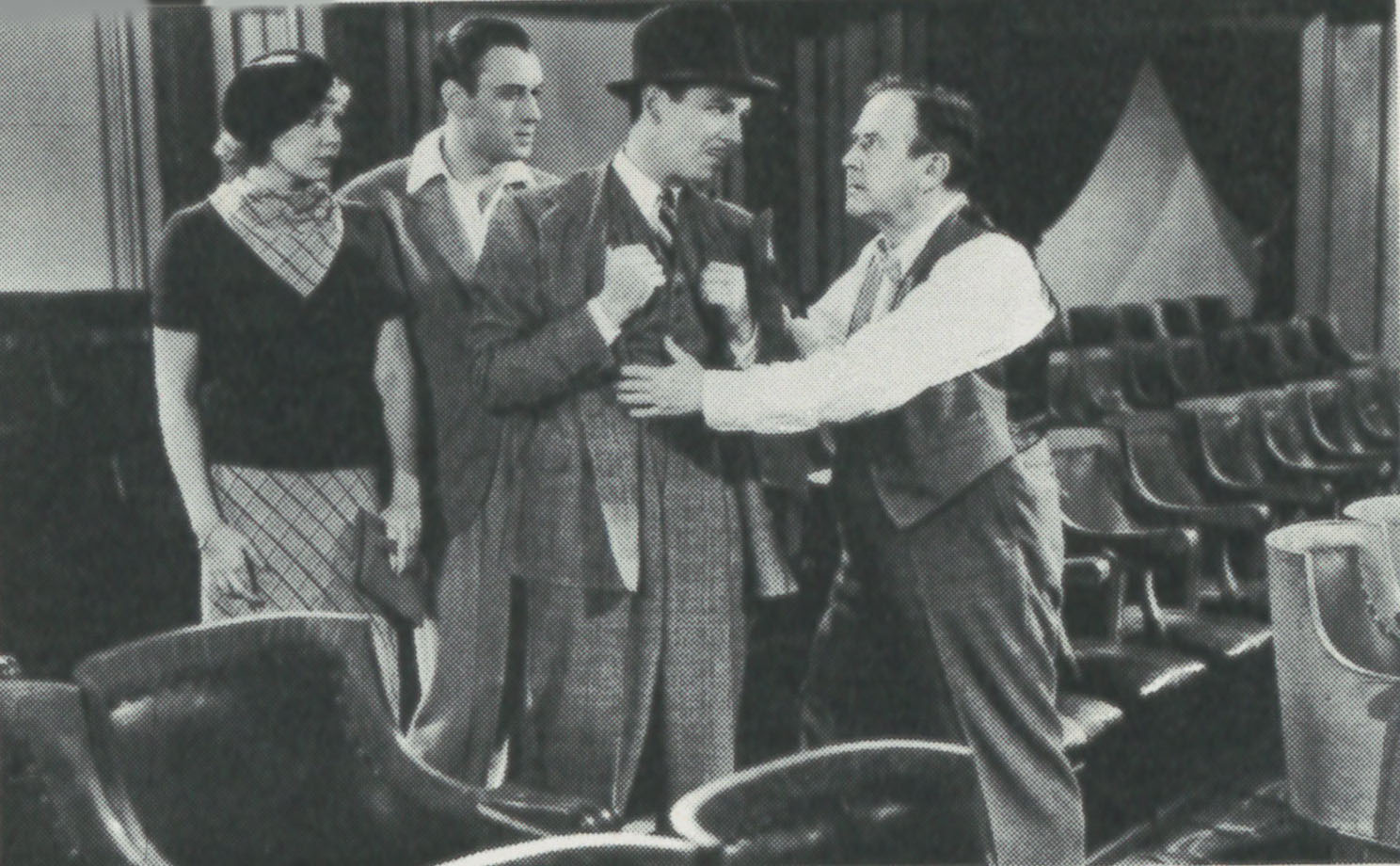
THE FIRST HUNDRED YEARS (1938) --- The big issue
to get an airing here is whether wife Virginia Bruce, with a stimulating and
well-paid job, should chuck it all to follow Bob Montgomery to hinterland
uncertainty of a ship-building gig he's landed. You know the answer way short
of 73 minutes it takes The First Hundred Years to unfold, status-quo as always
reinforced by establishment Hollywood
that wouldn't permit outcomes any other way. Even precodes like Week-End Marriage
played by the bedrock rule of women sticking to their men, even less
accomplished or outright unsympathetic ones. 30's comedy was all about male/female
politics, serious debate afoot whatever the frivolous setting. Laughs stop cold
when Montgomery
looks wife Bruce square and asks if she's for him or the career.


How many couples went straight from The First
Hundred Years to fierce argue where their own lives were headed? Behind every
wife working is the threat of finding a man she'll prefer to what's at home. In
Virginia's
case, it's business partner Warren William, but decks stacked in
convention's favor gelds once wolfish William, and now it's him of all people
protecting married virtue against outside interloping. A last reel device to
reunite the couple neutralizes the argument for a Code-compliant happy ending
that rings false. The First Hundred Years is MGM social engineering at
glamorous peak. Watch it right behind 1930's The Divorcee and know how utterly
transformed Hollywood was
within a few short years.


LONESOME (1928) --- A NY conducted symphony of
the city with story added and even short passages of dialogue, made during H'wood's
transition from silents to talking. I'm surprised Lonesome survives at all,
since Universal could have had no TV syndication use for the pic, and reissue
value was nil. This one conveys well the isolation you feel in a mob, teeming
with bodies crushed together on subway and fairgrounds that are
frightful, yet alluring. Deglamorising Gotham on one hand, Lonesome makes us
long for a visit to Coney Island as it then
was (even if that portion was mostly California-shot). Color effects look like
tinted postcards of the era. Glenn Tryon and Barbara Kent as plain-folk leads
are more effective than big stars that we know would have easier bridged a
chance separation to find each other again. Lonesome is what archives and
festivals use to demonstrate how striking a silent feature can be. Criterion
now has it on excellent Blu-Ray, with Paul Fejos' Broadway and The Last
Performance as bargain bonuses.


ORPHAN'S BENEFIT (1934) --- A couple of alleged
"firsts" in this Disney cartoon, being Donald's initial appearance
with Mickey, and intro of temper tantrums for the Duck. Wish I knew cartoons a
tenth as well as historians who contribute data to these DVD sets and write
such fine books on the topic --- many shorts emerge brand-new to me
as explore through box sets continue (how many Mickeys can you watch in a
single sitting?). Orphan's Benefit seems an approximation of typical
"Mickey Mouse Club" gatherings that took place in thousands of
theatres during the 30's, boisterous youth in seats and management on stage
trying to keep order. Mickey in his capacity of M.C. was surrogate for showmen
thus engaged, so it's for him to maintain calm amongst Donald, Clarabelle Cow,
a rough-draft Goofy, and others of WD menagerie (did Depression kids actually
bring sling-shots into theatres --- and use them --- as here?). Mickey was by
'34 more corporate symbol than comic, an insight regurgitated here for I guess
a millionth time, though it's fun going backward through these cartoons to see
just where transition to that began.


NON-STOP NEW
YORK (1937) --- Truly a crackerjack British thriller
done after fashion of then-the-rave on both sides of the pond Alfred Hitchcock.
Director Robert Stevenson goes him one better for mirth amidst the mayhem, and
has appealing Anna Lee for a femme in distress. Quick beyond even Hitchcock's
pace, Non-Stop is precisely that for its pell-mell race toward shortly over an
hour's mark, and it beats me why such a good one isn't better applauded. Second
half action is aboard a futuristic airship with private cabins, a dining room
with bar, plus an open-air observation platform. That alone merits inspection of
Non-Stop New York by sci-fi followers if not the rest of us. Between shows like
it and The Man Who Changed His Mind, you'd have to figure Robert Stevenson for
a UK
find with nearly Hitchcock's promise. He'd come later to America as did the Master, but
lightly expert entertainments like Non-Stop New York would unfortunately not be
his stateside lot (heavier Back Street, Joan Of Paris, and Jane Eyre instead,
though later froth for Disney). To see Non-Stop again, I had to settle for a
mediocre bootleg disc that did the pic no visual credit, but hope's eternal
that someone will one day release it properly.


PILOT # 5 (1943) --- Flyer Franchot Tone
undertakes suicide mission against Jap carrier as flashbacks detail how he got
there. This was sold as a war movie, but isn't. Tone's back-story pits he and
law partner Gene Kelly against Huey Long-ish corrupt governorship that stands
in for fascism they will confront when uniformed. Pilot #5 takes the position
that bad local government differs little from Axis empowerment, fat cat
grafters the US
equivalent of a Mussolini. Gene Kelly's brother from the old country commits
suicide upon noting sinister parallel between our broken system and ones in
far-away Europe. Surprising for critical
stand this MGM programmer takes with regards chinks in America's civic
armor. Idealistic Tone gets a beating and subsequent nervous breakdown for
service to the state (but which one? --- Metro is non-specific as to locale),
this among our United States
as opposed to fascist-controlled ones. Pilot #5 argues that we have a past due
clean-up job in US back yards, whatever outcome of a present war. An
"A" budget and cast might have smoothed rough edges here, so it's
lucky goals were modest, less cooks to spoil what is at times surprisingly
potent broth. Tone is, as always, effective, with Marsha Hunt plus starting out
Gene Kelly and Van Johnson to support. Fine quality from Warner Archive.


WAKE UP AND DREAM (1934) --- Universal musicals
from a first half of the 1930's are hen's-tooth rare, so seeing one takes
priority even when it's punk as Wake Up And Dream, a 1934 vehicle for
tragi-crooner Russ Columbo (his last), whose own bizarre finito confers
interest on whatever he did. Russ was backwash off Rudy Vallee and Bing Crosby,
upon whom he might even have improved given time and fate sparing him. You
could close your eyes, in fact, and almost mistake his voice for Bing's.
Columbo was swoonier in terms of chisel-profile and heavy-lidded appeal (think of
a singing Ricardo Cortez). Gals went daffy for Russ right up to gunshot closure of accounts. That happened by accident as a friend noodled among
antique firearms the crooner collected. A million to one freak mishap and
Columbo drew it.


Talent was real for Russ composing many of his
songs, including at least one in Wake Up And Dream. As screen personality, he's
low-key and likeable, letting Roger Pryor do heavier lift of Dream's patter
part. These two and June Clyde vaudeville-partner to empty houses. Writing
smacks of real-life at dodging landlords, making do on soda crackers and coffee
served tepid. Scribes then sure knew from hardship. Bet many trod vaude boards
themselves before movies. I'd have preferred (much) less of Henry Armetta, but
that's always been the case, so why make issue here? There's also Andy Devine
around comic fringes. Oh, and did I read that Russ Columbo was the great love
of Carole Lombard's life? (they dined together the night he died) Think I'll
order a Columbo CD if one can be got cheap. Wake Up And Dream is among what
Universal should have exhumed for their hundredth anniversary. There's no
seeing it anywhere other than boots, which is a shame.


Even as Mickey was being neutered onscreen, he was becoming a two-fisted boy detective/adventurer in the daily comics by Floyd Gottfredson. He went up against dope smugglers (really), masked bandits, mad scientists, civic corruption and gangsters. It's still the Mickey from the shorts, except his spunk is pitted against much tougher propositions. Evidently parents were okay with an angry Mickey slugging it out with Pegleg Pete in print.
ReplyDeleteAfter an uneven start sustained by Mickey's film popularity, the strip found its groove by the mid-thirties (around volume three in the current reprints) and remained a funny adventure strip until after the war, when it followed the shorts into safe, suburban throwaway gags.
Great grouping (as usual!)
ReplyDeleteI have a real weakness for that sub-sub genre of 1930's films fixated on futuristic transportation. STREAMLINE EXPRESS, BIG BROADCAST OF 1938 and TRANSATLANIC TUNNEL all had wild ass vehicles and/or inventions that looked like they zoomed off the covers of Modern Mechanix. NON-STOP NEW YORK not only had that crazy flying ocean liner, but was just about the best over-all movie of the bunch. The cork-screw plot is pretty good even in the first half before anyone leaves the ground and Anna Lee and John Loder were such an attractive couple (just like in THE MAN WHO CHANGED HIS MIND). It is a crying shame we have to make do with fuzzy PD quality on a title like this (I saw it for the first time streaming on Pub D Hub, and I see it's on a few other Public Domain type channels.) The art deco production design typical of these films screams out for good crisp definition and clean, varied gray tones.
Barbara Kent in LONESOME? She's one of my favorites... just passed away about a year ago I think. Will have to seek that title out (I still haven't quite got over my crush since seeing her avoid the clutches of Oliver Hardy in NO MAN'S LAW).
Yeah, everybody talks about Disney softening Mickey Mouse's personality, but isn't neat to see how funny Donald Duck is in his original supporting character mode? Pretty much, just a little pain in the neck!
Carole Lombard was among a group of Russ Columbo's friends who for a decade, kept Columbo's mother from knowing he was dead. They wrote letters to her...supposedly from Russ as he was on a world tour, and mailed from different spots on the globe. This continued until the mother died in 1944.
ReplyDeleteTCM ran "Non-Stop New York" a little while back. The brief description in the TCM guide got me interested... then I forgot to program the recorder. I wonder if its print was better than the one you saw.
ReplyDeleteKevin, I had not noticed "Non-Stop" on TCM before, but if it comes on again, I will certainly record it.
ReplyDelete