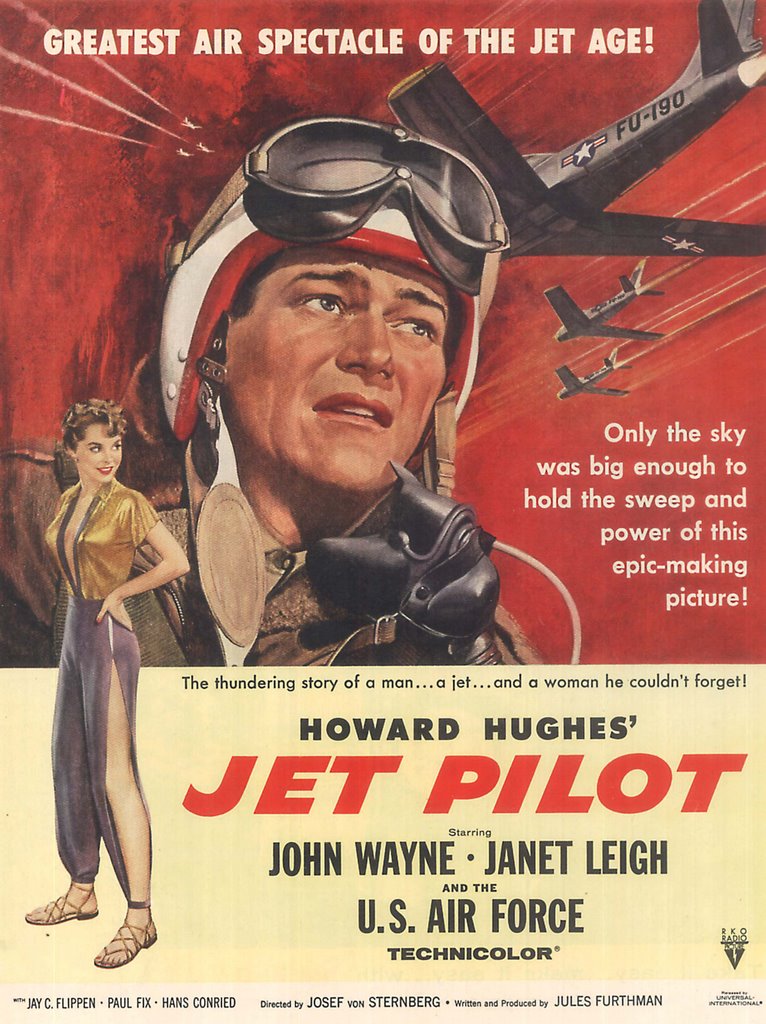
Some "Bad" John Waynes On DVD --- Part 2 Jet Pilot’s a handy receptacle for critical derision --- the butt of a hundred old movie jokes, forever tied to a whippingpost along with TheConqueror. It’s pure reflex that cites these asJohn Wayne’sall-time worst. For years, they were impossible to see. DuringHoward Hughes’ lifetime, he kept them out of circulation. A few prints of JetPilot traveled among collectors, but it would be well into the eighties before either would see daylight on TV or video. Having it available on DVD may not rehabilitate its tarnished reputation, but at least we can enjoy what is at times a visually stunning show, featuring one of the most breathtaking glamour turns on vintage view. Jet Pilot was meant to be the next Hell’sAngels. Howard Hughes wanted to go the old picture one better by staging dogfights with jets instead of bi-planes. He began in 1949, and obsessed over it for the next eight years. By the time Universal released JetPilot in September 1957, it was an old movie, with older airplanes. Even the biggest campaign in U-I’s history couldn’t save Jet Pilot from critical drubbing and disastrous word-of-mouth. In the end, Hughes took back the negative and spent most of the next two decades watching it by himself on a tabletop projector. It ended up being the most expensive home movie ever made.
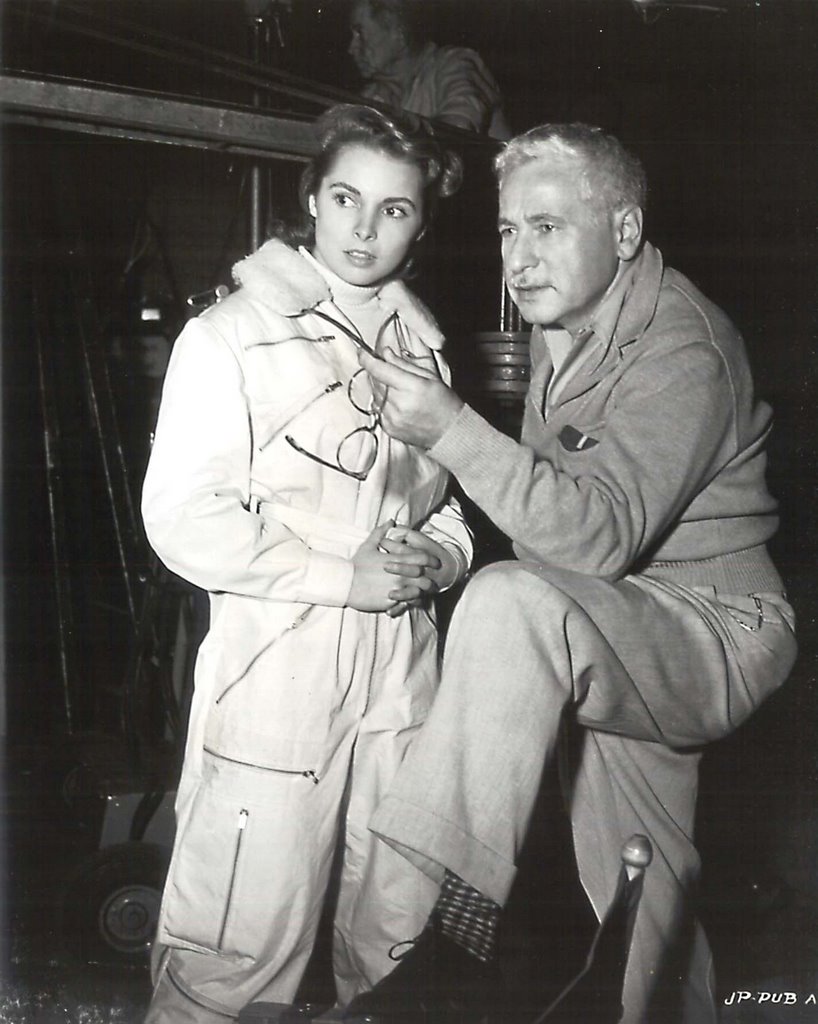
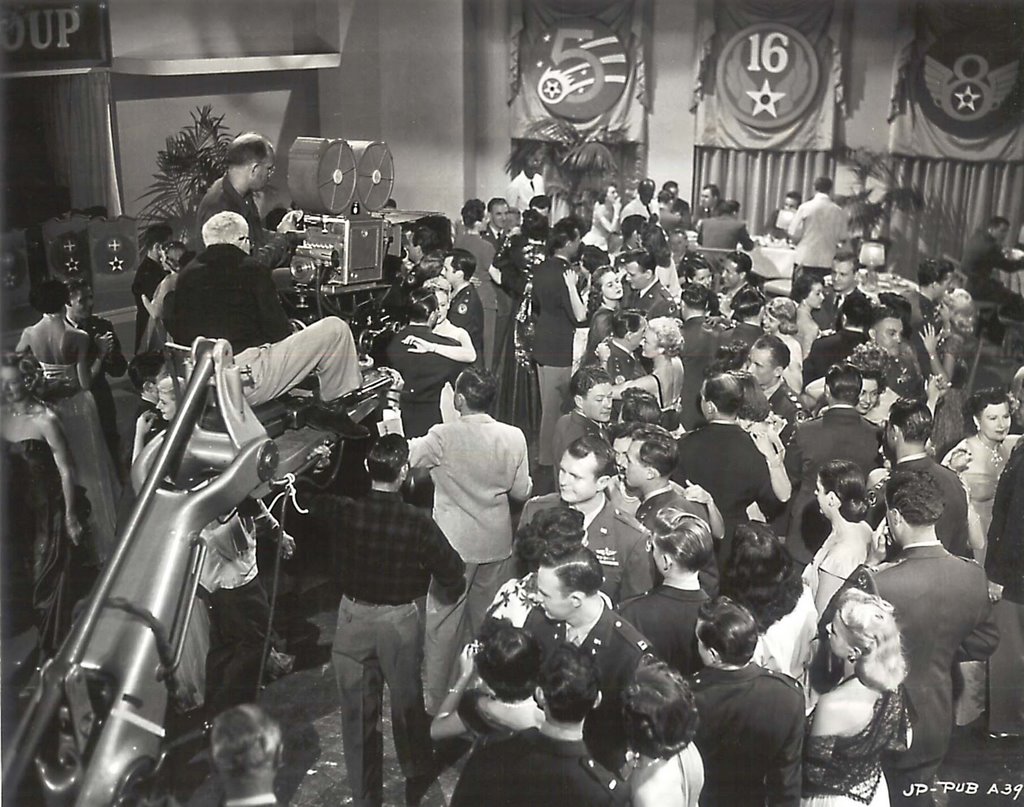
Robert Mitchumwasoriginally set for the lead in Jet Pilot. Wayne stepped in after signing a multi-picture deal with Hughes. They were chums off-screen. Howard wanted to be Duke, and Wayne couldn’t help being impressed by a man so powerful he could seemingly make clocks stop at will. Shooting began on Halloween 1949 under the direction of cast-off tyro director Josef Von Sternberg, whose comeback was breathlessly reported by lifelong acolyte Herman G. Weinberg in The New York Times. My films wereprotests against other films at the time, said the master craftsman after eight years in cinematic Siberia, and worship-the-ground-he-walked-on Weinberg was tactful re Jo's on-set tyranny and abuses --- but even this Bligh with a megaphone was no match for Hughes’ controlling ways. Sternberg (shown here with Janet Leigh and on the crane directing a dance sequence) wasn’t involved with the flying shots in any case. Multiple second units shot those at fourteen air bases from Alaska to Florida. Sixteen initial months were spent on aerial stuff, and there is reason to believe Hughes continued gathering jet footage beyond even that. MGM head Dore Schary had loaned Janet Leigh to co-star, but he never dreamed this project would drag so far into a next decade. Schary would later recall Hughes’ request for further services --- seems he wanted retakes on Jet Pilot --- three years after principal photography had ended. I have had my bellyfull, said Hughes to Schary shortly before the show was finally released, and indeed this would be his final project before the cameras.
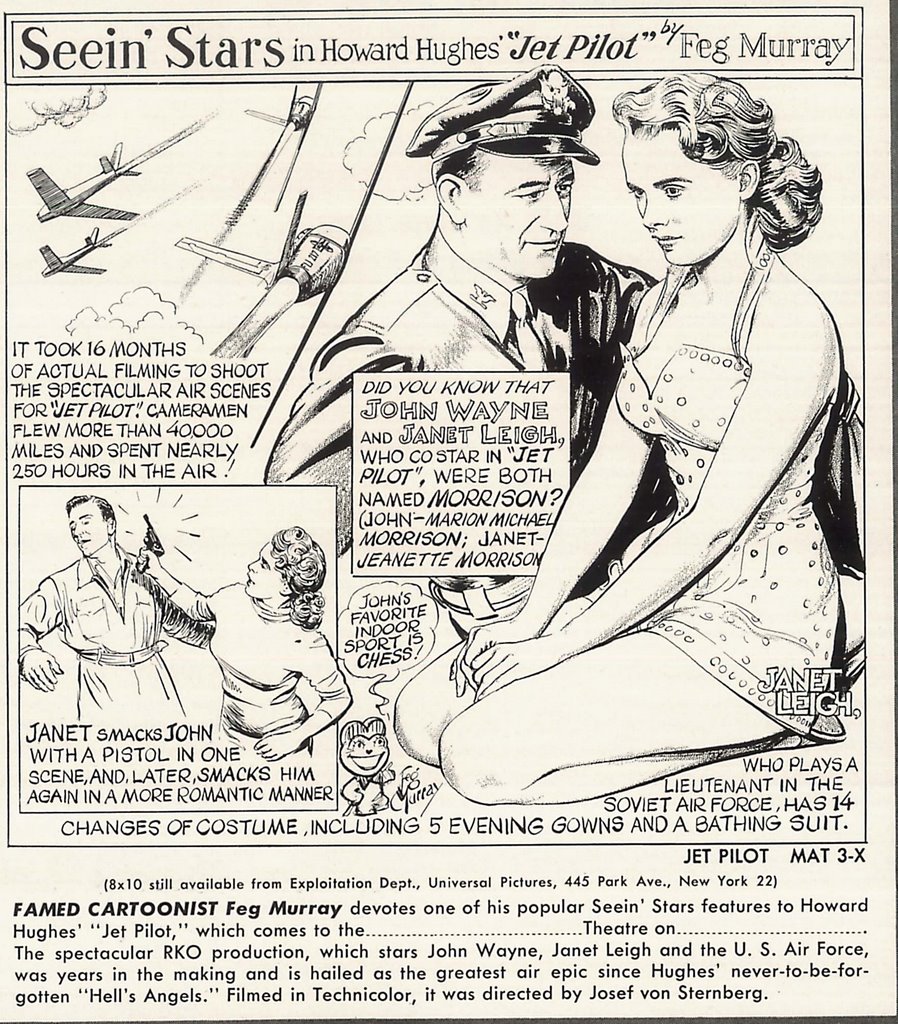
Anyone else would have wanted Jet Pilot wrapped A.S.A.P., seeing as how the jet fadcouldn’t last forever, but Hughes dawdled whileChain Lightning, Breaking The Sound Barrier, and other supersonics took to skies. Despite his occasional updating of the flight footage (which, of course, no one had seen), similar projects flew away with Jet Pilot’s potential audience. Press releases and gossip continued to appearas the fifties wore on, but Hughes wouldn’t let it go. Sternberg had longsince been let go --- Wayne oft expressed a desire to "kill the sonofabitch." --- pinch-hit directorsNicholas Ray and Jules Furthman (who’d also been associate producer and writer) were brought aboard for the seemingly endless retakes. When Universal finally took custody (Hughes having sold RKO in the meantime), they wisely opted for saturation release with a whopping 400 prints opening day-and-date (the better to get patron’s money before a stench got out). Commenting on years of press coverage now in the morgues, Jet Pilot's pressbook openly inquired of showmen, How much of this penetration has beenretained --- How much of it has faded with time? Harrison’s Reports said Universal was spending unprecedented dollars on a new campaign. I wonder how much of this Hughes footed. Critics were merciless, as expected, commenting on how "youthful" the two stars looked in a now ancient vehicle. Others observed that the planes were "obsolete and out of date" (as if they’d know the difference between a B-45 and a dill pickle). What may have wounded Hughes most were harsh comparisons between Jet Pilot and Paramount’s recent Strategic AirCommand, which had the benefit of up-to-the-minute air technology and Vistavision in the bargain. Panoramic projection had become a must since bygone days when Jet Pilot was in production, but U-I solved that by going with ersatz wide prints that played havoc with Sternberg’s elegant compositions. Later 16mm prints and videos were full-frame as intended, but Universal’s new DVD goes back to 1.85. They could at least have offered it both ways.
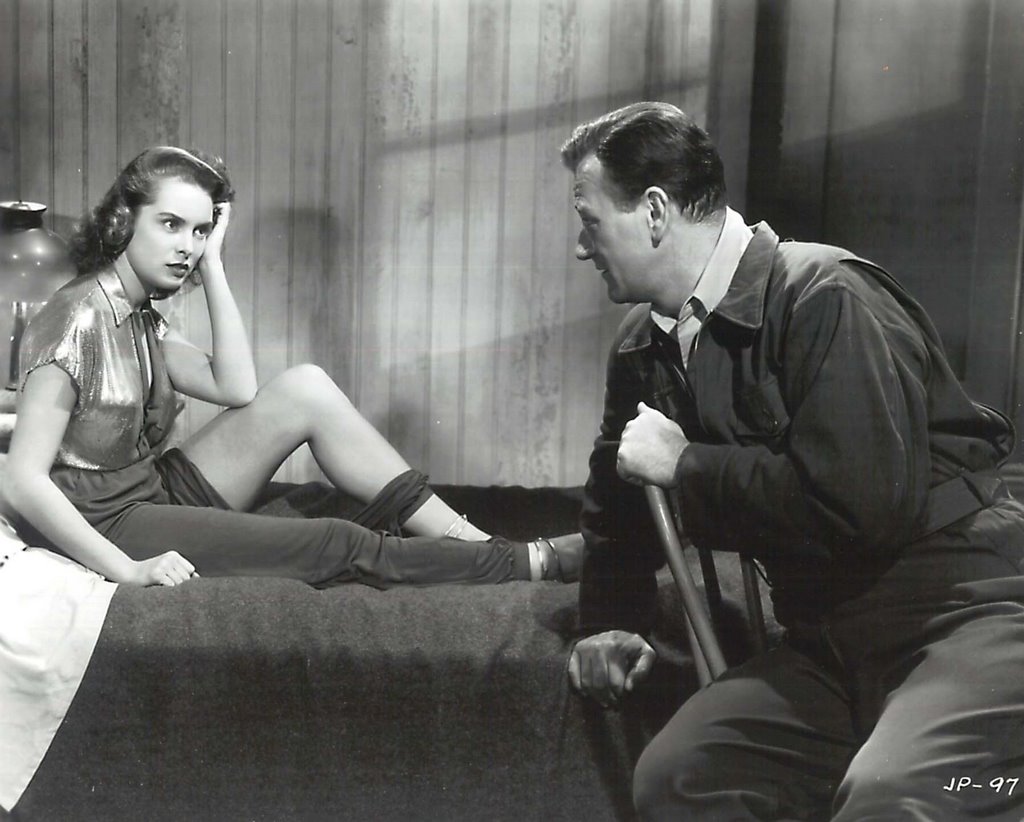
Sixties and thereafter critics speak of Jet Pilot in terms of "cold war hysteria." "Piquant Howard Hughes sex farce" is how I prefer to think of it. I’m betting hegot together with Howard Hawks on some of the gags and situations in thisshow. More than once, I was reminded ofThe Thing(which RKO would have been shooting at the same time). Janet Leigh’s renegade Russian flyer might just as easily have touched down at Captain Hendrys airbase, leaving that titular super-carrot to bedevil John Wayne and Paul Fix. Imagine Kenneth Tobey engaged in saucy repartee with Janet! As it is, there’s a scene in both pictures where guys enter a room from the frigid outside, being admonished by those within to "Close the door!" He may have been the biggest yank-off in town, but Jo Von Sternberg knew a thing or three about photography and direction. Everything he did for Dietrich in the thirties is surpassed here --- only this time it’s in color. Howard and Jo are a great team in Jet Pilot, whatever you may have heard to the contrary. For every blandishment he got about Jane Russell, this is where Hughes really delivered on the sex. Eachclose-up ofJanet Leigh is a stunner. Never mind cold war hysterics. Buy it just to look at her. Jet Pilot is too stupid and raunchy for most critical sensibilities, dialogue reminiscent of Playboy Party Jokes, and all themore unsettling with John Wayne delivering it. You’d expect him to eventually chuck the love stuff and get on with mopping up commies, but the sex pursuit remains front and center throughout. Hughes saw nothing else as interesting, and neither did I. It is celebrated airborne scenes that are the drag. None of numerous jets get in a fight, flying instead to no good purpose. I never understood their goal, other than to look for fluffy clouds to serve as arresting backdrop. Universal's DVD, among its group of Wayne vehicles in a box set, looks fine.
That first anniversary of Pearl Harbor found theatre lobbies dressed out with every conceivable lure for patrons to aid in the war effort. The "Victory Booth" was a common sight, as showmen were among the most effective bond salesmen. Those patriotic features, shorts, and newsreels didn’t go for naught. Audiences were besieged with solicitations before they even got through the front entrance. This scrap collection display on the sidewalk threatens to overwhelm the rather prosaic marquee in back of it --- the idea of tossing refuse into the open mouths of our enemies seems to have been effective, as one can envision parents lugging the stuff into theatres, then letting their kids have fun playing ring toss with Adolf. Day and night service at these bond counters was no idle promise. Many houses maintained round-the-clock schedules to accommodate third shift war workers anxious to catch the latest Andy Hardy before heading home for some a.m. shuteye. I bet non-participants really got the fish eye whenever giving those booths the go-by. Civilian slackers were no more to be tolerated than able-bodied men out of uniform, and the pressure to buy bonds and kick in on scrap drives must havebeen enormous. Even the happy prospect of seeingThe Boogie Man WillGet Youon a giant theatre screen would diminish somewhat in the face of contemptuous looks from expectant managers, ushers, and candy butchers, all of them conveying silent disapproval as you arrive sans scrap and leave minus bonds. I’ll bet they even took names in some of the smaller towns.
The above posting is number 200 for Greenbriar Picture Shows. We’ve been here since December 27, 2005, and the only day we’ve missed was when the server broke down (in the beginning, there were sometimes three posts in a day!). All 200 of these stories are in the archive, and you can link to it anytime from the top of this main page or by going HERE. The drop-down search engine has individual options for names, movie titles, and categories (for instance, our Glamour Starters series has its own section, as does Horror, Comedy, Musical, etc.). Go there sometime if you haven’t already.
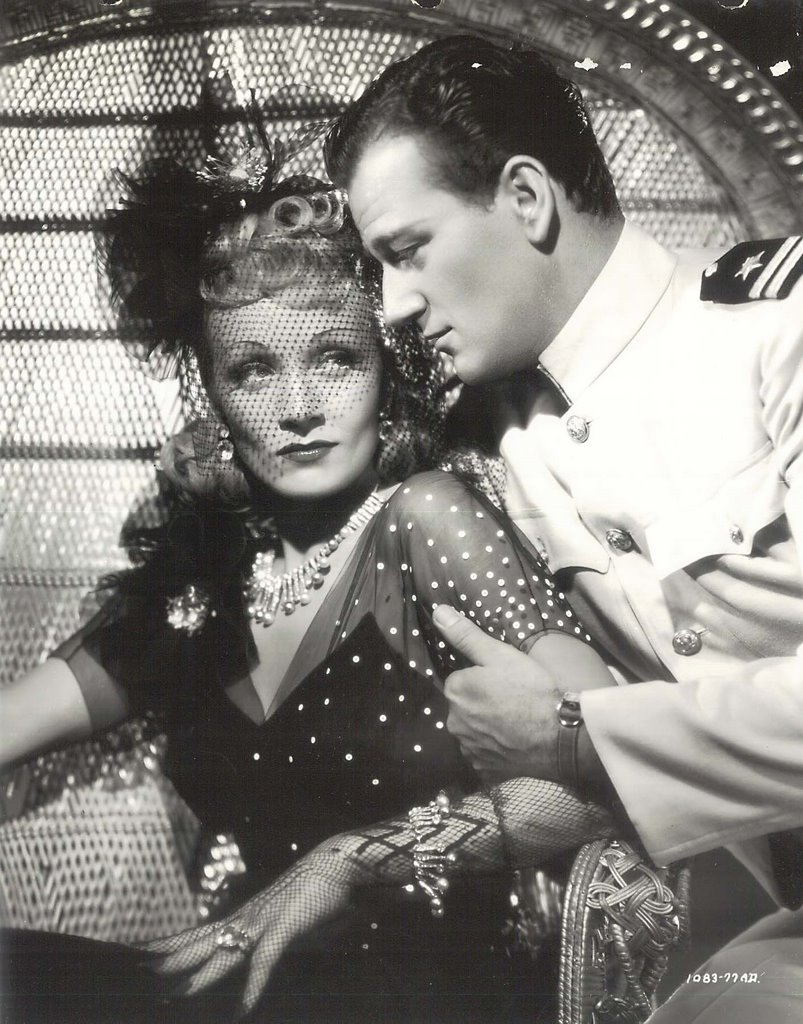
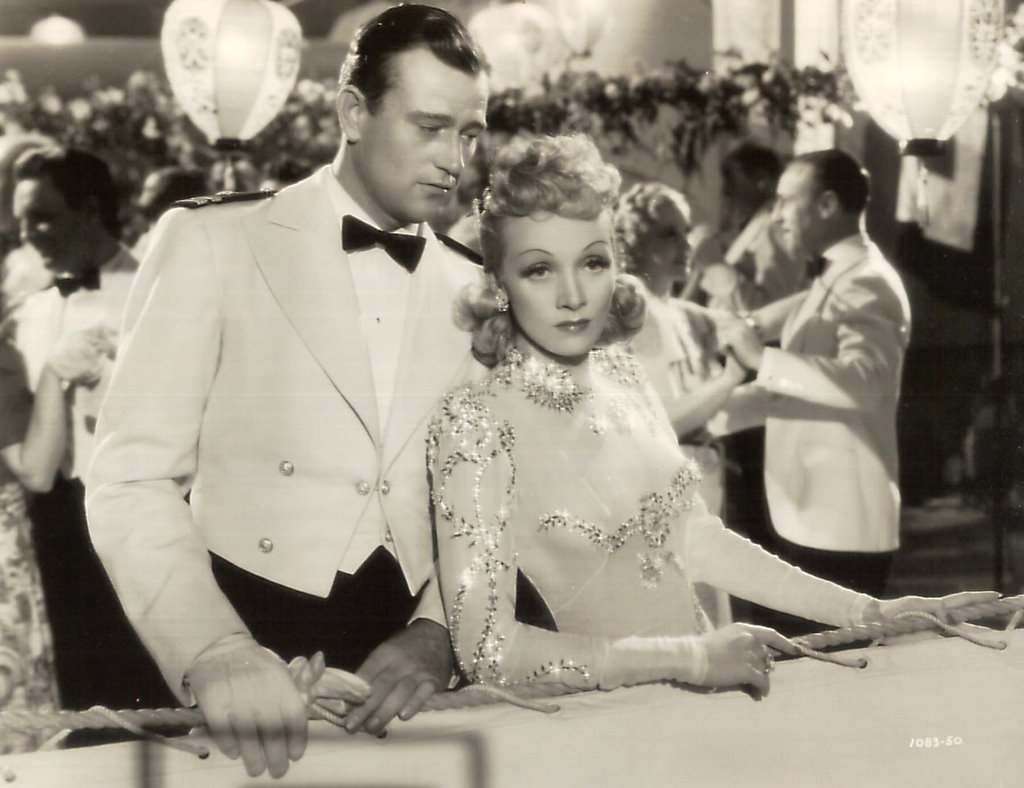
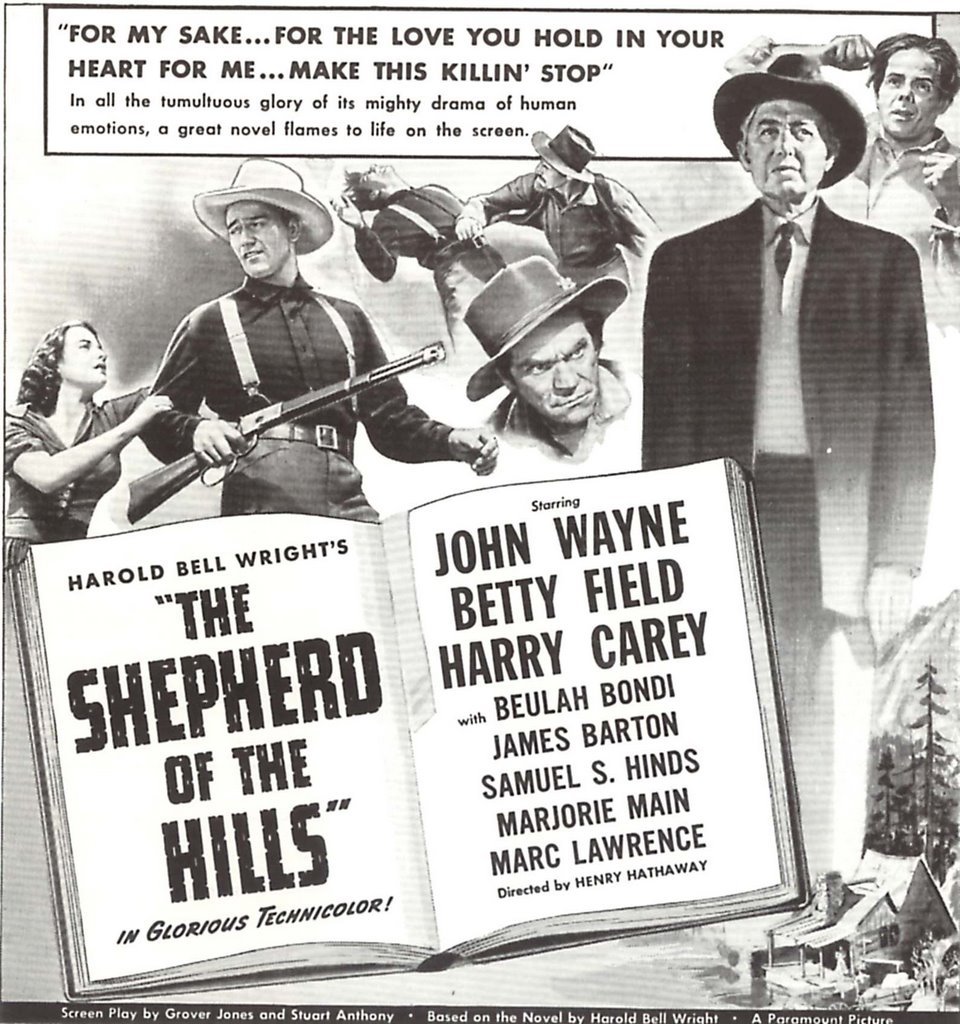
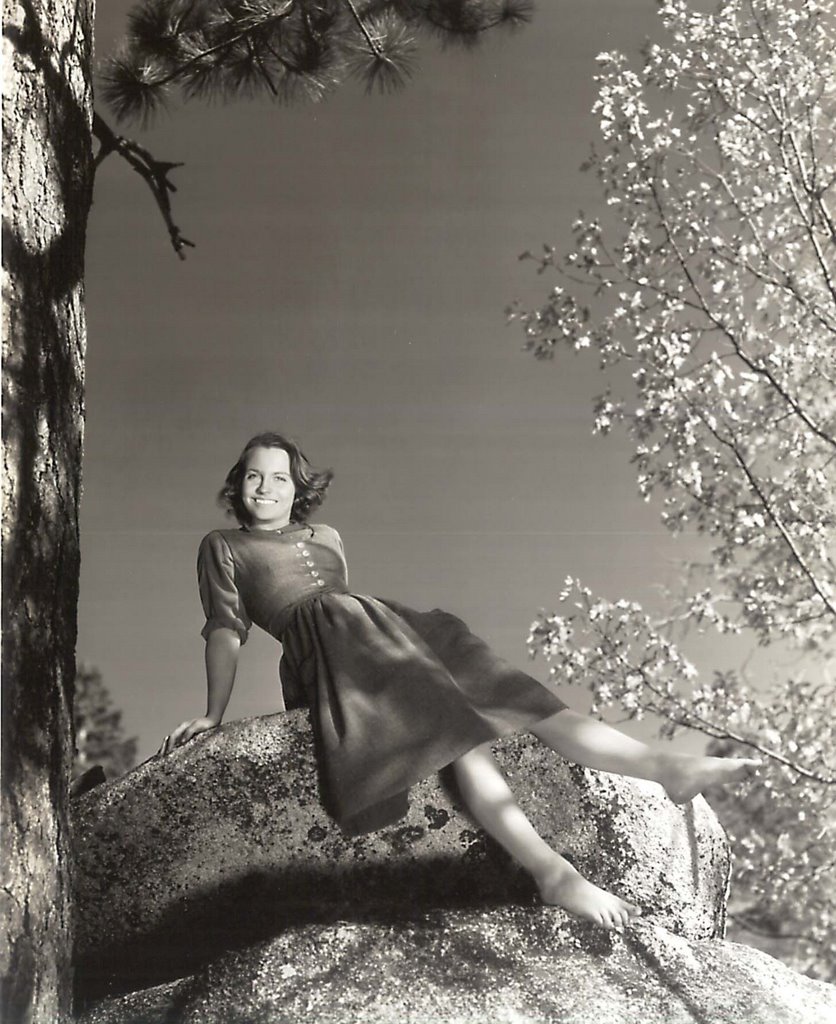
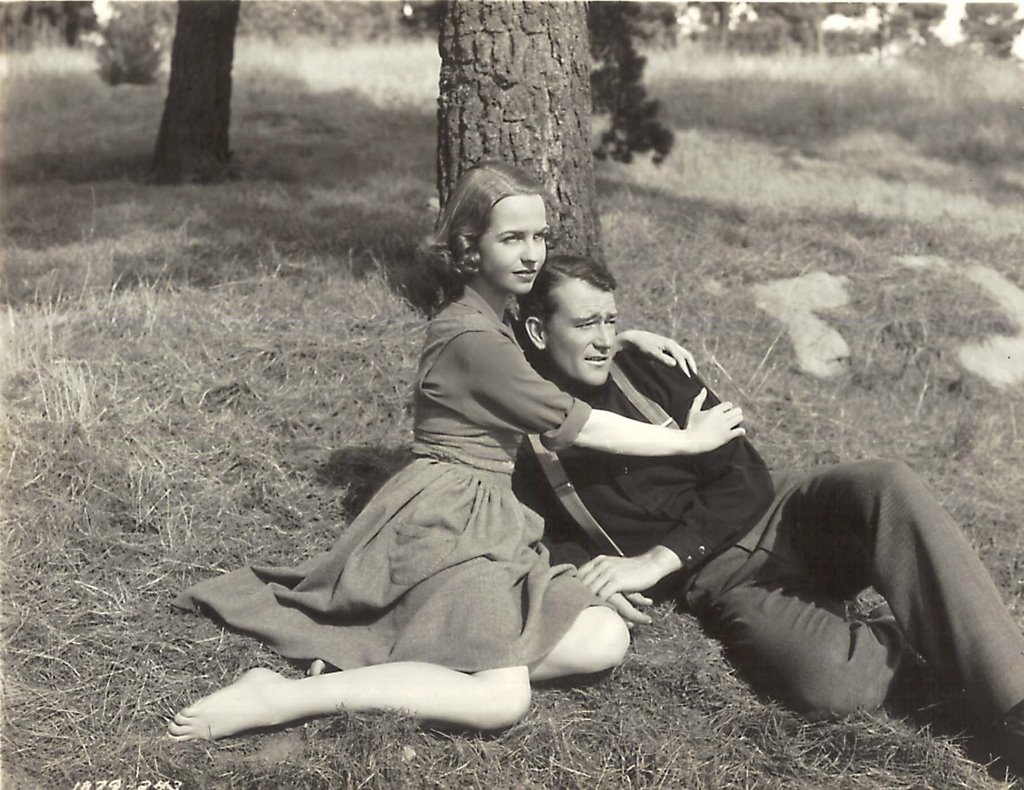
Some "Bad" John Waynes On DVD --- Part 1 With all the excitement and anticipation focused on theforthcomingJohn Ford/John Wayne DVD box from Warners, it’s easy to overlook these runts in the Wayne litter, but what could Universal do? They own but a handful of Wayne titles, so its catch-and-catch-can on their own JohnWayne --- An American IconCollection. I’ve just looked at some harsh customer reviews on Amazon. They advise against purchase of these five obscurities. But don’t listen to these sourpusses ... go buy this neglected and woebegone group today! They’re the ones to best illustrate fabled ups and downs in a career with as many false starts and appalling role selections as any major star ever got away with over fifty working years. There’s not a one that won’t fascinate you --- they sure did me. Despite my expressed reservations to come, I thoroughly enjoyed seeing them again. Yes, it’s easy to admire Wayne in She Wore A Yellow Ribbon and The Searchers, but after three dozen or so rounds with those acknowledged classics, there’s a real sympathy factor that kicks in for deer-in-headlights uncertainty he projects in these early almost-leads. JW's near-heroic blending of resignation with a get-it-done determination as displayed in Jet Pilotand The Conqueror makes us admire indomitable Wayne spirit all the more. I only wish Universal would stupefy naysayers and give us really obscure John Wayne titles, as they own several --- Idol Of The Crowds, California Straight Ahead, etc. --- that would truly be something to see! Seven Sinners is a Code-addled, would-be lampoon of much better shows played straight in the early thirties. It spoofs the Marlene Dietrich of ShanghaiExpress out of necessity of placating the PCA. Instead of Clive Brook, we get Mischa Auer.Warner Olandbecomes Billy Gilbert. Dietrich had to know her act was being denuded. Male consorts are now feckless eunuchs, seemingly incapable of achieving sexual congress with any woman, let alone Marlene’s siren of the tropics. She’s been run out of every port for "inciting riots" and questionable character, but lunkhead campfollowerBroderick Crawford assures us (and censors) that Bijou is a lady and buys her own dresses (presumably to establish that she’s nobody’s mistress). As with the prototype Dietrich hit of the previous year, Destry Rides Again, everything is pitched decidedly low for comedy. There's aforementioned Mischa Auer, Billy Gilbert, Vince Barnett, Brod Crawford --- everyone, it seems, but Shemp Howard. They’re all straining to be funny and deflect any audience notion that Marlene may intend to have, or has had, sex with anyone.Romance with youthfulJohn Wayne, besides the usual May/December concerns (she was nearly six years his senior, and looks more so), is laughably chaste, his last reel "sacrifice" on her behalf altogether pointless and nonsensical in view of their abstinence. Wayne had just broken into "A’s" by 1940, and director Tay Garnett seems content to let the relatively inexperienced actor go his own way. JW's playing it like one of the Three Mesquiteers, and there are moments when you wish a Ford or a Hawks would come in and crack the whip on him. Still, he’s good in a boyish way, and Dietrich’s customary seduction of her leading men seems to have carried on for Wayne’s benefit, though I can’t imagine what these two would have had to talk about (that may not have been an issue in any case, as JW referred to Dietrich late in life as "the best lay I ever had"). If Ozarkians were really as anti-social as they appear in Shepherd Of The Hills, you wonder how they managed to reproduce. This first time in Technicolor John Wayne still finds him among a performing ensemble, as in Stagecoach and The Long Voyage Home. Thank heaven he forfeits any attempt at a Southern accent. That’s always death to us real-life cornpones hoping for realistic depictions of mountain culture. Moonshining is an initial narrative focal point, dumped summarily in favor of feud palaver I never fully comprehended.Everyone’s so down in this --- never was there such a morose lot of hillbillies. The only tilt at humor is a donnybrook where Wayne gets conked in the head and, perhaps for the first time, does the cross-eyed comic take later to be so overworked. Big Bear Lake and the San Bernardino Mountains stand in for locations, and this is truly some of the bestTechnicolorI’ve seen rendered on DVD. Betty Field is way sexy as sole eligible female amongst the clans. She’s reason enough to have Shepherd Of The Hills, despite dialogue laden with stix-flavored mannerism (there’s nothing more irritating than self-consciously verbose rural philosophers forever clarifying everything they say with some off-putting analogy --- either in movies or real life). Surprising is fact robust mountaineers (Ward Bond among them) aren’t fighting like wildcats over Betty instead of meekly ceding her to Wayne. You keep wishing he’d grab the gal (They’ll be no locks nor bolts between us) and get on with a consummation. As it is, we’re dealing yet with Wayne the juvenile, his screen persona still not fully formed, so mild audience frustrations are more keenly felt by us in hindsight than would have been the case for 1941 viewers.
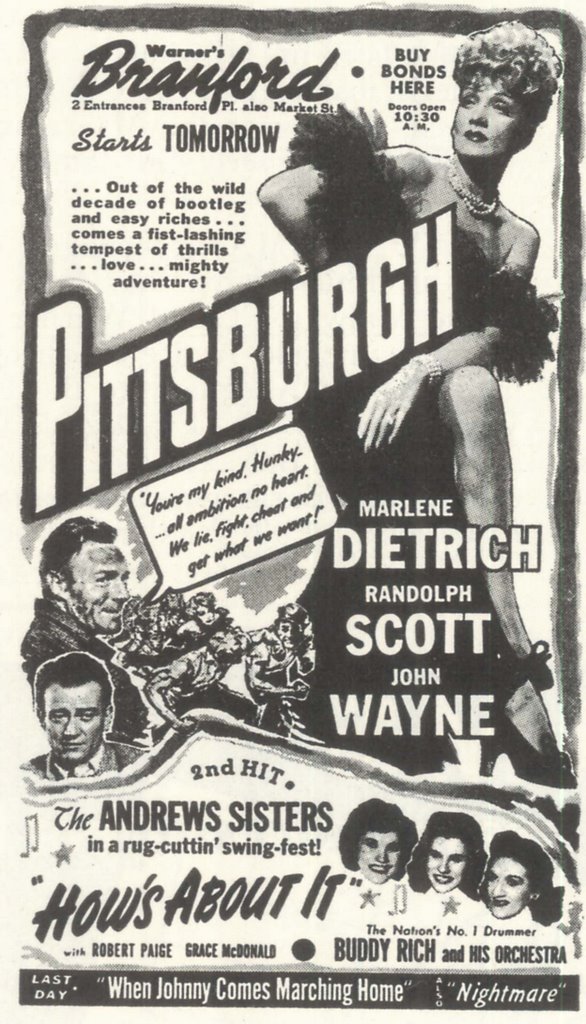
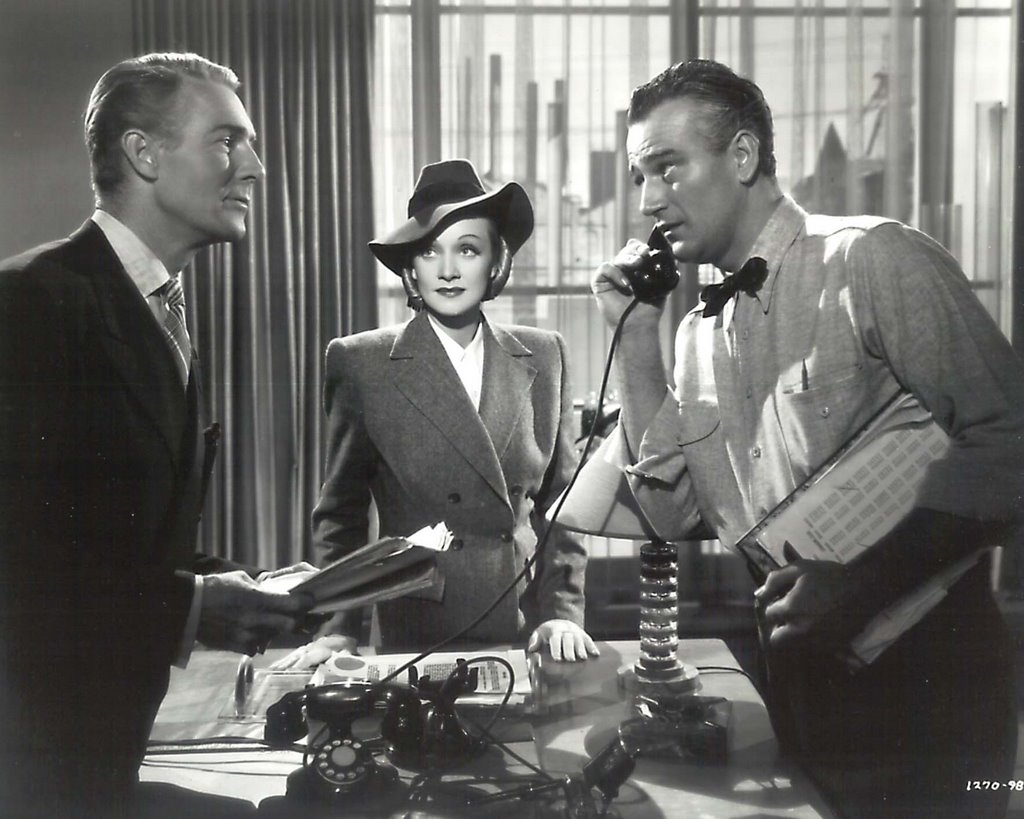
I’m all forcomeuppance on the screen when it’s deserved.Gary Cooper filled Karl Malden full of holes at the end of The Hanging Tree, kicked him off the side of a mountain, and that was fine. Frenchie needed killing. On the other hand, there are shows where humbling gets excessive. John Wayne eats much crow in Pittsburgh, served up by a gallery of insufferable prigs we like far less than Duke’s overreaching coal tycoon. They’re punishing him for failure to join the group effort --- everyone’s shoulder to a common wheel --- and basis for all wartime preachment circa 1942. If it won’t help win the war, forget it! reads a banner we see as the picture opens on Randolph Scott's rah speech to munitions staff, words no doubt hammered into Universal scribes con-fabbing daily with military consultants assigned by the Office Of War Information. Never were films so compromised by outside dictates and policy as during this conflict. Even reviewers of the time lamented heavy dollops of propaganda inherent to virtually all Hollywood output. Any screen character reluctant to pull collective weight was brought to heel. It’s no fun seeing go-getter Wayne bow to OWI policy, but there was a war on, and big business freebooters of the Wayne/Pittsburgh/Gable/Boom Town pattern suggested profiteering more than patriotism, and thus needed harnessing for the good of all. Duke’s like a forerunner to Jett Rink, minus whining and sucker punches, and this being Universal, gets Louise Allbritton for a wife, plus Samuel S. Hinds for a father-in-law (his avuncular presence an absolute given in any motion picture bearing a Universal logo). Might we all petition the company to get started on a nineteen volume Samuel S. HindsLegacy Collection? Leading lady Marlene Dietrich looks matronly beside youthful Wayne, burdened as she is with cumbersome "fashions." Was a woman ever so overly coiffed as Dietrich? One fur collar threatens to swallow her head. It seems she's changed outfits between one end of a corridor and the next. Dietrich would not be the only aging actress consumed by prevailing styles as passing years made her otherwise less relevent.
If anyone is disposed to finally clear up the mystery of Thelma Todd’s 1935 death, we are eager to take your statement. Having waited for going on a century, we’d all welcome closure (original investigation paperwork disappeared generations ago as part of the "cover-up"). Whatever else she accomplished, Todd will be best remembered as the body slumped over a driver's wheel in the wake of what Double Indemnity's Walter Neff would call a "monoxide job." Fans yet make pilgrimage to the grisly site where speculation continues as to what killed Thelma. I say it was a grotesque accident, involuntary manslaughter at best, the perpetrator, and all of friends and associates, so long dead as to make further clarification all but impossible. We could as profitably unmask Jack The Ripper. What is left of Thelma Todd in a public's consciousness, apart from circumstance of her passing, is support work with comedians whose names do survive, and surely she did something right, because Todd appeared alongside some greats. There was a Thelma Todd starring series at Hal Roach, two-reel comedies where she and ZaSu Pitts (then later Patsy Kelly) paired off as a distaff Laurel and Hardy. The Todd/Pitts/Kelly shorts were a trail mix of mirth and tedium, some pretty funny, others an ordeal. Zazu is easier to take than Patsy. The weakest of these comedies at least had Thelma, always a welcome sight, especially on occasions when she effects costume changes on camera, and there were happily lots of those …
Thelma Todd's birthplace was Lawrence, Massachusetts. She was born in 1906. There has been local recognition, one most noteworthy for her centennial. There was a New England cousin who spent her life collecting on Thelma. When she died, they auctioned the memorabilia. Sad when product of a lifetime’s pursuit is so casually disposed of, but there is bittersweet finish for most collectors, and their collections. Thelma herself had cleared out of Lawrence by the time she was twenty, gone to Hollywood with an armload of loving cups from various Lion’s Clubs and the promise of stardom to come. That was slow in arriving, as there were tens of thousands out there just like her, but after an uncertain start with ingenue roles, she lucked into comedy parts. This was a niche conventional actresses on the rise were less ambitious to fill, indeed she was typecast from there on, efforts to drama-tize Thelma fallen on deaf casting ears. A new name was tried (Alison Loyd), but doomed to crowd inclination to laugh rather than take her seriously. Corsair with Chester Morris was a 1931 experiment, but crowds wanted her no way other than comedy (two-reel partner ZaSu Pitts had the same problem). Multiple smash-ups, both on account of drink and ongoing lack of motor skills, nearly got Thelma killed (a palm tree jumped out in front of her car on one occasion), but she'd work steady until that night in December 1935 when lights went out. Short of further and Byzantine detail, we may best concede that Todd’s death has not. likely never will be, satisfactorily explained. Her maid found the body, no signs of violence reported at the time, evidence indicating Todd perished amidst fumes from her car engine. Had she gone there during the chilly night to warm up? There was a quarrel with live-in Roland West, a director down on his luck, but well connected in Hollywood power circles. He had banished her from the house, then followed her to the garage and by several accounts locked her inside. There was no indication she struggled to get out. In fact, Todd was found in the front seat of her car. West by several accounts, including possibly his own, went down the next day to check on her and found the result of his having sealed the door . From there, it was a matter of waiting out discovery by an innocent third party, then feigning surprise when told. Investigators are said to have got a confession from Roland West, this suppressed "for the good of the industry." Shortly before his own death in 1952, West made his peace again to actor and close friend Chester Morris, which Morris passed it along to producer Alex Gordon and film historian William K. Everson. All this strikes me as more plausible than another Todd biographer who asserts she was offed by Lucky Luciano's mob after being involved with the notorious racketeer and killer. This the naturally the account that has gotten most airplay since. More recent researchers, online and in print, have taken a saner approach and done much to correct the record. Assist toward this has been increased access to Thelma Todd's output and a present generation's embrace of her life and pleasing performances.
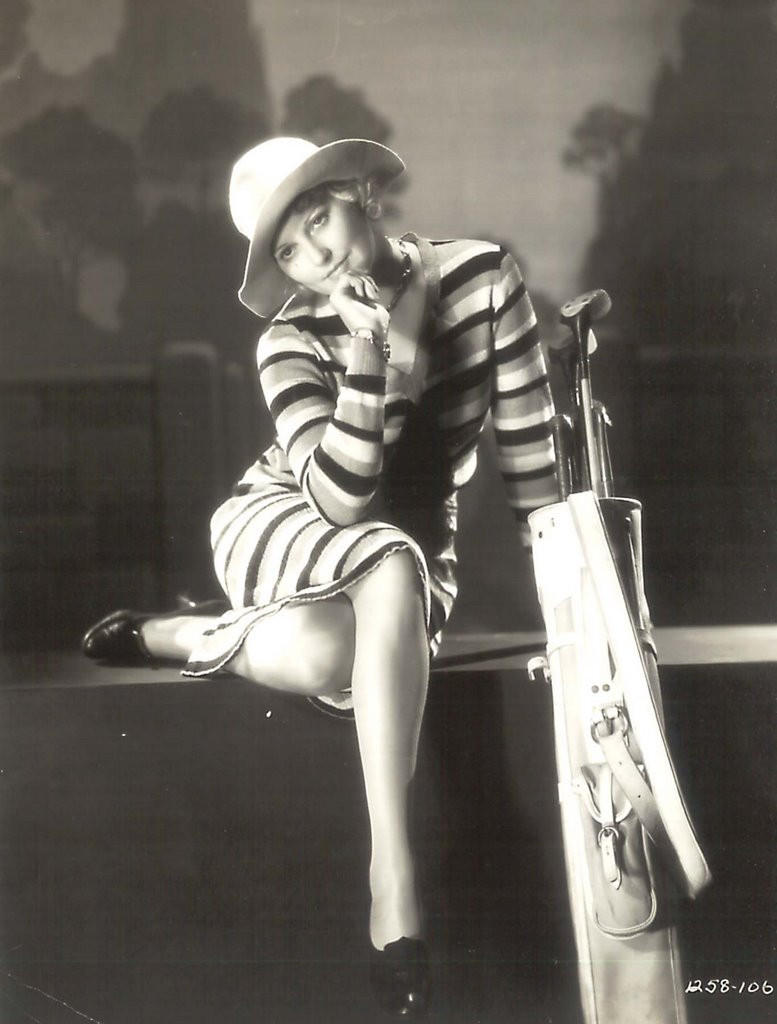
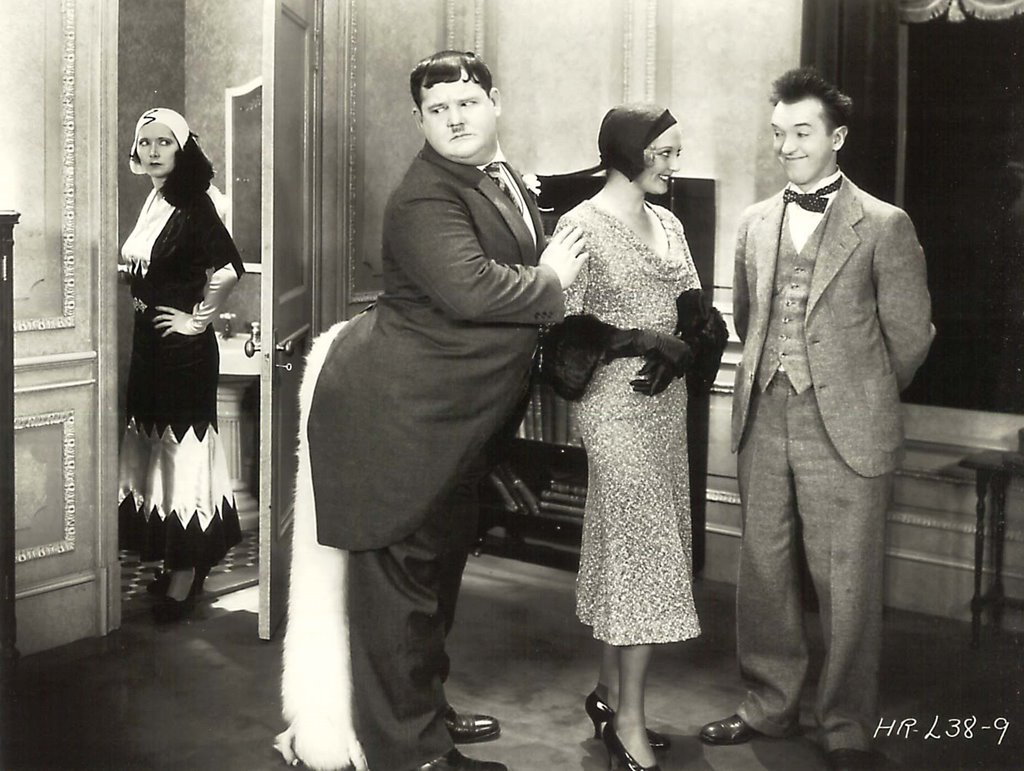
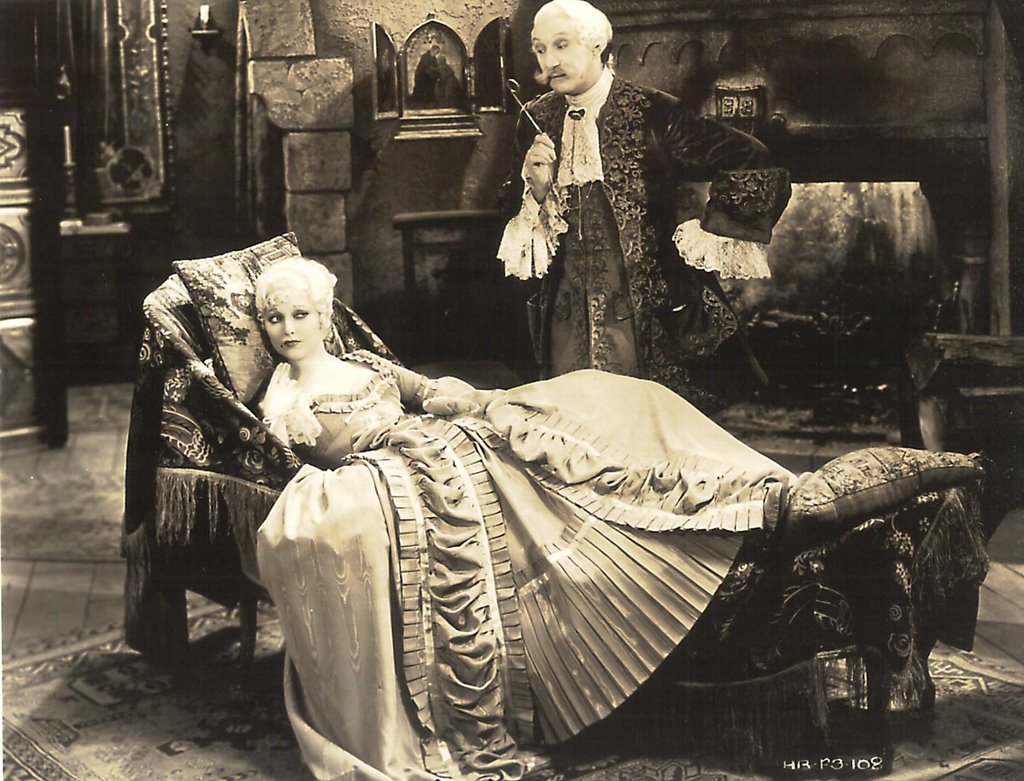
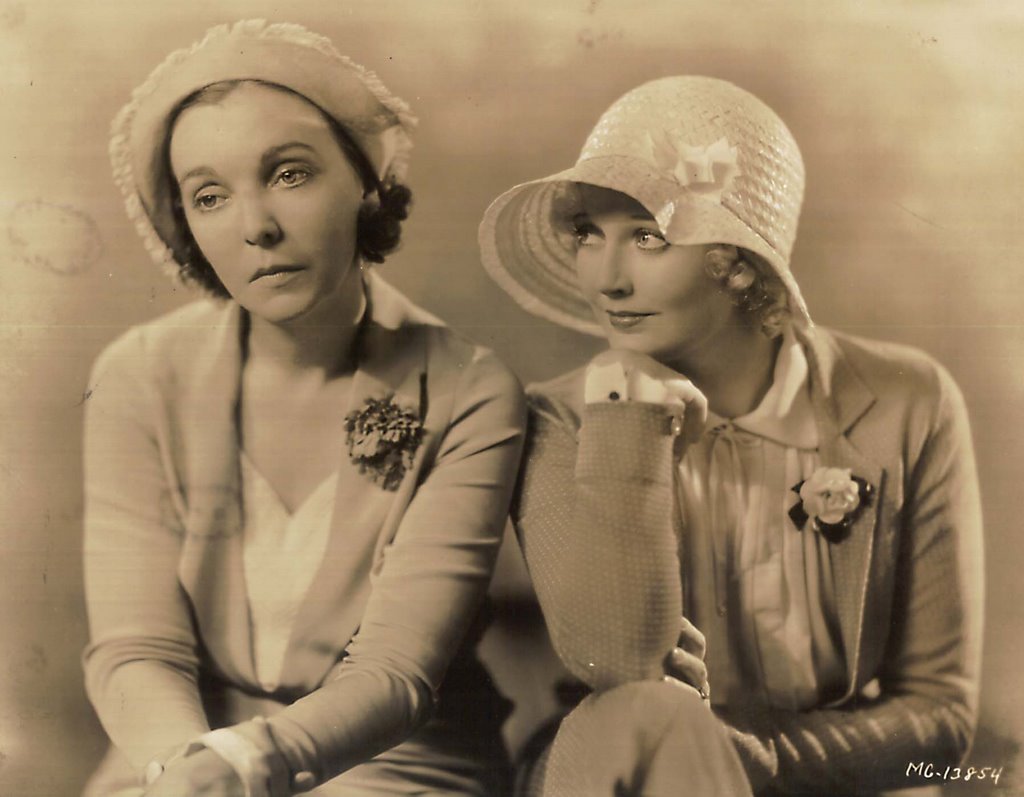
Thelma was known as the "ice cream blonde" ("… and everyone wanted a lick" must surely have been a refrain on the lips of various Hollywood lotharios). This negligee shot with the phone is from the 1931 versionofThe Maltese Falcon(her part in the remake was played by Gladys George).Laurel and Hardy benefited from Thelma’s presence in several shorts --- too bad there weren’t more --- this one is Chickens Come Home, and she’s gorgeous in it. Monkey Business was one of twoMarx Brothers features in which she participated. The other was Horse Feathers, but that one was code-cut in the late forties, and what’s left of Thelma’s key scene with the Brothers is so mutilated as to be almost incoherent. Too bad Universal hasn’t been able to locate better elements on this 1932 release.BusterKeaton was near a point of no return when Speak Easily found him sharing scenes with Thelma. This office exchange withJohn Barrymore in Counselor At Law also fell before the Code’s ax for a 1953 re-issue --- what’s left is still fine, but this missing footage appears to be gone forever. That's James Finlayson as a suspicious husband in The Devil’s Brother, and ZaSu Pitts poses with Thelma for a portrait heralding another Hal Roach short comedy. Their two-reelers generally ran ahead ofOur Gang and The Boy Friends in terms of rentals, but behindCharley Chase and of course, the Laurel and Hardy series, which was the biggest earner of all. Hard to imagine them beating out Roach’s Rascals, considering how forgotten the Todd/Pitts shorts are today. This final image is something of a rarity --- Thelma Todd in The Bohemian Girl, a feature just completed at the time of her death. Preview audiences apparently saw Thelma, but hasty reshooting in the wake of her mysterious death found the part recast and virtually all her footage removed. This sequence with Antonio Moreno was not seen by the public, and very few stills of Thelma from The Bohemian Girl have been published --- in fact, the only other one I’ve seen is in Randy Skretvedt’s excellent book, Laurel and Hardy: The Magic Behind The Movies.
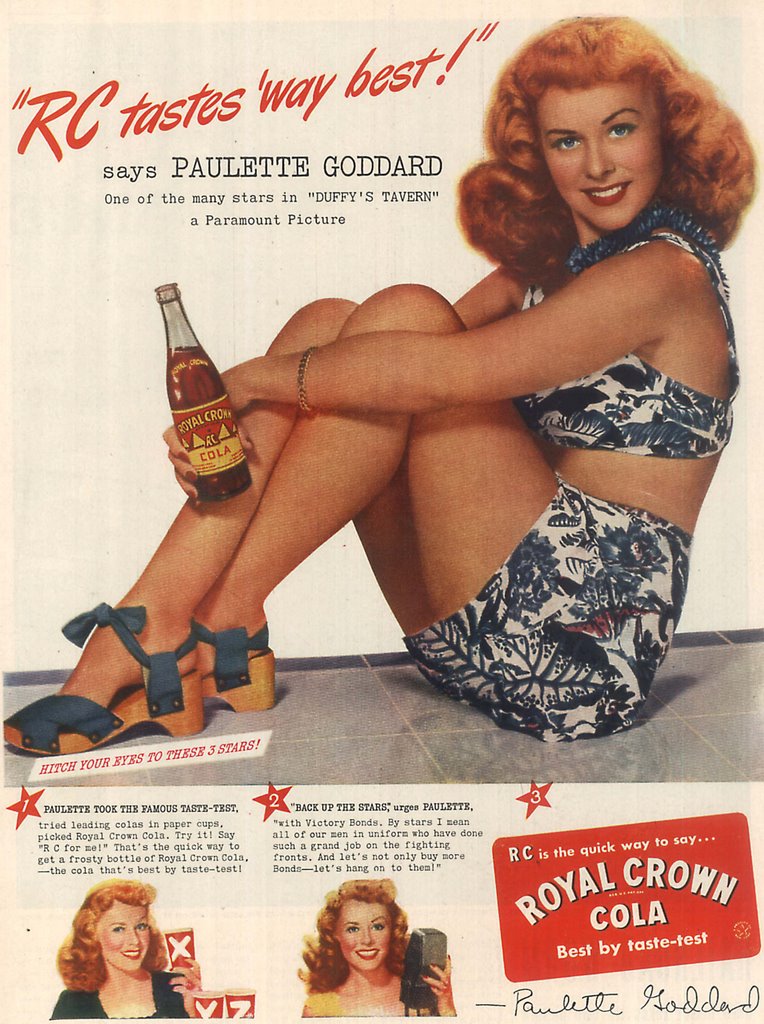
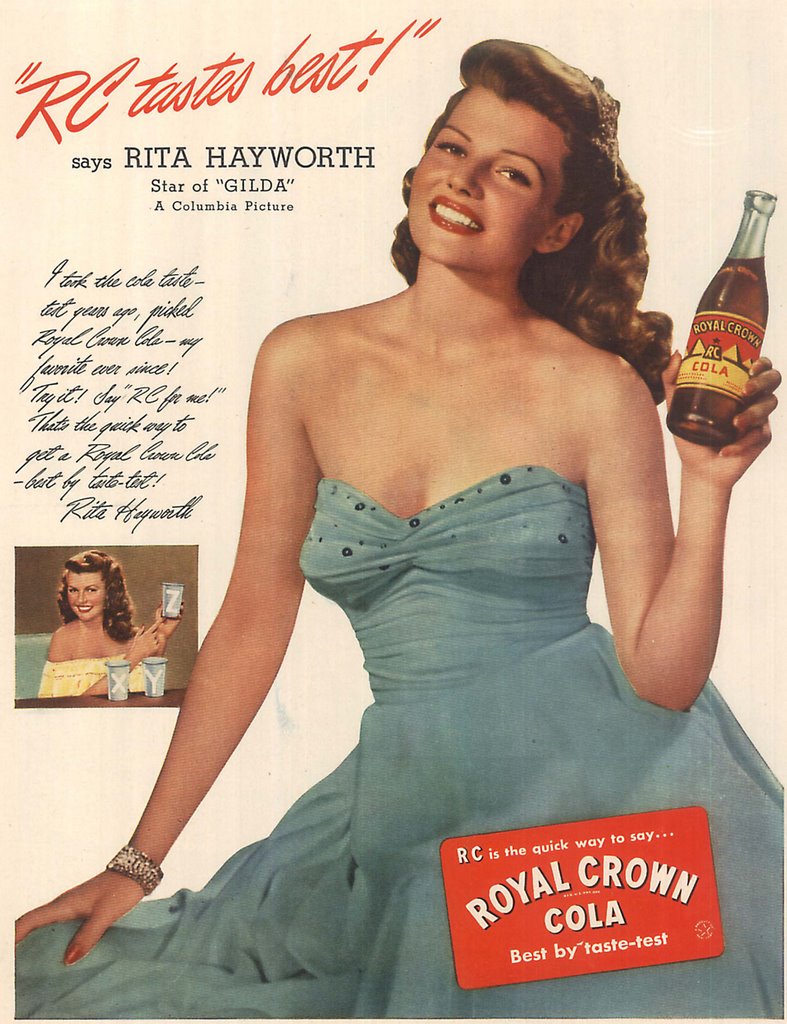
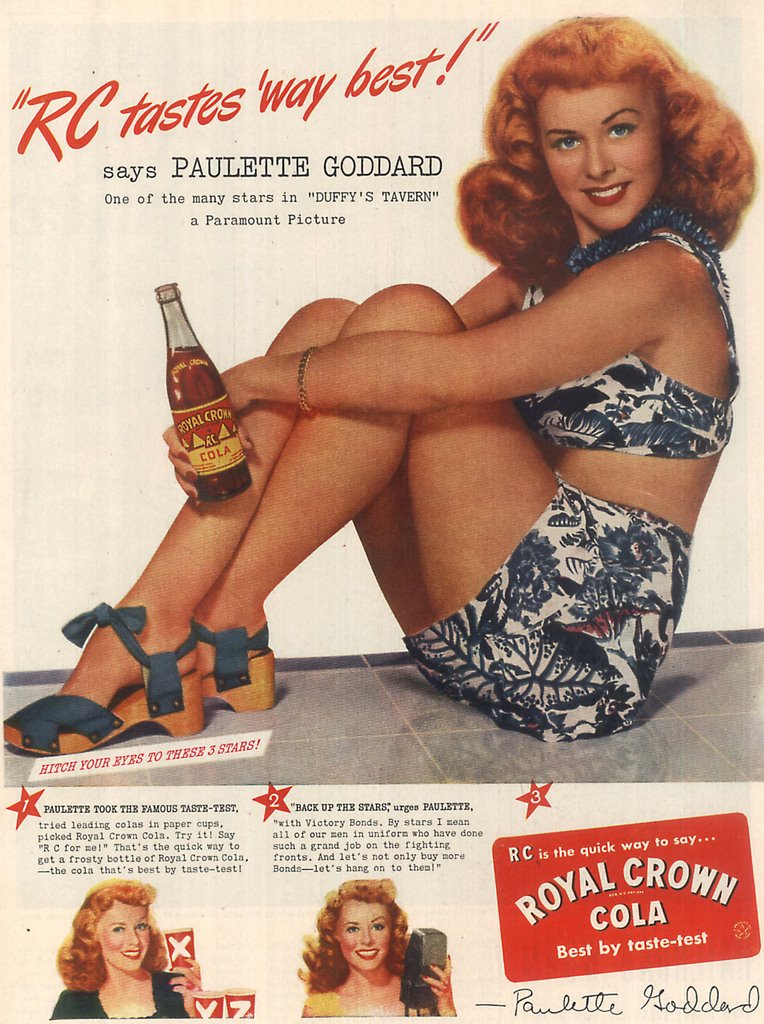
So many cola choices, but only one wins the taste test hands down, and that’s Royal Crown, the favorite of discerning actresses throughout our great industry. Rita seems the odd one out, having picked the cup labeled "Z" while Paulette and Hedy both went for that "X" container. Could Rita have selected a Pepsi in the belief it was an RC, or did someone switch beverages on the chance that the girls might get together and brief one another as to which they should choose? What if all three cups were filled with Royal Crown, in which case one must challenge the legitimacy of the whole exercise. It’s even possible that none of these three choices actually contained RC, but were instead filled with Coca-Cola (or even dreaded also-ran "Spur" cola) --- a cruel bit of japery on the part of bored and cynical ad agency employees determined to prove once and for all the indiscriminate, plebian tastes of overpaid, undereducated movie stars. We’re sixty years too late to get to the root of what appears at best a suspicious, and possibly corrupt, enterprise. We can only recommend you decide for yourself --- conduct your own cola taste test perhaps, and be sure to let us know the results ...
Courtesy among competing showmen was a thing fast disappearing by the sixties, when the decline in attendance, coupled with television’s ongoing encroachment, forced theatres to adopt ruinous booking policies --- an exhibitor’s hara-kiri with first-run features the weapon of choice. NBC had just introduced a Fall lineup of blockbuster post-48 movies on Saturday evenings, and syndicated packages of recent releases gave viewers plenty of reason to stay home nights. Desperate exhibitors retaliated by front-loading their marquees with triple helpings --- drive-ins were particularly at fault. This first ad presents the outdoor theater menu for a weekend in December of 1961. These were big new pictures at the top of the bill --- The Guns Of Navarone was a June release and still a viable attraction for the hardtops. Here it’s lumped with two other features (Bend Of The River must have been nice on that big screen) for a show that tipped the clock at seven hours plus. Five years later, things were worse. Now they were serving four shows, and for only a dollar a car! Trade press editorials fulminated against this eat-or-be-eaten policy. It was no isolated incident, they said. Brand new releases were being burned off day and date between indoor and outdoor venues, only the drive-in mob was enjoying four helpings for the price of the one that downtown patrons were getting. This sample from April 1966 illustrates the bargain awaiting crowds at the Trenton Drive-In, where three of the attractions were less than three months in release. The problem was attributed to "industry-wide chaos and confusion" that resulted from the distributor’s abandonment of long established clearance and playoff patterns. Drive-in operators were "scratching each other’s eyes out", they said. A short-term bargain for the customers, but a long-term disaster for showmen. Few could have anticipated the real disaster, and the eventual near-extinction, that lay in wait for drive-ins, nor the insatiable appetite of television networks gobbling up theatrical hits before theaters could even play them off. Exhibition as we’d known it was headed for oblivion. Reading these anxious editorials can be a little sad when you realize what so many of these guys had to look forward to. At least a few of them saw it coming.
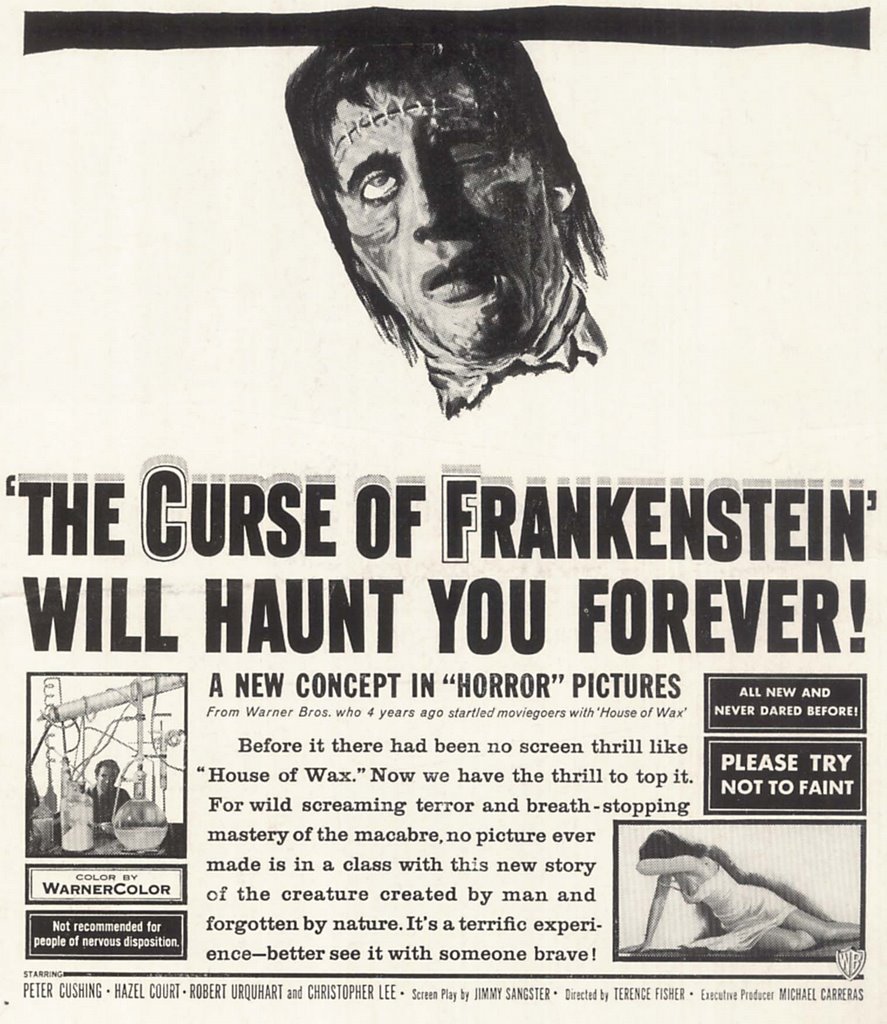
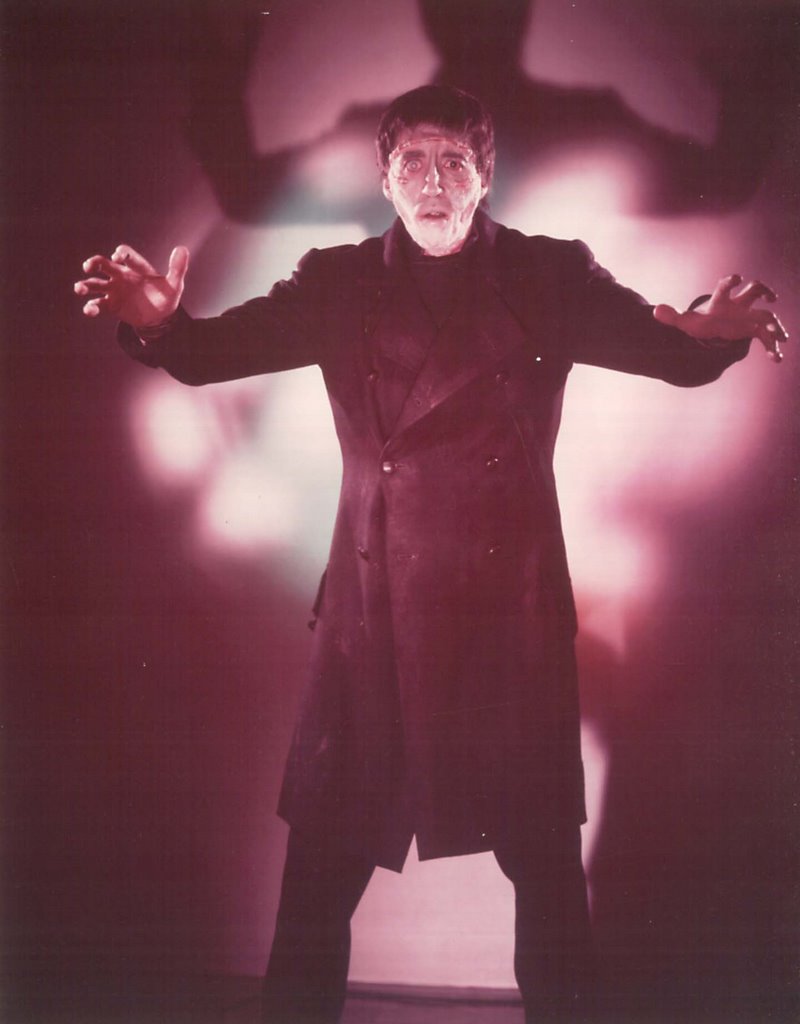
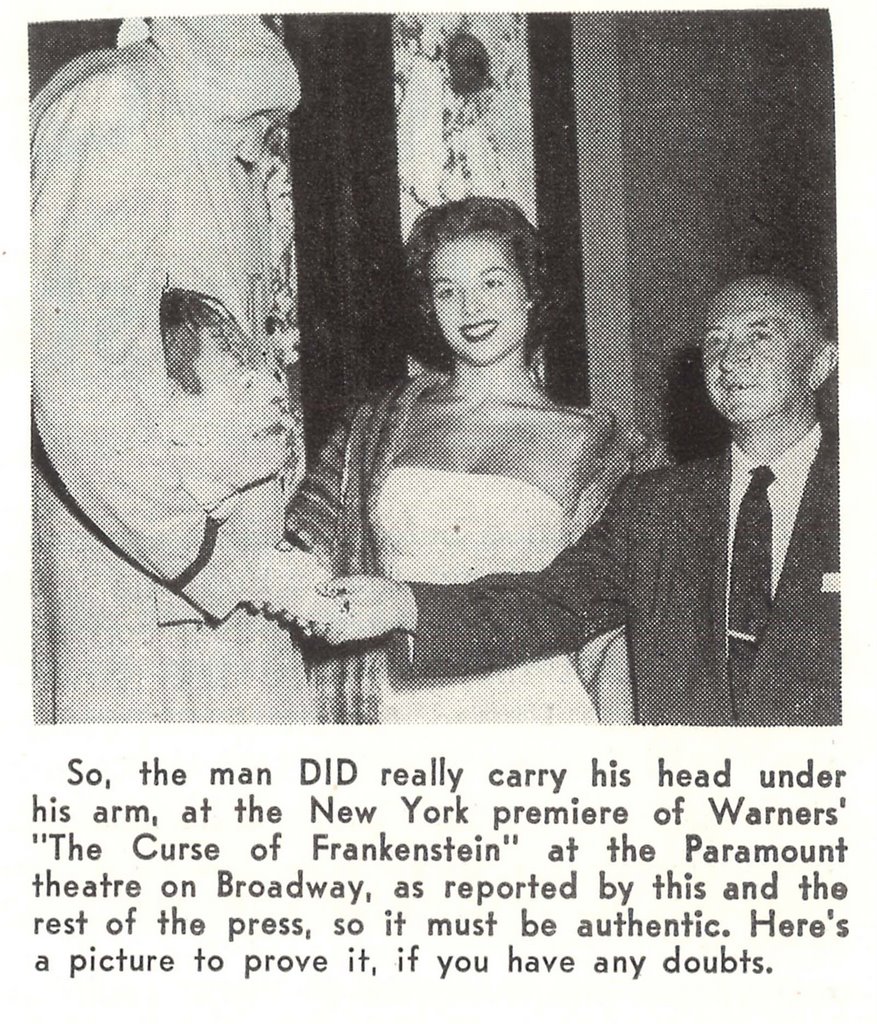
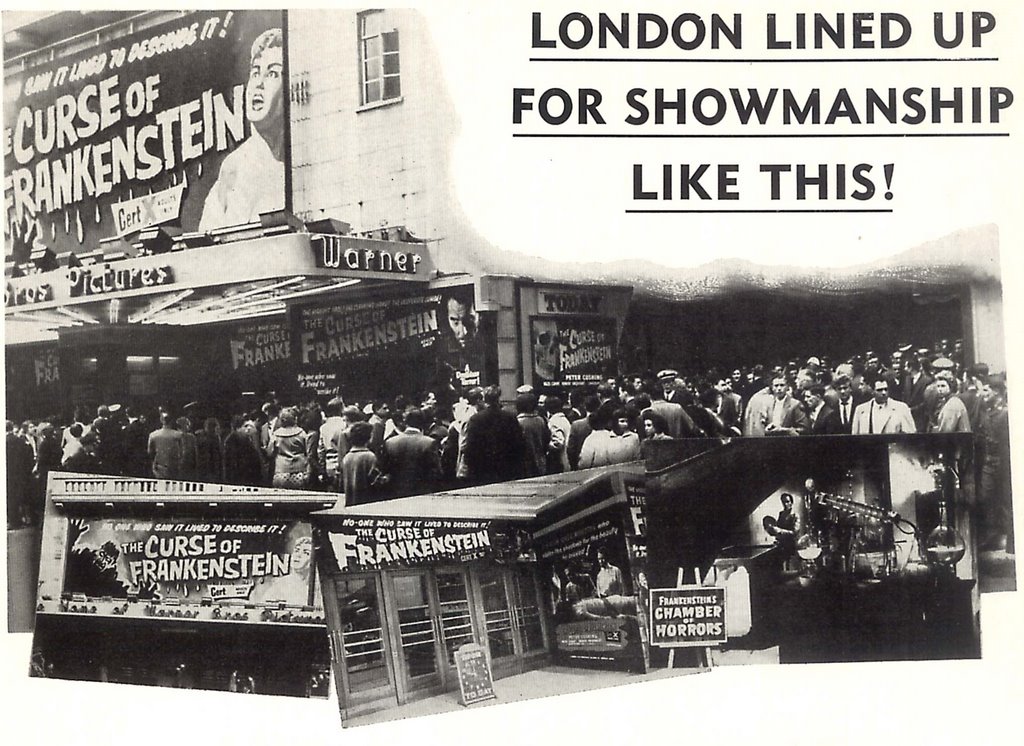
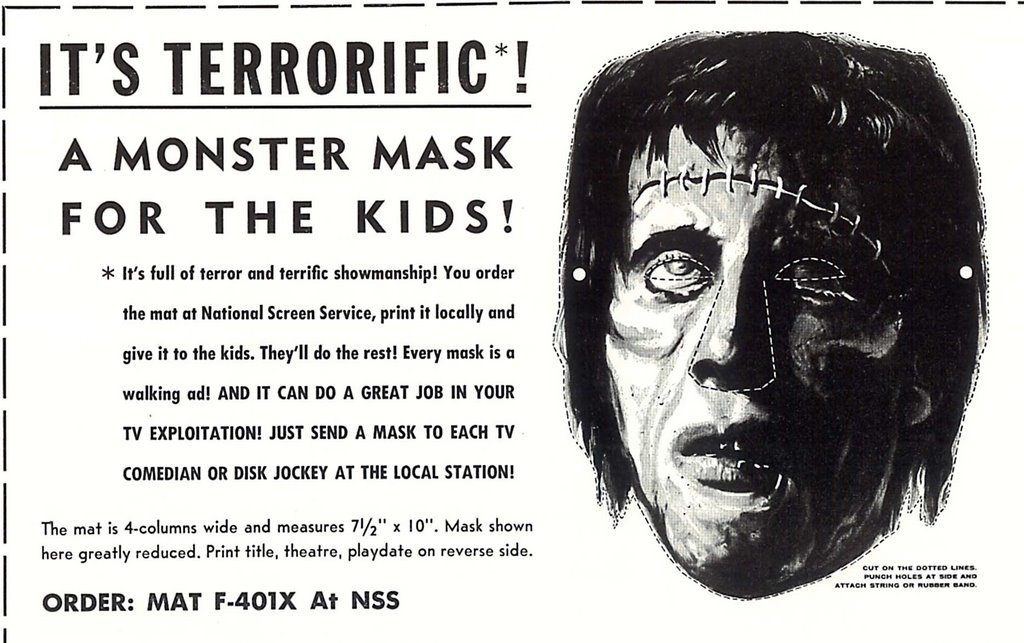
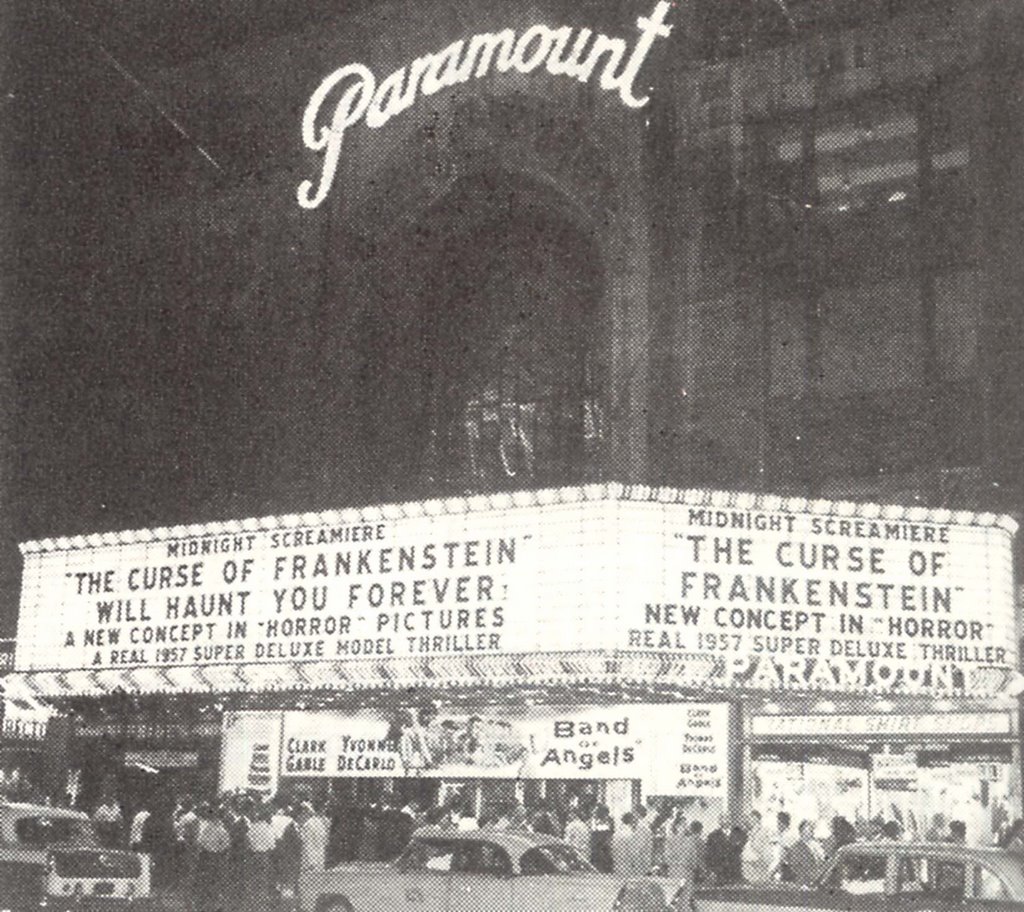
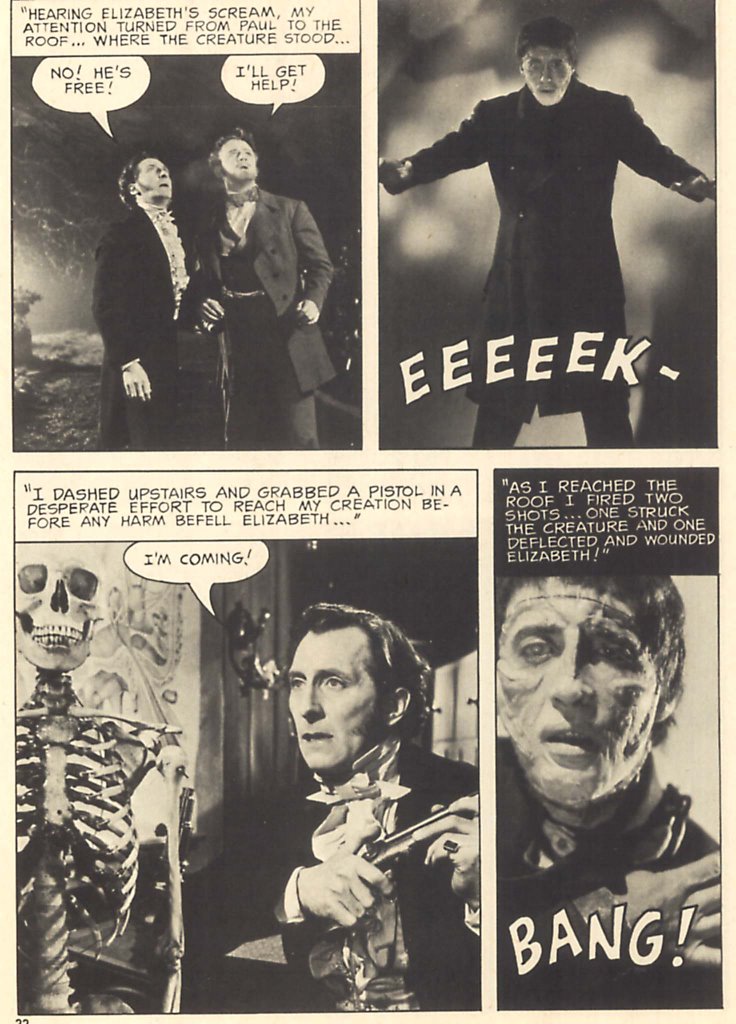
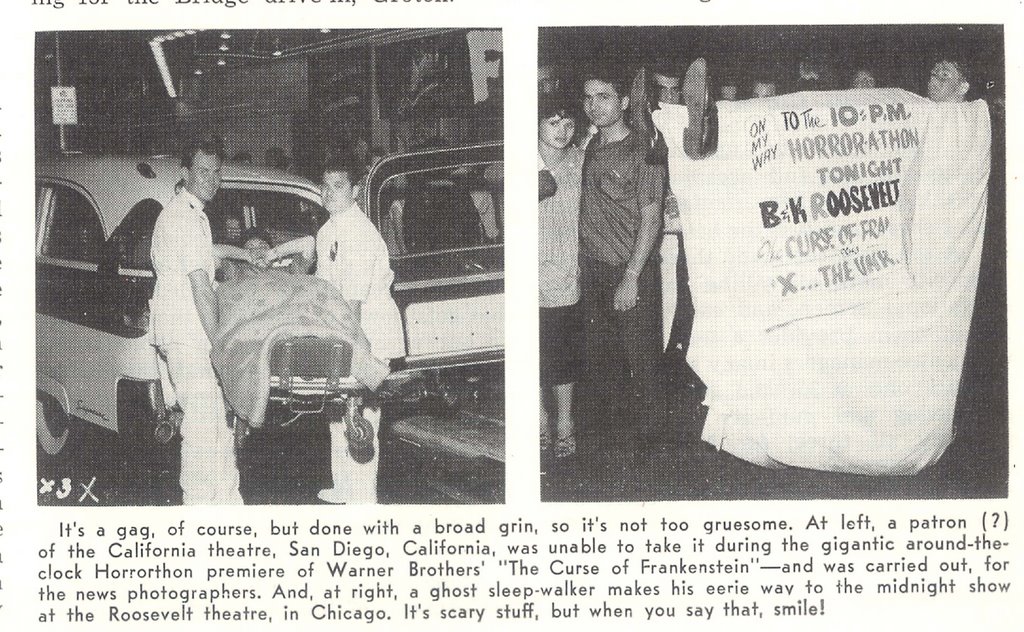
Kids today won’t levitate over The Curse Of Frankenstein. They’ll call it dull, slow, nothing happening, the customary branding iron applied to most old movies, particularly of horror type, explicit gore ingrained since ... well, since The Curse Of Frankenstein and Hammer films first arrived. Good luck convincing doubters that it was this one leading ways to wide-open charnel house that is screen horror today. To know Curse's impact, to feel shudders it evoked during summer 1957, is possible only by having been there, seeing it somehow through their eyes, this a transport fewer of us each year can make. To stream these epochal chillers, to own them in whatever souped-up rendition Blu-Ray affords, these still are replicas to suggest a feeling, not duplicate it. The Curse Of Frankenstein in 1957 was less movie than live performance, for at no time in decades to come would it play again like this. Warners saw and knew Hammer's merchandise could sell, given proper exploitation. "Above average for this kind" was probably how they figured it, gore the novelty to prop up ads. Comparisons with WB's previous House Of Wax were inevitable, trade screeners quick to realize The Curse Of Frankenstein was radical depart from 1953's gay nineties fun house that few took seriously. If anything, House Of Wax harked back to Gentleman Jim, The Strawberry Blonde, and other nostalgia trips popular in the forties. TheCurse Of Frankenstein was not built for laughs nor fun. Here were dirty lab jackets smeared with blood, heads cleaved off just below the frame line, eyeballs and cut off hands daintily wrapped in burlap swatches, clinical lab detail to shock viewers, who in a previous year had seen something close (The Black Sleep), but this time there was color, and nothing of known chillers, let alone what television offered, could approach it. Some were disappointed by Hammer's monster. They couldn’t use the familiar Karloff visage, Universal having issued warning in advance of Curse production. The 1931 Frankenstein, plus sequels, had been out of circulation a while anyway. Comparisons would be made as originals took their television bow within a few months of Curse openings (July 1957), and micro budget Frankenstein’s Daughter and IWas A Teenage Frankenstein would feed on scraps left by The Curse Of Frankenstein. Home andtheatre screens were soon inundated with Frankenstein output of new or old vintage. Domestic rentals for The Curse Of Frankenstein totaled $1.4 million, with foreign at $1.0, for a worldwide $2.6 million. Profits for Warners amounted to a bountiful $1.6 million, considerable money for a genre wherein expectations were generally lower. Curse Of Frankenstein was a natural for round the clock showing. Advertising was rightly aimed at kids and teens. A "monster mask for the kids" was actually a blown-up paper ad mat likely to fall apart the moment you tried putting it on. The Curse Of Frankenstein stayed evergreen for years to follow. A comic version was published in 1964 when the feature was reissued and Warren Publications, publisher of Famous Monsters magazine, came aboard with a montage of stills plus frame blow-ups to tell the story and promote the film. My first acquaintance with TheCurse Of Frankenstein,along with resolve to someday see it, came by way of this magazine. There used to be a drive-in theatre about six miles out from town. It was nestled on a blind curve just off a two-lane road very much like the one that put Robert Mitchum into a tail-spin toward the power plant in Thunder Road. Our own Thunder Road snaked along rural desolation best avoided past nightfall, leading to nowhere, it seemed, other than backwoods oblivion. The small farmer who erected his movie screen between two chicken houses on an open pasture found a ready audience for odd assemblage of programs he rented for cheap, or cheaper. There were "B" westerns, long after they had disappeared elsewhere, Judy Canova hillbilly frolics, hot car actioners ... and horror shows. I had never been out there, but was informed that wandering cattle often peeked into patron cars. How do you attend drive-ins without a driving license? Family outings were all well and good ... for other families. Mine never, ever saw outdoor movies. My father considered that plain foolishness, what with M Squad available within comfort of home. This weighed not so heavily upon me until August 1968 when TheCurse Of Frankensteinfinally showed up. Intensity of fourteen-year old desire to see TheCurse Of Frankenstein was a rock in my shoe from 1965 when Liberty management ducked revivals of Curse with Horror OfDracula, even as they seemingly played everyother NC theatre but ours. Out-of-town cousins had seen them. Print ads far and wide trumpeted both. Famous Monsters and Castle Of Frankenstein wrote eloquently of the combo (Frankenstein Spills It --- Dracula Drinks It!). For all I knew, boys in reformatories got to see them. Too young to have caught initial release in the fifties, I was determined to at last see TheCurse Of Frankenstein, whatever obstacles fate and parental resistance might throw in my path. A first hurdle was getting there. Do I walk six miles, go in afoot, stand alone in that pasture with a speaker in my hand? Someone would have to take me, and that someone might just as well be my sister’s boyfriend. And why not? He and I got along. What if she had left for college? Richard was a good sport, realized perhaps there were worse ways to spend a Sunday evening than taking your girlfriend's little brother to a drive-in to see an already fading print of an eleven-year old horror film. To his eternal credit, and my everlasting gratitude, Richard agreed to be my escort. It would seem the mission was accomplished, but wait, they had booked TheCurse Of Frankenstein for one night only --- a Sunday night --- a new school term to begin the next morning. No way my folks would let me stay out past 10:30. Worse still, TheCurse Of Frankenstein was set to run behind Gamera The Invincible ("A giant, jet-propelled fire-breathing space turtle terrorizes the earth," says MaltinReviews). Seeing both would keep us out after midnight. Gamera as opener would be my downfall unless I could persuade the drive-in operator to reverse positions and play TheCurse Of Frankenstein first. Perhaps the prospect of at least two paid admissions on an otherwise bleak Sunday night induced him to accommodate me, or maybe he felt sorry for a boy whose priorities were dreadfully misaligned. Whatever the reasoning, I hope his fields prosper yet, for it was he, and gallant Richard, who made it possible for me to finally see The Curse OfFrankenstein.