Classic movie site with rare images, original ads, and behind-the-scenes photos, with informative and insightful commentary. We like to have fun with movies!
Archive and Links
grbrpix@aol.com
Search Index Here


Thursday, January 17, 2008


Vampira and Other Creatures Of The Late Night


I was 3000 miles away in my cradle when Vampira broke big hosting movies on Los Angeles television. For one who’d achieve such mythic status, she had a mighty short run on airwaves. I’ve scoured obits for possible reasons why in the wake of Maila Nurmi’s death last week at 86. Nurmi said she and her alter ego were blacklisted. The squawk was over KABC’s desire to own Vampira outright. It was less Nurmi they wanted than her patent on the character. She had roamed graveyards in a lavish 40’s spook show Michael Todd staged (just once) in New York. Howard Hawks  got wind of that and signed her to be his next Lauren Bacall . Nurmi broke out on her promised-but-not-delivered big break and married Dean Reisner, former child actor for Charlie Chaplin  and son of director Charles Reisner, who’d done Keaton’s Steamboat Bill, Jr. and helmed several Dane and Arthur  comedies. The KABC producer spotting Nurmi at a Hollywood party in her Morticia Addams get-up was pedigreed Hunt Stromberg, Jr., whose father oversaw many Blue Ribbon Metro features. Was Vampira the first horror host (ess) then? Maybe an obscure station someplace used on-camera emcees for chillers prior to 1954, but there’s no record of them, and likely if there were, none would approach sexed-up shenanigans wasp-waisted Vampira delivered weekly. The only thing she lacked were movies engaging enough to sustain viewers between live routines. All were indie/cheapies sold to KABC despite establishment industry edicts withholding filmland product from TV. Bela Lugosi-philes say he watched White Zombie on KABC and dug Vampira's act. To-be classic noirs played as well, but audiences were decades away from embracing the likes of Detour and Decoy, and besides, what were these doing on a late night spook show? Nurmi’s exit (in less than a season) was abrupt and permanent. Why would an on-air personality featured in LIFE and Newsweek fade off the tube at her seeming summit? I’m guessing the station would have maintained Vampira minus Nurmi, for reasons lost to time. Was she too difficult in negotiations? Anyway, Nurmi withstood what must have been high pressure from the station to buy her character. In the end, neither profited. I don’t doubt the blacklist theory. Some phone calls among program managers probably settled future job prospects. Nurmi could be Vampira all day (and night), but what’s the point when cameras aren’t looking? There’d be numerous photo sittings. Ones shown here were out of agency files and suggest Nurmi was spreading her image where she could to score another midnight berth, but programmers weren’t buying. She sat out wee hours in the garb with assorted Hollyweirds in places like Googie’s Coffee Shop, where dame fortune smiled and introduced her to iconoclast of the moment James Dean. She said they hit it off, but he was less ready to scratch the town’s underbelly, telling Hedda Hopper not so gallantly that witches weren’t his thing and neither were dates with cartoons. Vampira retaliated with a publicly cast hex upon him, and sure enough, Dean exited out shortly after. Nurmi caught hell from creeps and sickies nationwide who figured she put the death mark on their idol, though better judgment might have silenced her during interviews where she claimed to have received spectral communications from Dean via her bedside radio.


Desperation’s last straw found Vampira pulling two hundred-dollars for a single workday on Ed Wood’s Plan 9 From Outer Space, a then unimaginable ticket to immortality that became Nurmi’s own equivalent of the Dean curse. No wonder she shunned latter-day interviews! Going through life with Wood cults in single-minded pursuit would consign anyone to retreat behind locked doors. Varied Vampiras were poaching Nurmi’s act by the time horror hosting really took off in the late fifties (one of them here with on-air m.c. John Zacherle at a record promotion). Vampira herself became less a graveyard smash than just another shill for producers peddling horror pictures such as Blood Of The Vampire, which received Vampira’s Good Ghoul-keeping Stamp of Approval in 1958. Horror hosts were meanwhile thicker than bees in a honey tree. American-International established its own Fraternal Registry Of International Ghoulish Horror Telecasters (FRIGHT for short) "in recognition of your gruesome talent and nerve-wracking ability to scare people out of their wits night after night." Incidental to such honorariums was AIP’s campaign on behalf of 1959’s Horrors Of The Black Museum, possibly the first occasion in which a studio made extensive use of horror hosts in selling a theatrical feature. Competition was such as to finally get Maila Nurmi out of costume and into chic attire for a personal appearance at the January 19, 1965 Tomb Of Ligeia premiere. Here she posed with the film’s star Vincent Price and former Bride Of Frankenstein Elsa Lanchester, as well as successor horror host Jeepers Keeper (Fred Stutman). The leopard caped countenance at left was in fact the genuine article among screen vampiresses, and predated Nurmi and her pretenders by twenty years at least. Carroll Borland had played opposite Bela Lugosi in 1934’s Mark Of the Vampire, and hers was the template others, including Vampira, would copy from then on. Relations that night between the two must have been chilly. For all of Nurmi’s dogged courtroom pursuit of fake Vampiras (the last of which would be hapless Elvira), here was the High Priestess of them all coming to call at age fifty in shrouds she wore when the model was invented three decades before. Must have been for Maila like someone walking over her grave.


I was of that earnest mindset deploring horror hosts and their cheeky deconstruction of classic monsters. Cookie-cut routines airing weekly seem to have all come out of the same how-to manual for clueless stations with chiller packages and late-night slots to fill. Kids at school littler than me were making sport of Frankenstein and Dracula. I faithfully watched Dr. Evil out of Charlotte and Count Shockula from High Point but cringed over their mockery of horrors played straight in thirties and forties classics. Pure snobbery deprived me of laughs I might have enjoyed at age 12, but someone had to defend the integrity of The Black Cat and Werewolf Of London. Our sixth grade class presented a so-called "chapel program" for the school in 1966. It was a talent show of sorts and everyone had a turn. I would appear as Count Dracula and deliver a humorous monologue penned by another boy in the cast. The much-rehearsed Lugosi impression was down pat, and my mother furnished a resplendent cape with crimson lining. Our audience guffawed when I spoke longingly of the Transylvanian Twist and visits to the local blood bank, but few detected the stake this lousy skit was driving through my adolescent heart. Forgive me, Bela might well have served as my silent coda, yet hadn’t Lugosi himself burlesqued the image on countless stages during hardship bookings in the late forties and fifties? Maybe it was knowledge of these that made me protective of his image now, or possibly (and more likely) I just took such things too seriously. Letters to Channels 3 and 8 offered detailed instruction as to how they might properly present monster movies. Collective groans must have sounded whenever one of these arrived in the post. I chastised Count Shockula for insipid gagging, an inexpressive mask, and too many showings of The Flying Serpent. Station manager Dick Bennick replied. Turns out he was Count Shockula, master of ceremonies for the Mess America Pageants held at tri-city hardtops in addition to his Shock Theatre hosting duties and actually featured in Issue 45 of Famous Monsters (as shown here). Dr. Evil was magician and spook show favorite Philip Morris, who seemed to have brought his live act to every stage except the Liberty’s. Between begging for that and the Curse Of Frankenstein/Horror of Dracula combo, I was truly Colonel Forehand’s worst nightmare in those days. Horror Theatre became Dr. Evil’s Friday night TV address. Channel 3 reached more viewers than any station in North Carolina. New Years Eve 1964 found the good doctor taunting a (he thought) captive gorilla during a broadcast of Teenagers From Outer Space. Upon the feature’s more than welcome finish, the roused ape broke free of its bonds and gave Dr. Evil merry chase through the studio. Even I was moved to relax vigilance on behalf of horror film dignity upon seeing this. Too bad not an inch of tape survives from these shows, as WBTV erased over them all to record Saturday wrestling.


Having on previous occasion confessed of my 1969 disruption of Channel 4-Greenville’s broadcast day, I now relate a bittersweet account of another effort that year to bring better television to our benighted NC airwaves. Being supreme authority regarding such matters, I had shared expertise with stations since the late fifties. A fifth birthday gift of a TV GUIDE subscription was what first inspired me to take childish scrawl to paper and draft revised schedules for nearby channels to implement. Not as experienced during pre-school days in matters of posting same, I must assume my parents deposited them in Amy’s magic mailbox, or some equivalent other than actual dispatch. In any case, my letters brought no replies until the mid-sixties when unfortunates at Channel 12 in Winston-Salem began apprising me of Universal horror films being shown as Saturday fillers. Their lease on these eventually played out, and it seemed to me they’d never been properly exploited. Perhaps if I showed up at their offices one day (unannounced), portfolio in hand, things could be put right. On said occasion in August 1969, my "cold call" to Channel 12 resulted in an hour’s sit-down with two of the vice-presidents, both of whom remembered letters I’d written over the past several years. My mission, if they chose to accept it, was nothing less than repurchase of the entire "Shock!" package and a classy format in which to present them. John Comas was program director. He listened patiently and promised to take my suggestions under advisement. Within a week of the meeting, I received the letter shown below. Success (if partial) at last! The referred-to Halloween special that began in prime time and lasted through the night of October 31 tempered my transport of joy. NBC’s schedule was pre-empted in favor of Frankenstein, Dracula, The Mummy, and Son Of Frankenstein. There were three horror hosts, none of them practiced in that art, and each determined to one-up the other with tomfoolery resulting in large chunks being cut from the features. Frankenstein began with Fritz dropping the normal brain; Dracula opened as Renfield entered the castle door. All four features were sans credits. Alas, this was television in those days. You took what you could get and made the best of it. A much updated postscript to my 1969 adventure might justify my relating it, for only today I sought out and spoke with John Comas, signator to this and many letters I received from Channel 12 and a vigorous retiree at age 87. We had a great talk about his days in television and the interesting deal he made with Screen Gems to get the ten titles listed in his August 1969 reply. Turns out he received special low terms on the cherry-picked horrors due to Channel 12’s community outreach to schools and local police for the Halloween special. Everyone’s idea was to give kids and teens something they could watch on TV that night in lieu of going out and possibly making mischief on Winston-Salem streets. Mr. Comas pointed out the fact that distributors seldom waived requirements that stations purchase larger packages in order to get movies they wanted. In the case of Screen Gems and the Shock! offerings, there were fifty-two features in one group and twenty in the other. It was highly unusual at the time for local broadcasters to select the best out of both and leave the rest alone. The fact that Channel 12’s Halloween Spooktacular was designed (at least partly) as a public service project was what secured Screen Gems' cooperation, along with generous terms that came with it. Fascinating insight into ways and means these Universal classics were sold to stations, and I thank John Comas for supplying it.


Horror hosts enjoyed but regional glory. Few were syndicated. None to my knowledge cavorted on major networks. There was celebrity to be had in theatres, super markets, and used car lots, but only within reach of your host station’s broadcast signal. A collector I dealt with some twenty years ago turned out to have been one of Tennessee’s legendary monsters of ceremony, but I never realized it until long after he died in 1994. Russ McCown started with WSM in Nashville as film director. Chance substitution for a stage frightened studio performer found him in costume as one Sir Cecil Creape, host of Creature Features and immediate airwave sensation (that’s Russ/Sir Cecil in the color image). McCown brought real imagination to his horror hosting. There were contests, local celebrity guests, and much ad-libbing. Eventually, the act moved over to The Nashville Network, which widened his audience considerably, though execs ultimately let Sir Cecil go because he wasn’t country enough. I met Russ sometime after that. He’d show up at the Charlotte Western Film Fair with 16mm prints junked out of stations in Tennessee. There was nothing about his demeanor to suggest this was one of horror hosting’s leading lights. Russ was friendly, unassuming, and a font of information about inner workings in television. He also brought dynamite stuff in the trunk of his car. At a time when original prints of Sherlock Holmes, pre-48 Warners, and John Wayne Republics were exceedingly hard to come by, Russ had them all. Never once did he mention having been Sir Cecil Creape, let alone his past life signing autographs for hundreds of Memphis-area viewers clamoring to meet him. This man had played through every syndicated package there was over years in broadcasting, and remembered much detail about programming movies in stations where he’d worked. Just for instance, that pre-48 Warner group was one that had fallen out of demand after moves to color programming and the availability of more recent features made them seem archaic by comparison. Prices were consequently way down by the early eighties. Russ said his station had paid just $125 per title for five runs of films like Passage To Marseille, Jezebel, and Captains Of The Clouds. That’s twenty-five dollars per run. It’s a good thing home video came along to rescue these shows and put them on a better revenue-generating basis. I do wonder what sort of coin vintage titles gather in today’s marketplace (such as --- just how much is Cinemax paying Paramount for tomorrow’s telecast of A Place in the Sun?), but these remain closely guarded secrets within the industry. Knowing people like Russ gave me occasional insight into them. I only wish I’d been aware of his alter ego and greater fame as Sir Cecil Creape. That would have made for even more enthralling conversation.


Monday, July 18, 2022

Film Noir #10


Noir: The Big Operator and Black Angel


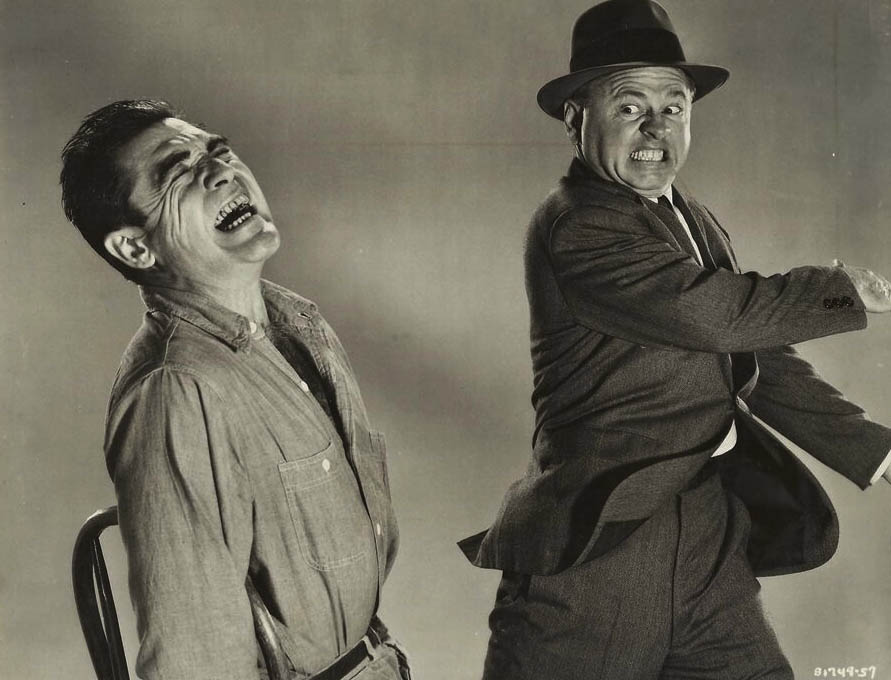
THE BIG OPERATOR (1959) --- Mickey Rooney could give great performances in repose. Let the film be rag-tag, Mick never missed. By 1959, he was shuttling between leads for B’s and support in A’s. Attitude may have held him down, as Rooney had habit of sacking agents and biting hands that fed him. Deep-resenting how he was treated since Number One time was passed, Rooney saw solace in playing hard-bark heavies where he’d push around even ones that dwarf him like Steve Cochran and Ray Danton. Conductor of twisted symphony that is The Big Operator was Albert Zugsmith, of whom it was said no one was so penurious or given so to sludge. But … if there were no Zuggy, there would likely be no Touch of Evil, or The Incredible Shrinking Man, so take medicine that is The Big Operator and like it. Any film where Steve Cochran is happy wed to Mamie Van Doren (their kid is Jay North) ranks high among my souvenirs. Cast in support can only be called inspired … where does one even begin? Mel Torme, aforesaid Danton, Leo Gordon, Jim Backus, Charles Chaplin Jr., Ray Anthony, and VAMPIRA --- caps necessary because there was but one Vampira (unless you factor in Carrol Borland or Elvira).


She is billed too as Vampira, not Maila Nurmi, and better still, plays a beatnik. Jackie Coogan is present, credited too as Dialogue Coach, and who could have brought to that job such range of experience? Coogan saw much in his life, too much to speak of for interviews perhaps, an infant of tawdriest tank stops and bad influences from parents on down. GPS addressed Jack before in terms of being cheated out of millions, lynch mob presence, and marriage to Betty Grable (what she learned from him). Most movies will assure you that unions are on the square, but Zugsmith apparently got no such directive. Rooney’s brotherhood appears to be rotten from the top down. Had Zugsmith been having union trouble? The Big Operator was distributed by MGM, done independent by Zugsmith for negative cost of $537K, scope black-and-white and on L.A. streets or the Metro backlot where needed. There came but $319K in domestic rentals, $295K foreign. Final loss was $312K. The Big Operator plus others Zugsmith did for Metro release reverted to him, all gone quick to TV. Olive has a Blu-Ray of fine quality.


BLACK ANGEL (1946) --- Universal did class mysteries during the 40’s to invite better bookings and placement at top of bills their unaccustomed place. Toward that came gifted directors like Robert Siodmak, writers to climb hill out of pulp origin, and casts to supply conviction if not glamour. Phantom Lady, then The Suspect and Scarlet Street, proved it could be done, and to a public’s liking. These had Siodmak or Fritz Lang as signatories, prior associates of Hitchcock on hand (Joan Harrison a producer), plus stories strung on crime and guilt to ensnare folks like you/me who schlep onto harm’s path. One could cast an Alan Curtis, Dan Duryea, or at further extreme Charles Laughton or Edward G. Robinson and realize how easy it was for common clay to trip up and into a gas chamber. Black Angel has a nonentity we barely meet (John Bennett) charged right off with murder, and a wife ticking down to his scheduled execution, a “good girl” (June Vincent) who won’t mind using born loser Dan Duryea to find the real killer.


Wrinkle here is that Duryea might be the killer, if unaware of the fact, complications the handiwork of source author Cornell Woolrich, who for many is sufficient reason to look at Black Angel. I like how Vincent strings Duryea along, being handsy with him and seeming to promise he’ll be successor to the husband however the case turns out, Duryea this time lovelorn rather than a cruel exploiter of women. This actor was clearly floated here for something other than villainy or weaklings. Roy William Neill directs Black Angel, having graduated from the Sherlock Holmes series, his future seeming assured for noir and like subjects had not death claimed him in 12/46 at age fifty-nine. Universal constructs a lavish nightclub set and stages most of action around it, a boost to production values and off-set to perception that Black Angel is more of “B” same. Universal really had to earn whatever first-run placement they got, offerings from them vetted thorough before “A” dates were bestowed. Black Angel was released as a nice standard DVD, then more recently a Blu-Ray from Kino.


Tuesday, September 02, 2008


Warners and The James Dean Cult --- Part Two


It took Elvis Presley to wash away tears we’d shed over the loss of James Dean. Love Me Tender began the healing with saturation bookings in November 1956. Unlike Warners’ slow rollout of Giant, Elvis and company surged in with a (for Fox) record of five hundred prints to make sure everyone wanting Presley got him then and there. Love Me Tender came into many theatres right behind Giant, and lines announced youth’s embrace of a new teen idol. Should 1956 Hollywood go forward with that proposed Dean biopic, why not let Elvis play Jimmy? It was considered, perhaps not seriously, but few concepts flew higher than a newly minted sensation enacting another who had lately departed. Presley was a known Dean acolyte, but too fresh and untried to haul burdens of a posthumous image darkening with sad and sadder stories of how life and people had let Jimmy down. "Kansas City filmmaker" Robert Altman (so identified by the trades) went in search of loner Dean with scriptwriting George George in a spec documentary project they’d begun in November 1956. The James Dean Story was (so far) sixty-five minutes of profile and interviews with Jim’s relatives back in Indiana. Months passed with bankrolls depleted (by $20,000) as Altman and George shopped their project around for distribution. Would the Dean cult last as long as these two would take to set up a deal? TV networks were better able to strike while Dean irons simmered. He’s hotter than anybody alive!, said one NBC exec. That web was repeating a Robert Montgomery Presents that Dean had done with Ed Begley and Dorothy Gish called Harvest, while CBS was giving third broadcast go round to The Unlighted Road, a Playhouse Of The Stars featuring Dean. CBS also reran I’m A Fool, with Natalie Wood among Jim’s support. All these were scheduled during a Dean-heavy month of November when old anthology product with the actor regularly Trendex-trounced competing stations. All three shows exploited the Dean legend for frankly commercial purposes, said TIME, but as any JD footage was so many ribbons of gold, how could you blame networks for mining them? Warners meanwhile noted awards and nominations still coming Dean’s way. Golden Globe "Henriettas" went to he and Kim Novak in March 1957, while the Academy tabbed Jimmy among possible Best Actors for his work in Giant. It was time for WB to get serious about their backlog. No more limited engagements and catch-as-catch-can bookings for East Of Eden and Rebel Without A Cause. In response to the overwhelming demand, said advertising, both would be reissued with a new campaign for nationwide combo runs in 1957. Let kids pose with Dean standee. Tie in with local photog or use personal camera, said new pressbooks, Offer free pictures between five and seven PM. Still taboo was mention of the actor’s death in publicity kits. A psychologist or member of the clergy could give talks at the theatre on the meaning of James Dean to teenagers was closest they’d come to dealing with the cult and its cultural ramifications (but what right-minded showman would furnish a lectern for such?). Flip-books of the chicken run sequence from Rebel Without A Cause were made available to whet darker patron appetites, while taglines trumpeted the Academy nomination for Giant. Eden/Rebel played percentage and fattened many an exhibitor’s purse, in addition to enabling recent Dean converts to catch up with his limited output (not unlike later James Bond fans turned on by Goldfinger acquainting themselves with earlier 007 via the Summer 1965 encore of Dr. No with From Russia With Love).


As time passed, Dean cultism was eased toward the margins. Kids were ready to ease up and have a little fun with it. Enter the spook showman. If fans were so anxious to bring Jimmy back, well, that was simple enough. New York’s Jefferson Theatre offered "The Materialization Of James Dean" as part of a stage show wherein JD shared residency with Count Dracula in a so-called "House Of The Living Dead". So much for respectful tribute. The press reported a teen girl found slumped and writhing in her seat in the wake of shock and convulsions sustained during the show’s climax. Two male rowdies had been fighting in an adjacent aisle. One of them kicked her in the head while the lights were out. All this followed said materialization, which consisted wholly of the showing of an illuminated photograph of Dean’s face during one of innumerable blackouts. Hooliganism was an increasing problem as youth patrons emulated anti-social behavior they observed on screens playing The Blackboard Jungle, American-International delinquency pics, and yes, Rebel Without A Cause. Increasingly raucous spook rallies did little to restore calm. A dozen uniformed NYC police were needed on this occasion to quell effects of electric shocks, face-slapping from invisible hands, and a roving gorilla named Gargantua. Ushers with luminous painted features chased up, down, and between rows as screen attraction Abbott and Costello Meet The Mummy unspooled. Others were poised meanwhile to exploit gothic possibilities of ongoing Dean fascination. Faded from airwaves Maila Nurmi (aka Vampira) saw profit potential in one-time association she’d had with JD. They’d been friends, maybe more, she implied. Anyhow, the Dean factor fleshed out an act gone stale on fading memories of Vampira’s single year hit doing Los Angeles television, and she’d make the most of it. Maila claimed to be in communication with Dean through the veil and not adverse to on-stage discussions regarding the black magic curse she’d placed on the departed actor for having spurned her. Jimmy’s fans called out to me: "Did you kill him?" I didn’t answer them. The Vampira act was useful adjunct to shilling she’d done up and down the California coast during April 1957 for United Artists’s double chiller bill of Voodoo Island and Pharoah’s Curse (here she’s posed with Bel-Air producer Ed Zabel and a Fox West Coast Theatres manager). The restless spirit of James Dean was now inexorably linked with carny-inspired freak fairs and low-budget horror-thons. All this as someone else picked up the Academy Award for which Dean had been nominated.


Sensing perhaps a need to dignify, if not honor, Dean’s memory, Warners lent support to an (at last) worthy gesture in his name. 1956 had been recorded as California’s blackest year from the standpoint of traffic deaths. An exhibitor who was also Public Information Director for the California Traffic Safety Foundation submitted a script to WB for a short highlighting the problem. Would they consider making a public service film with Cheyenne’s Clint Walker as on-screen host? Television division exec William Orr volunteered studio resources for a subject which would ultimately go to National Screen for distribution. 150 California first-runs got it free for a week beginning June 26, 1957, with drive-ins and other venues to follow after the July 4 holiday (host Walker is shown here taking delivery of a print). Within the week, another Presley feature opened. Loving You would further chip away at Dean’s youth idol preeminence. An Elvis craze was sweeping the country, and it was bigger than Jim’s ever was. Jailhouse Rock would be along in October with the promise of many more to come. Warners had meanwhile dragged feet committing to distribution for Altman and George’s documentary. The James Dean Story was finally announced for WB release in June 1957, but they’d first need to polish it up with industry sheen missing from the barely over an hour’s content submitted by the Kansas City filmmakers. A musical score was added and rocker of the moment Tommy Sands sang a theme tune (Let Me Be Loved) penned by veterans Jay Livingston and Ray Evans. A heavy score by Leith Stevens and doom-laden narration by actor Martin Gabel emphasized downer aspects of Dean’s life, as though early death were just another sad chapter laid atop those many preceding it. Warners fleshed out the running time to 83 minutes with screen tests Dean had made for East Of Eden and at last permitted public scrutiny of that road safety spot with Gig Young intended for Warner Brothers Presents. There would be an August 13, 1957 (near) hometown premiere for The James Dean Story at the Paramount Theatre (shown here) in Marion, Indiana. The state governor and Indiana’s US senator were in attendance. Eveready Nick Adams flew in from Hollywood and opening festivities were coordinated with the annual County Fair in full swing. A huge night parade featured school bands, saddle clubs, girl and boy scouts, plus the Strategic Air Command in flight. Nick Adams, then reigning Miss Fairmount, plus other dignitaries, visited Dean’s old high school and his grave, with a barbecue for all capping festivities at the Winslow Farm where Jimmy had lived with his aunt and uncle. A twelve foot monument unveiled for the premiere may or may not still be standing (anyone know?), though WB presumably stood good on its pledge to donate opening proceeds to a Fairmount school for aspiring actors.


Seventy-three Indiana theatres played The James Dean Story after its regional premiere. Then business fell off. Hindsight suggests Warners waited too long to get the documentary out. New York’s double feature playdate at their Paramount Theatre found The James Dean Story supporting The Black Scorpion, while other situations put it in second position behind A Face In The Crowd (as shown here). TIME’s review was expectedly dismissive. It exploits a ghoulish clamor for Dean’s voice to echo once more from the grave, but it does so with a mortician’s lugubrious solicitude for the living. Soft domestic rentals of $335,000 for The James Dean Story suggested a cult having run its course. Warner’s modest pickup cost of $50,000 assured they’d get a profit, and that in the end amounted to $200,000. This would be the third and last James Dean released since his death. There was nothing left to sell. By mid-1958, WB had Jimmy’s dramatic successor launched in a western slated originally for Dean. The Left-Handed Gun is one of those where you can shut your eyes or ears and summon up JD even as Paul Newman emotes the title role.  Newman seems to me to have had much the (early) career Dean would have enjoyed if not for 9/30/55. The two were screen-tested together in 1954 for East Of Eden, the footage still extant. Would Warners have given Newman such late 50’s opportunities with Dean still living? The sad dispersal of East Of Eden and Rebel Without A Cause to televised oblivion happened in Summer, 1960. Both were dumped into late shows and ninety-minute berths nationwide. For these two pictures carefully composed for Cinemascope projection, the loss was especially ruinous. It would be years before either would be seen properly by audiences discovering Dean. Giant was held back for theatrical reissues. The first of these in 1963 played Dean’s participation way down. The trailer spotted him fleetingly and near unrecognizable in a scene where he's covered with oil. That seven years later campaign was all about Liz and Rock (their names towering high in previews). Why promote Dean and give emphasis to the fact you’re peddling an old movie? The cult of yore was surely a spent thing by 1963. It would echo if faintly when Warners’ 1970 reissue trailer appeared. By then, a culture of disaffected youth had thrown its net over most filmland product, as witness narration: The star who became a legend, who spoke for all the restless young as no one has before or since (domestic rental take for Giant that year was $539,000). Marketing of Giant since has been given over altogether to Dean’s image. Kino’s 1982 reissue featured him alone on its one-sheet (shown here), while Warners DVD distribution finds Giant absorbed into a box set tribute to the actor.


Monday, April 25, 2022

Film Noir #6


 Noir: Backfire, Basic Instinct, and The Beat Generation


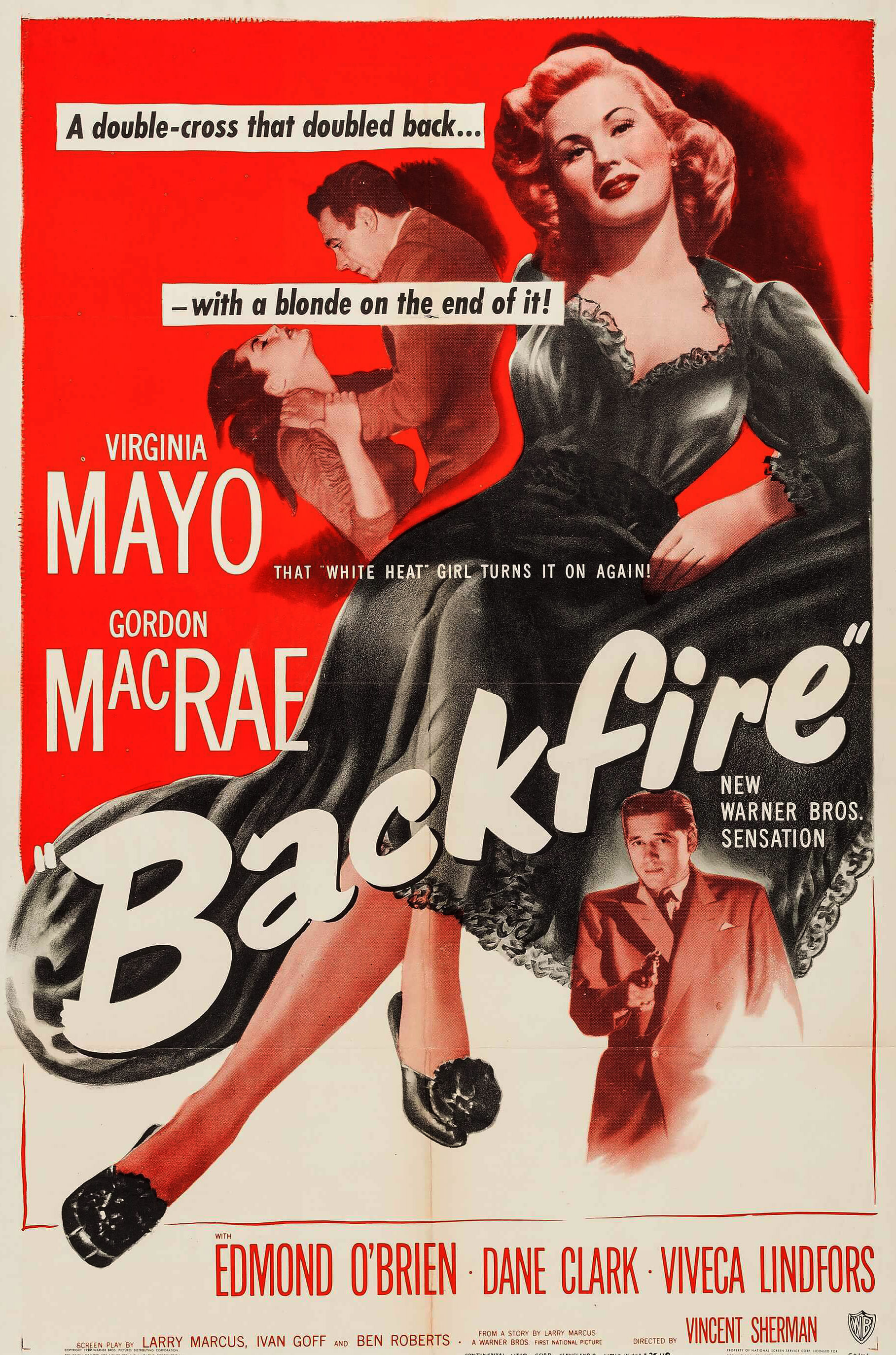
BACKFIRE (1950) --- A moment in a most ordinary film noir can make the look-in worthwhile, like where a taxi pulls up to actual locale that was the Fremont Hotel in long gone section of L.A. called Bunker Hill. Its run-down remnant dressed a score of noirs through the 40’s and 50’s, a few even unto the 60’s, nary a trace left now, except on surviving film. Backfire was remnant too, of Warner Bros. coming off a studio era where money got expended on even weak pictures like this, director Vincent Sherman implored to make it even though the script was lifeless, “Do it for the team” an argument too often made. How enervating to take jobs you and “the team” know will turn out poor. “Confused and pointless,” said Sherman of Backfire, the director’s bargain with brass giving him The Hasty Heart next if he but held nose to finish Backfire.


Knowing this, why do I sit and watch Backfire today, let alone enjoy it? First is atmosphere 1950 took for granted, like Bunker Hill and other actuals that were photographed. There is story of sorts, confused yes, spread like chicken litter over what seems longer than 91 minutes. Gordon MacRae normally sang, not here. He showed up in the eighties to perform at our little community college. How might he have reacted if I went backstage to ask about Backfire? The “surprise” heavy is plain from the moment we meet him, as why would Dane Clark be in an otherwise puny part? Backfire was not of the Warner B unit, even as it skirts an edge of same. Where narrative is weak enough, at least give a happy finish so we won’t regret coming. Backfire has that in unlikely spades. One critic of the day said seeing it was like a visit to an old friend that is pleasant even though you know he will tell the same stories you’ve heard so often before. Did Backfire please for being so utterly routine? Being of “noir” category won’t excuse everything. Another coaster, I fear. How long before tabletop space runs out?


BASIC INSTINCT (1992) --- Much better than it seemed when new in 1992, and I wondered why. Maybe because shock value, like all shock value, must dissipate, especially where imitated or driven into clown corner because now we’re embarrassed for having once been shocked or impressed by it. Basic Instinct was of a piece with other detective yarns before and (especially) after. As to being noir, fair enough, even as “erotic thriller” was a label affixed at the time, acknowledged then as fresh, and invitation for others to emulate until parodies became greater in number than thrillers erotic or not. Basic Instinct had the advantage of lush production, a moody score, nods back to noir but stylish to point of abstraction, joy in which does not fade with passage of time. There is Frisco setting, welcome as it had not been since Bullitt and Vertigo, a reliable noir background from Dark Passage and The Maltese Falcon onward. Basic Instinct makes the now blighted city look inviting again, perhaps a last time it would be so for movies. Director Paul Verhoeven gave, still gives, unique energy to whatever he turns hand to. If “erotic thriller” was indeed a fresh invention, then it was his invention, plus writer, camera assist he got. Let the yarn confuse for it is always engaging to look at.


Central image of the icepick dominates … ill-advised sex leads inevitably to its application. The instrument even lies still beneath beds these characters occupy, a visual cue that they are doomed for having coupled. Movies punish for promiscuity as they always have. Basic Instinct makes sex easy for the getting, but waiters always bring the check, and Verhoeven’s are high. Explicit talk pushed envelopes for probably a last time here. Nothing much would surprise us after this. Intensity amuses now in a weren’t the nineties silly way, OK if look-back on the era is fond (surely for some it is), with quarters dropped in pay phones or analogish computers giving nostalgic glow. Casting gets unexpected hypo, funny man “Newman” (not meant to be) an interrogator for Sharon Stone’s R-earning Q&A, the moment that sold most tickets in 1992. The story by hot-then writer Joe Eszterhas has more twists than a barrel of snakes. A third less of these would make keeping up easier. I wondered at the time who the killer really was. I sort of still do. Basic Instinct has dynamism and hypnotic quality to wear well for those who know how 90’s games were played and still are amused by them. I see where Sharon Stone did a Basic Instinct 2 in 2006, which must have been agony for her and whoever watched. Seeing Stone in the trailer reminded me of Mae West. Fickle modern stardom, fleet then, the more so in a streaming now.


THE BEAT GENERATION (1959) --- Best of the Zugsmiths, which I declare not with cocked eyebrow, being surprised by how straight it plays, except when it wasn’t (beatnik stuff). Beats get a hammering, cast from Steve Cochran to heavy Ray Danton calling them phony and “pseudo-intellectual,” sort of a preview of how mainstreamers came to disdain hippies, except the hippies were more useful to a mainstream, at least where consumerism co-opted them, or pop music celebrated their otherness. The Beat Generation used a barely understood 50’s movement for what exploitation might be got, the Beats less about sex or attendant action than poseur poetry to slow violence the show was sold on. Beats made soft Establishment targets, Maynard G. Krebbs to exemplify them weekly on the Dobie Gillis show. For Zugsmith, they were mere branch to hang merchandising upon. He had an eye for casting, a barometer it seemed for how cult taste would run twenty and more years later.


Best of Beats is Vampira making with words pointless and sans rhyme, but her with a phone directory is OK in fan quarters. Vampira nee Nurmi was a sub-culture all her own. Steve Cochran gives a complex and fully committed performance, and I mean it, his character put through wringers both work and home-hearth generated (they merge when wife Fay Spain is victimized by sadist Danton). Spain is also fine. Players not appreciated enough could rise to occasion where material merited their fullest participation, and we can regret they didn’t get further and better opportunity to show wares. The Beat Generation was co-written by Richard Matheson, who was no one’s idea of hack. This was clearly a piece he put his heart to, however it was tempered by exploit elements and salacious selling. Irish McCalla is Jackie Coogan’s devoted domestic partner (insert exclamation here). She’s good too. So is Mamie Van Doren as a mark for faux rapist Jim Mitchum, a tool for devilish Danton except Jim falls for Mamie and can’t go through with it. Van Doren was limited by her lush looks, but I never saw her bad in a performance.


Did these players get together at Beat Generation’s start and pledge to let’s give it our best, as if this were a real movie that we might earn statuettes for. Pity they weren’t so rewarded, especially Steve. I speak as a fan of course. And who invited Charles Chaplin Jr. (as “Lover Boy”)? Impression is these people were to some extent hangers-on or pals with Zugsmith. If so, he sure picked abstract company. Norm Grabowski (annoying), Maxie Rosenbloom (more so), poor and played out Paul Cavanagh, who I dearly love. Then William Schallert with an uncredited bit that would never, ever pass under today’s Code. Add these imperishables to a story tense as taut wire. Was Ray Danton at least part-way as evil as characters he portrayed, or maybe being beset with an evil face made him do evil things, like Karloff’s “Bateman” in The Raven. My secret is out then … I adore The Beat Generation and am thrilled there is a Blu-Ray to splay across wide screens.


Tuesday, October 16, 2007


Funny Face and Fashion At Fifty


People are aware again of Funny Face not so much as a result of Paramount’s recent reissue of the DVD as its extended appearance in a widely shown GAP commercial in which Audrey Hepburn dances on behalf of the newly revived skinny black pant. Thanks to digital wizardry, something old looks new again, as Hepburn defines fashion for women several generations behind her own. Ask most college girls and they’ll identify this actress first among vintage stars otherwise unknown to them. Marilyn Monroe’s popular too, but in more of a campy, retro way. Audrey’s the one they’d like to be. Her appeal is of a right now sort. The movies can date, but she somehow doesn’t. Young women speak of the ick factor when they observe her elderly leading men, but they’d never hold that against Hepburn. She is a role model that transcends an era, and for Funny Face’s social/political misdeeds, she will be forgiven. Read, if you don’t already, imdb comments on this and other classic films. These are fans and casual viewers who write from the heart as opposed to wearisome critics and analysts who have lost perspective on what really makes these pleasers tick. The older Funny Face gets, the more mixed feelings it will arouse; for three things it gets wrong, there will be one to redeem the lot, this a musical filled with moments still hypnotic and evocative of the fifties in ways few others are.


The fashion industry takes it on the chin in Funny Face. Satire of its disordered personalities replaces efficiency shown by magazine executives in 1944’s Cover Girl. Consider Otto Kruger as Rita Hayworth’s mentor in that earlier musical. Competent and avuncular, you might find him chairing the board of directors at a steel mill or auto manufacturer. He’s assisted by models well adjusted and competent. Anita Colby was credited as technical advisor on Cover Girl. She and real life top mannequin Jinx Falkenburg are active participants in the fictional Vanity magazine’s search for a new face. Models in Funny Face don’t speak other than to suggest utter vacuity. Dovima is said to have been the highest paid cover girl in Manhattan during the fifties. Her character looks like Vampira and does little credit to a presumably glamorous profession. So when did notions of freaks and eccentrics staffing Vogue come into vogue? Was the post-war "New Look" responsible for jaundiced views of fashion and its arbiters? Kay Thompson plays martinet and runs roughshod over robotic girl assistants neither modeling nor typing for her. Just what is their function? Cover Girl reflects a healthier environment for the creation of beauty. Funny Face suggests poverty of ideas and a last possible resort that brings Audrey Hepburn into its decaying fashion orbit. She’s right to run away, and fast.


Fictional "Vanity" Magazine Editor Otto Kruger with Fashion Find Hayworth


Real-Life Model "Dovima" with Astaire


You must come from the stone age, says Audrey to Fred, and if appearance (in comparison to her) is any indication, indeed he must. These two together, let alone romantically linked, is incredulity itself. His talent was undiminished, but Astaire’s wardrobe looks fey, as do fussy gestures unbecoming to romantic partnership for a twenty-seven-year-old lead lady. Had Kay Thompson’s role been more attractively conceived (and cast), maybe this character could have been paired with Astaire for a romantic fade. As it is, Thompson was herself nine years his junior. Fred’s game enough for a kiss when he and Hepburn first meet, though it’s startling still to see a figure more appropriately paternal suddenly moving in for the smooch. Astaire had three show-biz decades on Hepburn when they made this. He jumped at working with her, as did she with him. You Make Me Feel So Young might well have been a theme song for the dancing veteran by this time down to his last musicals. I’m doubting he argued when they told him she’d get first billing. Debates over wizened leading men are ongoing among Audrey Hepburn’s fans, so who instigated so many mismatches? She was at least complicit. It was as though this actress was on an endless quest for onscreen father figures. Where before they were clever and individual clothing accessories, Astaire’s white socks, ascots, and ribbon tied belts now seem old man accoutrements. When Audrey in a wedding gown dances with Fred in cardigan buttoned once in the middle, you wonder if she’ll waltz him into assisted living. It was hard letting go of Astaire as a romantic partner on ballroom floors, too many fond memories and much reluctance to cutting him loose. Possible successors? There simply were none. If Hepburn could not dance with Astaire, why make Funny Face at all? I’ve tried imagining alternate casting. Cyd Charisse as Maggie Prescott, with she and Fred in fadeout clinch? Rita Hayworth would have worked. Ginger Rogers sounds ideal, but where would that leave Hepburn? Would she dance with Anthony Perkins, John Kerr, John Derek? There are good reasons why she gravitated to older leading men. The foregoing are three of them. Commercial realities in 1957 dictated that Astaire dance with a younger woman. But for their cross-generational teaming, Funny Face with its $3.164 million negative cost would never have seen the light of day.


Empathicalism was a word invented for the purpose of sending up intellectual phonies and beat generation predators that get in the way of Audrey Hepburn’s modeling career in Funny Face. They sustain a worse drubbing than the fashion industry itself. Others have pointed out an anti-intellectual current running through this musical. Well, the fact it is a musical automatically places Funny Face at odds with any sort of sedentary or cerebral expression. Thinkers here are subdued and seldom on their feet, making them natural opponents to Fred Astaire’s philosophy of movement and physicality. The audience enjoys his ridiculing them because it is Fred who supplies the entertainment while these leeches cadge drinks off impressionable Audrey. The issue for modern viewers comes when Astaire extends his commentary to include Hepburn’s character. He’s about as interested in your intellect as I am!, he shouts, when they argue over her apparent dalliance with French philosopher Flostre (ultimately revealed as a rotter and would-be seducer). The fact that Audrey reads books automatically makes her a figure of fun. Oh, one of those, Fred says. Astaire and Kay Thompson perform a wicked beatnik spoof to set things right, but did it? I wonder if 1957 audiences weren’t drifting toward an embrace of the longhair’s mindset, with increasingly educated post-war women becoming more resistant to Astaire’s seeming condescension toward them. It’s surely an aspect of Funny Face that gets the goat of femme viewers today. If not for all the dancing and fashion trappings, I wonder if this movie might have fallen off their popularity charts altogether, for much of its social politics is decidedly incorrect.


Suzy Parker with Cary Grant in Kiss Them for Me and Gary Cooper in Ten North Frederick


Jinx Falkenburg Was at Her Peak of Modeling Fame for 1944 and Cover Girl


What if Audrey Hepburn had taken up modeling in the wake of Funny Face? What kind of revenue could she have generated? The top cover girl of that period was Suzy Parker. She appears in the Think Pink montage. Parker is said to have been the first model to receive one hundred dollars a day (but wait, some sources credit Anita Colby with having accomplished that in the forties). The aforementioned Dovima made her way up to seventy-five per day by the late fifties. It was possible to parlay posing into a hundred grand a year, as Parker eventually did. Of course, these were so many nickels and dimes to movie stars with Audrey Hepburn’s earning power, but what price might she have commanded had Hepburn divided her post-Funny Face working hours between soundstage and runway? You could say that (most) movie stars were really just glorified models to begin with, but look what happened when members of the latter sorority tried their hands at acting. Suzy Parker was Fox’s effort toward animating beautiful (but hitherto motionless) images. She co-starrred with Cary Grant in Kiss Them For Me (he was sufficiently infatuated as to do the screen tests with her) and Gary Cooper in Ten North Frederick. There was a showy part in The Best Of Everything, then mostly television. Today she’s a name primarily recalled by fashion buffs (Vanity Fair did an excellent recap of her life a few years ago). Parker is credited by some as having provided inspiration for Audrey Hepburn’s character in Funny Face. Models often provided offscreen cues for neophyte actresses. Anita Colby (known as The Face) taught style and deportment to David O. Selznick’s contract youngsters, including Jennifer Jones. She’s a poised and assured presence (as herself) in Cover Girl, though little acting followed. Jinx Falkenburg (above) came closest to stardom of a sort, making "B" musicals and comedies for Columbia before (and following) her appearance in Cover Girl.


Radio City Music Hall bookings were more about prestige than money. Out of eleven pictures that played there in 1957, six eventually went into the red. Four were musicals. Silk Stockings, The Pajama Game, and Les Girls followed Funny Face into Radio City that year. All but The Pajama Game took a loss. Numbers we have on Funny Face indicate a similar fate. The $3.164 million it cost was not recovered in domestic rentals of $2.235 million. Expensive mainstream releases out of major studios had to open in big ways. Trade advertising craved long lines in front of the Music Hall. Again, it was all about perception. No one wrote or published figures on high allowances Paramount had to make for Radio City’s house expense, astronomical at the least and all the more so by 1957. Funny Face would have to gross a certain (high) amount before film rental kicked in, and worse yet, Paramount was obliged to pay for most of the advertising. Getting into the Music Hall meant clearing the entire New York territory, including all five boroughs. Runs were exclusive there, and for four or more precious weeks, Radio City was the only place NYC audiences could see Funny Face, its massive house nut meanwhile eating up Paramount’s returns. Studio musicals were beginning to look like elephants marching toward the ivory preserves. Faster profits were being realized off millions of kids dropping their allowance on saturation bookings of rock and roll features, most profitably those with Elvis Presley. Hal Wallis produced Loving You for Paramount release on a budget of $1.295 million, less than half the cost of Funny Face. Its domestic rentals of $3.3 million left little doubt as to directions in which musicals were headed. MGM’s Jailhouse Rock was marketed toward youngsters who could ride their bikes to neighborhood theatres. Opening week for this Elvis vehicle found it playing multiple engagements in most territories, including New York as shown here. Saturation made it possible for everyone to buy a ticket while the product was hot, and Jailhouse Rock, produced at a negative cost of $1.1 million, brought back $3.3 in domestic rentals and eventual profits of $1.6 million. Funny Face was caught between modest films like this and roadshow blockbusters that could take their time getting investments back. With the sixties coming on, stuck in the middle musicals were about to be squeezed out.
grbrpix@aol.com
  • December 2005
  • January 2006
  • February 2006
  • March 2006
  • April 2006
  • May 2006
  • June 2006
  • July 2006
  • August 2006
  • September 2006
  • October 2006
  • November 2006
  • December 2006
  • January 2007
  • February 2007
  • March 2007
  • April 2007
  • May 2007
  • June 2007
  • July 2007
  • August 2007
  • September 2007
  • October 2007
  • November 2007
  • December 2007
  • January 2008
  • February 2008
  • March 2008
  • April 2008
  • May 2008
  • June 2008
  • July 2008
  • August 2008
  • September 2008
  • October 2008
  • November 2008
  • December 2008
  • January 2009
  • February 2009
  • March 2009
  • April 2009
  • May 2009
  • June 2009
  • July 2009
  • August 2009
  • September 2009
  • October 2009
  • November 2009
  • December 2009
  • January 2010
  • February 2010
  • March 2010
  • April 2010
  • May 2010
  • June 2010
  • July 2010
  • August 2010
  • September 2010
  • October 2010
  • November 2010
  • December 2010
  • January 2011
  • February 2011
  • March 2011
  • April 2011
  • May 2011
  • June 2011
  • July 2011
  • August 2011
  • September 2011
  • October 2011
  • November 2011
  • December 2011
  • January 2012
  • February 2012
  • March 2012
  • April 2012
  • May 2012
  • June 2012
  • July 2012
  • August 2012
  • September 2012
  • October 2012
  • November 2012
  • December 2012
  • January 2013
  • February 2013
  • March 2013
  • April 2013
  • May 2013
  • June 2013
  • July 2013
  • August 2013
  • September 2013
  • October 2013
  • November 2013
  • December 2013
  • January 2014
  • February 2014
  • March 2014
  • April 2014
  • May 2014
  • June 2014
  • July 2014
  • August 2014
  • September 2014
  • October 2014
  • November 2014
  • December 2014
  • January 2015
  • February 2015
  • March 2015
  • April 2015
  • May 2015
  • June 2015
  • July 2015
  • August 2015
  • September 2015
  • October 2015
  • November 2015
  • December 2015
  • January 2016
  • February 2016
  • March 2016
  • April 2016
  • May 2016
  • June 2016
  • July 2016
  • August 2016
  • September 2016
  • October 2016
  • November 2016
  • December 2016
  • January 2017
  • February 2017
  • March 2017
  • April 2017
  • May 2017
  • June 2017
  • July 2017
  • August 2017
  • September 2017
  • October 2017
  • November 2017
  • December 2017
  • January 2018
  • February 2018
  • March 2018
  • April 2018
  • May 2018
  • June 2018
  • July 2018
  • August 2018
  • September 2018
  • October 2018
  • November 2018
  • December 2018
  • January 2019
  • February 2019
  • March 2019
  • April 2019
  • May 2019
  • June 2019
  • July 2019
  • August 2019
  • September 2019
  • October 2019
  • November 2019
  • December 2019
  • January 2020
  • February 2020
  • March 2020
  • April 2020
  • May 2020
  • June 2020
  • July 2020
  • August 2020
  • September 2020
  • October 2020
  • November 2020
  • December 2020
  • January 2021
  • February 2021
  • March 2021
  • April 2021
  • May 2021
  • June 2021
  • July 2021
  • August 2021
  • September 2021
  • October 2021
  • November 2021
  • December 2021
  • January 2022
  • February 2022
  • March 2022
  • April 2022
  • May 2022
  • June 2022
  • July 2022
  • August 2022
  • September 2022
  • October 2022
  • November 2022
  • December 2022
  • January 2023
  • February 2023
  • March 2023
  • April 2023
  • May 2023
  • June 2023
  • July 2023
  • August 2023
  • September 2023
  • October 2023
  • November 2023
  • December 2023
  • January 2024
  • February 2024
  • March 2024
  • April 2024
  • May 2024
  • June 2024
  • July 2024
  • August 2024
  • September 2024
  • October 2024
  • November 2024
  • December 2024
  • January 2025
  • February 2025
  • March 2025
  • April 2025
  • May 2025
  • June 2025
  • July 2025
  • August 2025
  • September 2025
  • October 2025
  • November 2025
  • December 2025
  • January 2026
  • February 2026
  • March 2026
  • April 2026
  • May 2026
  • June 2026
  • July 2026
  • August 2026
  • September 2026