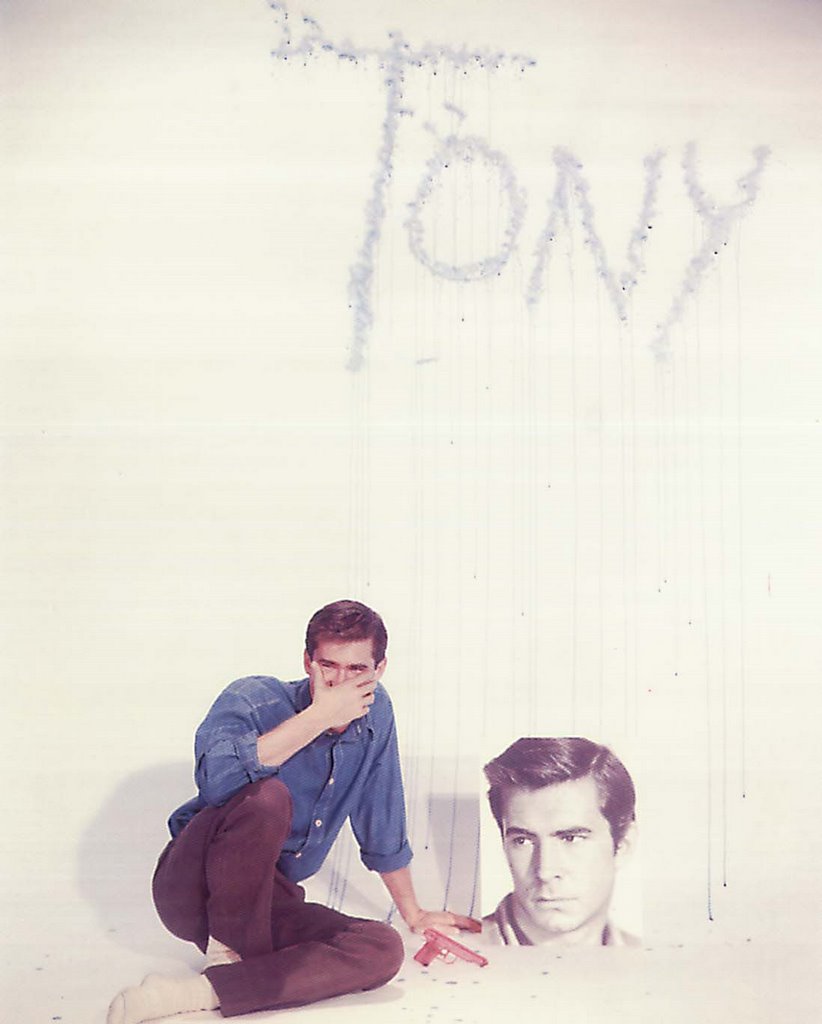
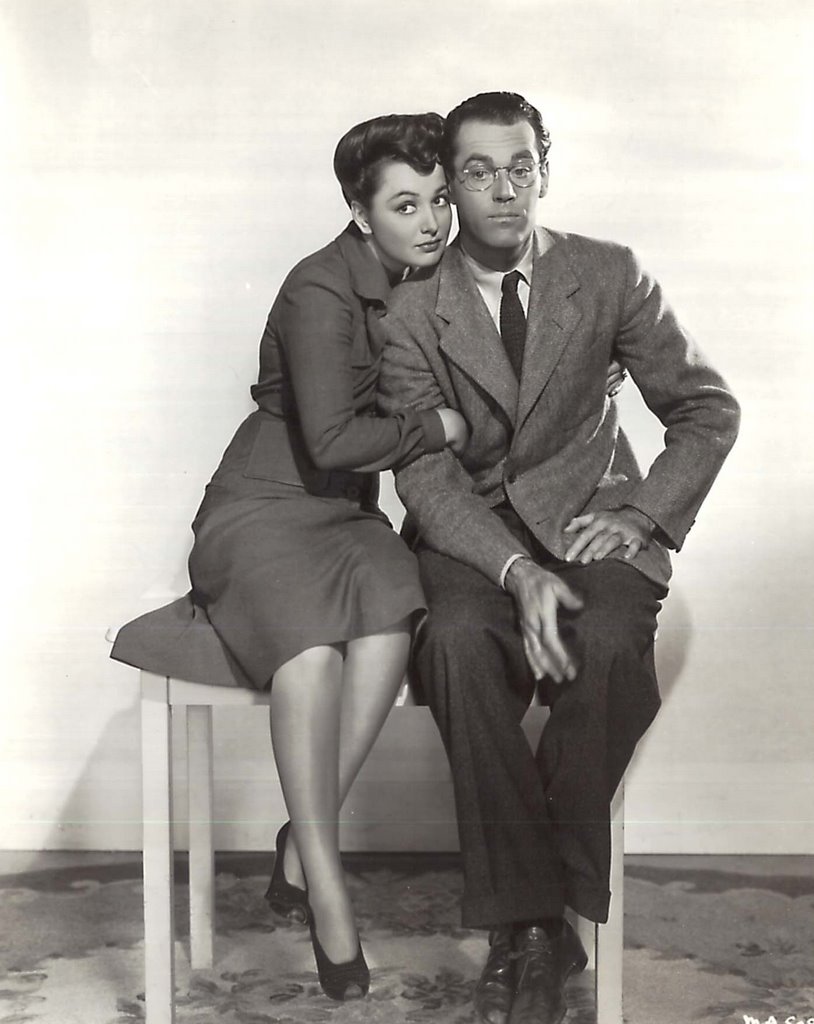
Isuspect Tony Perkins sat for this still a few months before Psychowas released. It was supposidly done at Paramount, and in 1960, so maybe it was part of the campaign for the Hitchcock film. If you looked at this image prior to Psycho’s release, you might think it was cute --- just another instance of a young star having fun with the conventions of Hollywood fan photography. If you came upon it in the Fall of 1960, after that never-to-be-forgotten summer of Psycho, your reading would have been very different. The only thing this picture needs is red paint instead of the gray. Otherwise, it’s Norman --- or better yet, Perkins as we would always think of him after that fateful role forever wiped out any possibility that he’d continue as a popular romantic lead. Tony’s even got his hand covering his face as though he’d just walked into that Bates Motel bathroom after Mother’s visit. The stark white background evokes memories of that little cell they’ve put him in at the end of Psycho. I think this is one creepy shot. It seems to suggest that Perkins himself is a little nuts. Was that the idea? Surely not. Actually, I’m not all that sure this was done for Psycho. It looks more like something Warners might have sanctioned for Tall Story, which was released a few months prior to the Hitchcock film, and featured Tony in one of his gawky, gulping boy parts (there’d be no more of those!). Either way, it sends out a very different message, for me at least, than the one that was no doubt intended.
There were Chaplin films that generated controversy when they were new. MonsieurVerdoux was pilloried by critics and ignored by the public in 1947, only to be embraced by audiences when revived briefly in 1964. All the Chaplinfeatures would be re-issued successfully in the wake of his Academy Award presentation in 1972, and they’ve remained in popular circulation since. The one most likely to stir debate today is The GoldRush, and that’s been a fairly recent phenomenon. It's the sole Chaplin feature that exists in two distinctly different versions (several of his silents were amended for re-issues, such as The Kid and The Circus, but only the recut versions are generally available now). The Gold Rush was released in 1925 to a triumphant boxoffice ($2.2 million in domestic rentals toward a worldwide $4.380), and was regarded as Chaplin’s masterpiece, an opinion with which he concurred. After the triumph of The Great Dictator ($5.0 million worldwide), the comedian mounted his first revival of a silent Chaplin film since the beginning of the talkie era. Others had circulated some of the short comedies with new soundtracks, but this would be a major feature re-issue under Chaplin’s own imprinteur, and since he owned the negative outright, he was free to make whatever adjustments to The Gold Rush he saw fit …
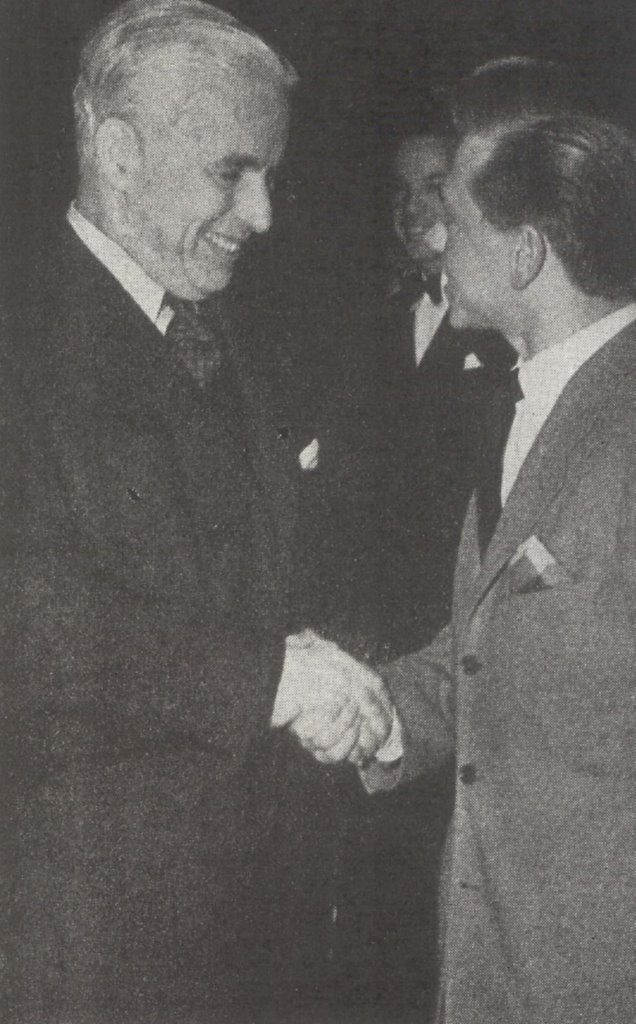
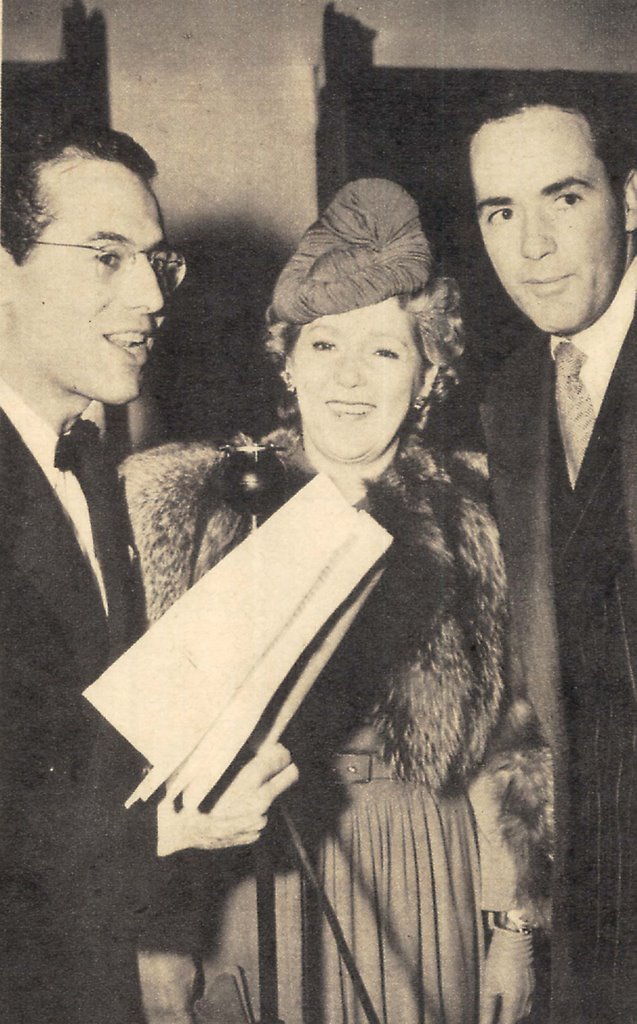
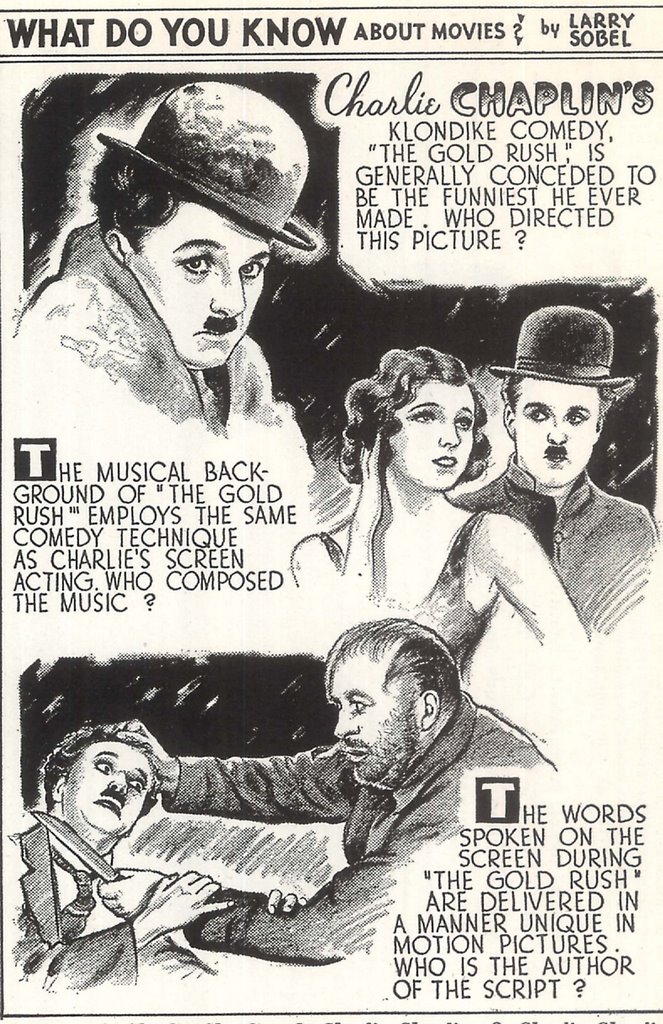
In a 1942 world of brash comedy and rat-a-tat verbal sparring (thanks as much to radio as movies), Charlie Chaplin had to be apprehensive over the welcome, or lack of one, he might receive for a seventeen-year old silent movie. There were but a few of these back incirculation over the last ten years. Three had beenRudolph Valentino starrers (The Sheik, Son Of The Sheik, and The Eagle) and one had brought back William S. Hart for a final prologue bow before the camera (Tumbleweeds). Most were handled by independent distributors as novelty shows --- curios for the amusement of women who’d once swooned over Rudy and kids who wondered what all the excitement had been about. Otherwise, silent films were buried deep, and none of the majors had any interest in them beyond scattered art house showings and an occasional print donated to the Museum Of Modern Art. Perhaps it was this uncertainty that inspired Chaplin to modernize The Gold Rush thusly --- Told To The Strains Of Music That Will Tug At YourHeart, Told Through Words That Will Convulse You With Laughter. Charlie’s own pocketbook was convulsed to the tune of $154,000 for the modernization, which included a new score composed by him, and spoken narration he elected to deliver in his own voice. United Artists would distribute on 60-40 terms for all exhibitors, "just like any other UA picture." The preview at Westwood’s Village Theatre was rapturous --- its close proximity to UCLA would bring an appreciative college-age audience. Chaplin himself appeared for the opening, along with an array of major industry names (here he is greeting Mickey Rooney) --- even Mary Pickford showed up with husband Buddy Rogers to launch the new Gold Rush. She, like Chaplin, still maintained an ownership interest in United Artists.
Critical reaction was overwhelmingly positive. James Agee placed it among the year's best films. No one seems to have kicked about that narration or the removal of intertitles. They probably felt, like Chaplin, that a little minor surgery would be needed to make this old film palatable for modern viewers. The idea of narration was not new. Paramount had released some short subjects made up of silent highlights which included an explanatory track, and Metro dished up old footage now and again for their comedic one-reelers. For better or worse, such were templates Chaplin had to go by, and his attempts to augment sight gags with verbal humor in The Gold Rush may well have been inspired by the likes of Pete Smith (perish any thought of that --- I find those things almost unbearable to watch). We may deplore Chaplin’s judgment today, but our hindsight pales before Charlie’s foresight, as his trip down memory lane took a lot of movie-goers with it (New York’s Globe Theatre played all-night on Saturdays to accommodate crowds). We can appreciate The Gold Rush today, not as a product of the silent era, but as a sampling of one great silent comedian trying to adapt his work to fulfill the expectations of a forties audience, and, as it turned out, succeeding very nicely. UA demonstrated its confidence with an all-out campaign. No silent movie revival had gotten this kind of push before. Note the powerhouse panel of 1942 comics paying laughing tribute to the master for a trade ad (and howabout thatAbbott and Costello telegram endorsement!). The Gold Rush re-issue ended up with $614,000 worldwide, an exceptional number for any oldie, let alone one without dialogue.
So just what’s it like to watch (and hear) Charlie Chaplin in the 1942 Gold Rush today? Nine out of ten fans would give its narrator the hook. Perhaps C.C. anticipated all those DVD audio commentaries we’d someday be assaulted by, and decided to get in his licks sixty-five years early. If you like sitting beside someone at the movies who will explain what you’re watching, while you’re watching it, then this is the Gold Rush for you. Otherwise, I’d recommend the original 1925 silent version, recently reconstructed by Kevin Brownlow and available on a Warners double-disc (with the 1942 edition). Your preference will probably depend on which you saw first. For me, it was an 8mm print of the original I got back in 1969, mounted on nine little reels, and dead mute other than classical recordings I played along with it. I am, therefore, an adherent of the 1925 version. On the other hand, there are Chaplin fans who will go to the mat for his re-issue, having seen it at an impressionable age and falling in love with it thus. It’s fortunate we can choose. The ideal would be to somehow marry the picture quality from 1942 --- with silent titles from 1925 --- to the Chaplin music from 1942, but without the Chaplin voice of 1942, and then stand back and shout, It’s Alive … Alive! Until that happy (but unlikely) day, we must make our election based on what’s available, and thankfully, both versions are.
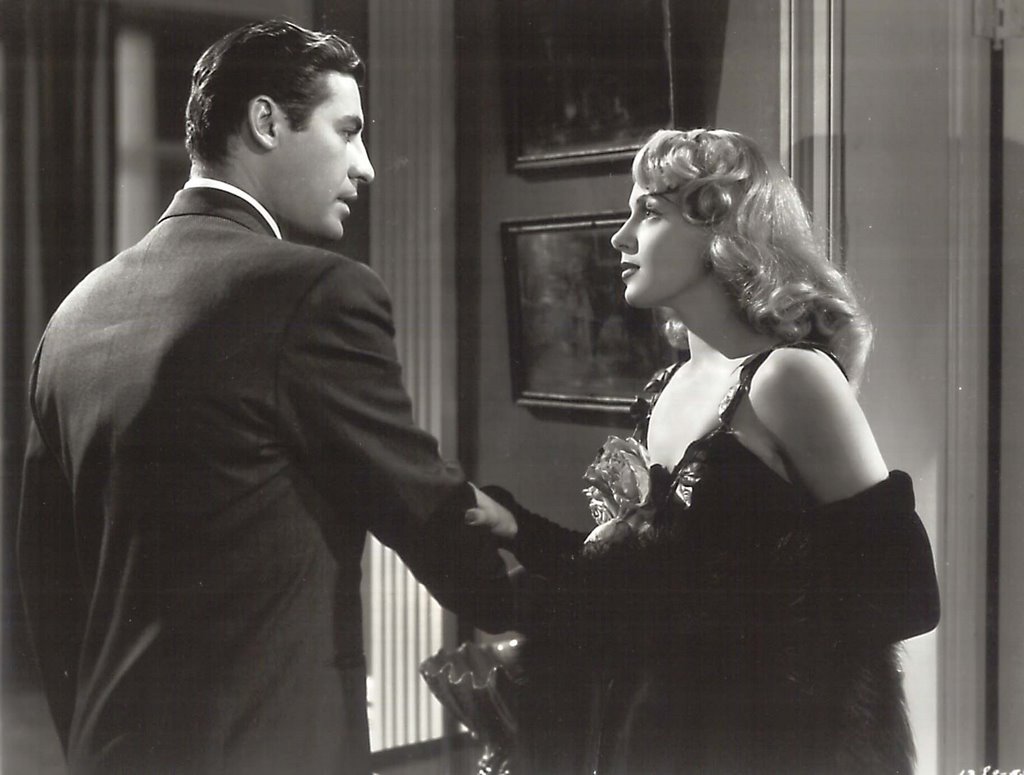
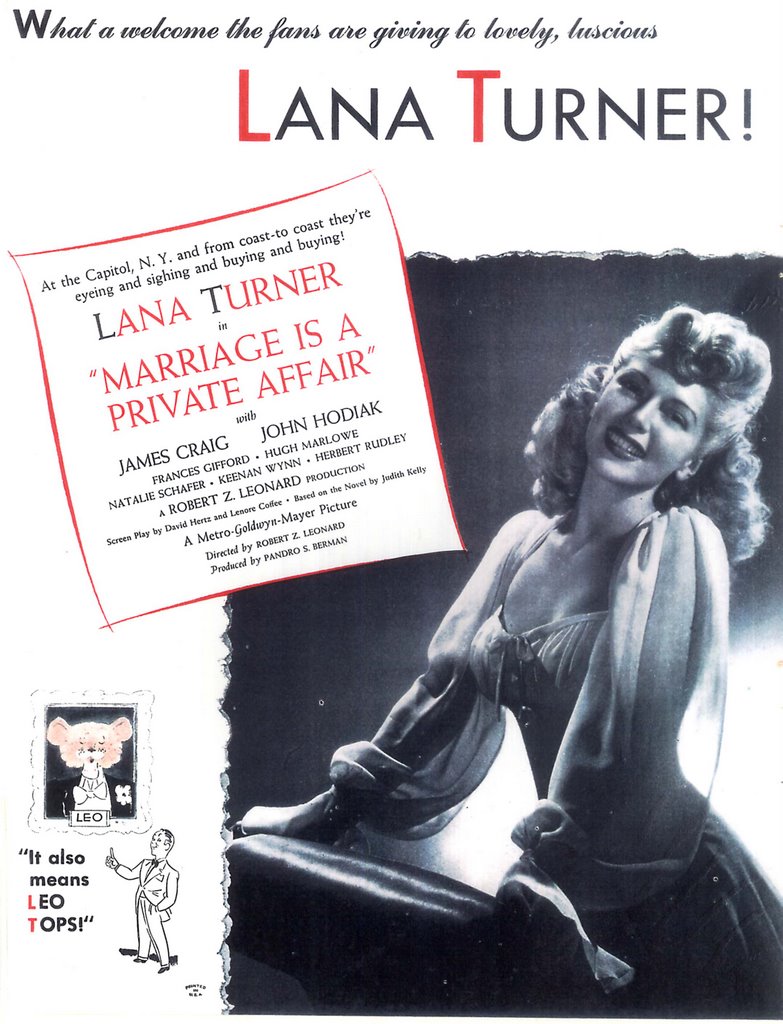
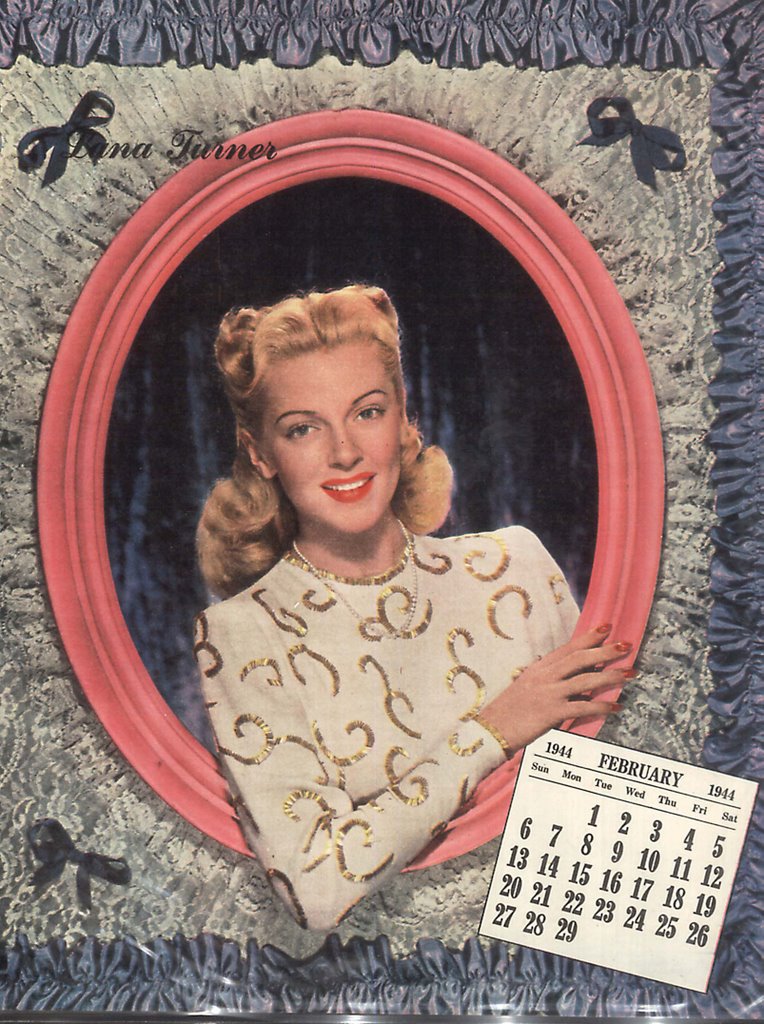
Lana-Thon Today Lana-Thon headquarters is over at Flickhead (HERE), and Ray has links to participating webpages, so by all means check that out. In the meantime --- what’s to say about Lana Turner? Unless you’re a fan, and their numbers aren’t likely to be on the increase, she maycome across as a less energized Marilyn Monroe --- ora latter-day de-clawed would-beHarlowsex kitten reigned in by the Code. Then why write about her? I can’t offer a definitive answer because I was born too late. Most of us were. The ones who could tell us all about Lana Turner and what she meant to her once wildly enthusiastic fan base are a dwindling lot of world war veterans --- the men who served and worshipped Lana, and the women who crowded her movies stateside and lived vicariously through her romances, both onscreen and off. It’s easy for our generation to regard her as a studio manufactured joke, for we never experienced the anxieties that a star like Lana was there to alleviate. She was comfort food with a brief shelf life, but like strawberries fresh from the market, she had an intoxicating flavor that just can’t be experienced so many years after the initial purchase, and a movie like Marriage Is A Private Affair can give but the barest hint of what it must have been like to taste Lana in her prime. She wouldcertainly make better pictures (The Postman Always Rings Twice, The Bad and The Beautiful, Imitation OfLife), but none that summon up her essential appeal like this one. That it’s so utterly forgotten today is no doubt due to the fact that Marriage Is A PrivateAffair exists purely as a Lana Turner vehicle, 116 minutes to luxuriate in her presence --- not enough for us, but plenty for moviegoers in 1944. In case you haven’t seen it on TCM, here’s the set-up. Lana’s a party girl with money who marries serviceman John Hodiak. Complications ensue. That’s pretty much it. The movie opens with an outsized wedding sequence that must have set many a second-shift Lockheed girl’s heart a-flutter, and the extended honeymoon idyll, which seems destined to run into 1945, provides the sort of vicarious you-are-there sensation that all movies strive for, and seldom attain. This is where we really have to admire the efficiency of the Dream Factory. That wedding night, staged as it was on the most patently artificial stage since Random Harvest, fulfilled the wartime yearnings of both sexes. Men in uniform could substitute themselves for John Hodiak (no problem there, since Hodiak was anything but an imposing presence, and even the lowliest G.I. could imagine supplanting him), while women could anticipate a future that might include a romantic wedding trip where money is seemingly no object and no one has to worry about getting back to work. Reality never intrudes upon Lana’s world. That all seems dated and foolish to us now, but it was more than satisfying then. Marriage Is A Private Affair premiered with 98 prints on military camps and bases in September 1944. Lana Turner appeared with the show in Naples, Italy, and provided a filmed prologue in which she greeted soldier audiences from the screen and delivered a "chin-up" message. This was her first picture in eleven months (maternity leave) and the anticipation was intense. Marriage Is A Private Affair went on to deliver $1.9 million in domestic rentals against a negative cost of $1.5, with $715,000 in foreign rentals. The final profit was $237,000. I’m told that Marriage Is A Private Affair was Tennessee William’s first Hollywood writing assignment. He contributed some dialogue. Actually, the writing isn’t so bad. A best selling novel was credited as the source, but the Breen Office had forced a near-total abandonment of that, being as how it dealt rather explicitly with adultery and featured an abortion among the key plot devices. Books like these were as disposable then as they are forgotten now, and yet I did find multiple copies of the novel for sale at AbeBooks on line, so a lot of them must be turning up in attics and estate auctions (it was also serialized in Ladies Home Journal). Is there anything so discredited today as a movie adaptation of a best-selling novel that no one remembers? One noteworthy thing about Marriage Is A Private Affair is the supporting cast. This was the first time Lana Turner had carried a picture on her own --- before, there had been at least one co-star of equal stature --- but this time, she’s backed up by an interesting group of young contract hopefuls, and that in itself makes this picture well worth seeing. James Craig is Hodiak’s rival for her affections. He’s mustachioed andsmirked out as if doubling for now-in-the-serviceClark Gable. It’s one of the most slavishly imitative performances you’re ever likely to see. Tom Drake has one big scene where he plays the ghost of a downed flyer who’d been Lana’s sweetheart. This may have been the audition, and it’s a nice one, that got Drake the Meet Me In St. Louis part. Frances Gifford never seems to have gotten the breaks, at MGM or elsewhere, but she’s awfully good here in what’s easily the most interesting part in the picture. Herbert Rudley never scaled the heights either, but I always liked him (there’s a nice chat with Rudley in one of Tom Weaver’s terrific interview books).
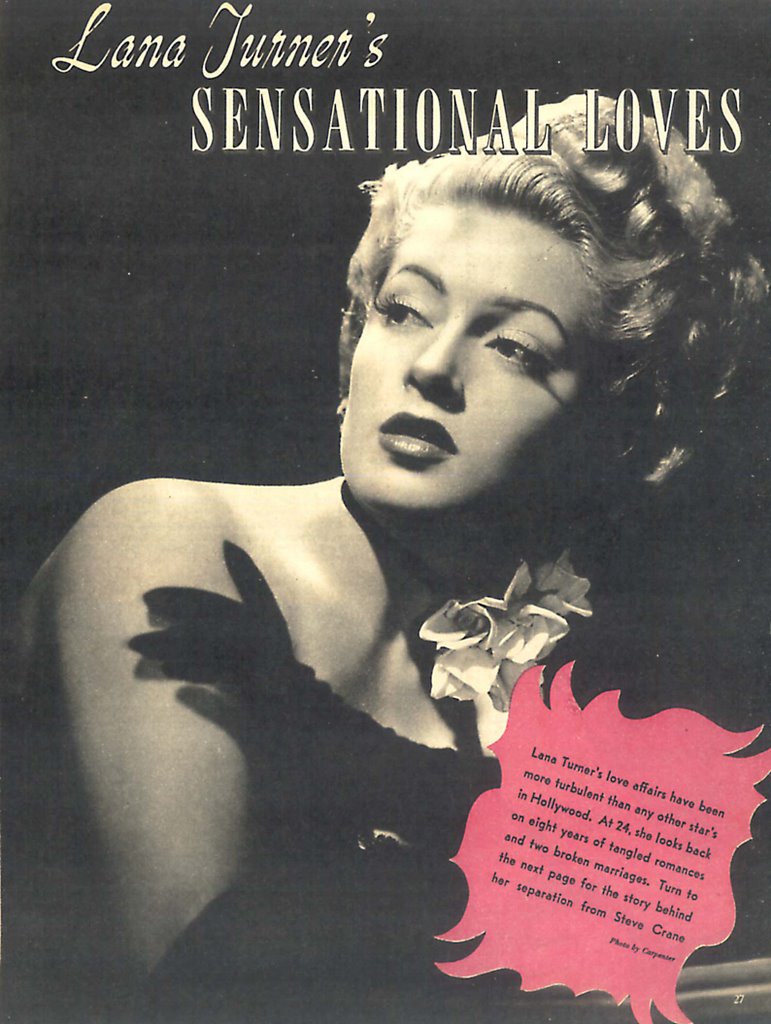
Check out Lana Turner’s Sensational Loves. This article was published in tandem with the release of Marriage Is A Private Affair. Here was another instance of a star’s personal life serving the interests of the product. Even the title promises an insider’s peek at Lana’s marital wreckage. The "Welcome Back" trade ad refers to that absence of almost a year, and the fan frenzy that greeted her return (the crowd in front of the theatre was typical during that era when movies really had a mass audience). Note the twin bed in this shot with John Hodiak --- that was the one sticking point with audiences during those military base premieres, for even during the honeymoon, Lana and Hodiak occupied separate beds. The whistles and catcalls in response to these Code-dictated accommodations were said to have been deafening. Marriage Is APrivate Affair was truly an instance of a movie that could only work, and did work, at a particular moment in time. There were many such pictures coming out of the studios then, particularly during the war (and it seems the lion’s share were from Metro). They may not survive as popular entertainment for a general audience, but for fans like us, they’re fascinating time capsules, and this is one Lana Turner obscurity that’s well worth catching next time it’s on TCM.
Mark A.Vieira has written a number of books about vintage Hollywood. He’s also a professional photographer whose mentors included the great George Hurrell, who would himself become the subject of a beautiful Vieira coffee table volume. Mark’s books contain the most incredible still reproduction I’ve ever seen in print. His practiced eye for all things photographic has yielded some of the most stunning collections you’re ever likely to see. I’ve been reviewing two of his more recent ones this week, Greta Garbo: A Cinematic Legacy and Hollywood Horror. Having read both when first published, I found myself immersed in the text once again --- Vieira makes with some of the best film writing around --- and all that behind-the-scenes stuff he reveals is just not to be seen (or read) elsewhere. The photos in both books are super rare (here are two of them). Mark’s been a collector long enough to know what’s already been published, and avoids much of that. In all my years of perusing monster mags and horror books, I thought I’d seen everything, but these images from classic shockers really blew me away. His Starlight Studio website has a page devoted to each of his books --- Garbo is HERE, and Hollywood Horrors HERE (there’s a fascinating story at the site about Mark’s own personal ordeal in writing the latter), along with ordering info. If I could but rescue a handful of books from a burning house (God forbid such a thing), Mark Vieira’s would be the first ones I’d grab …
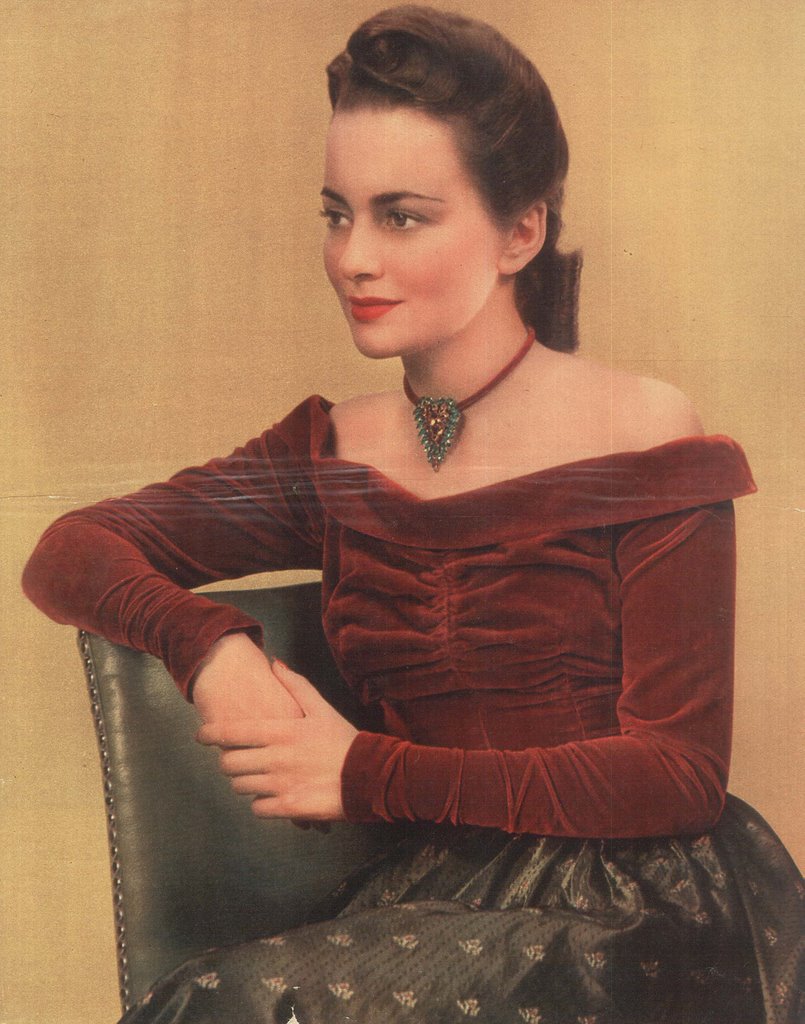
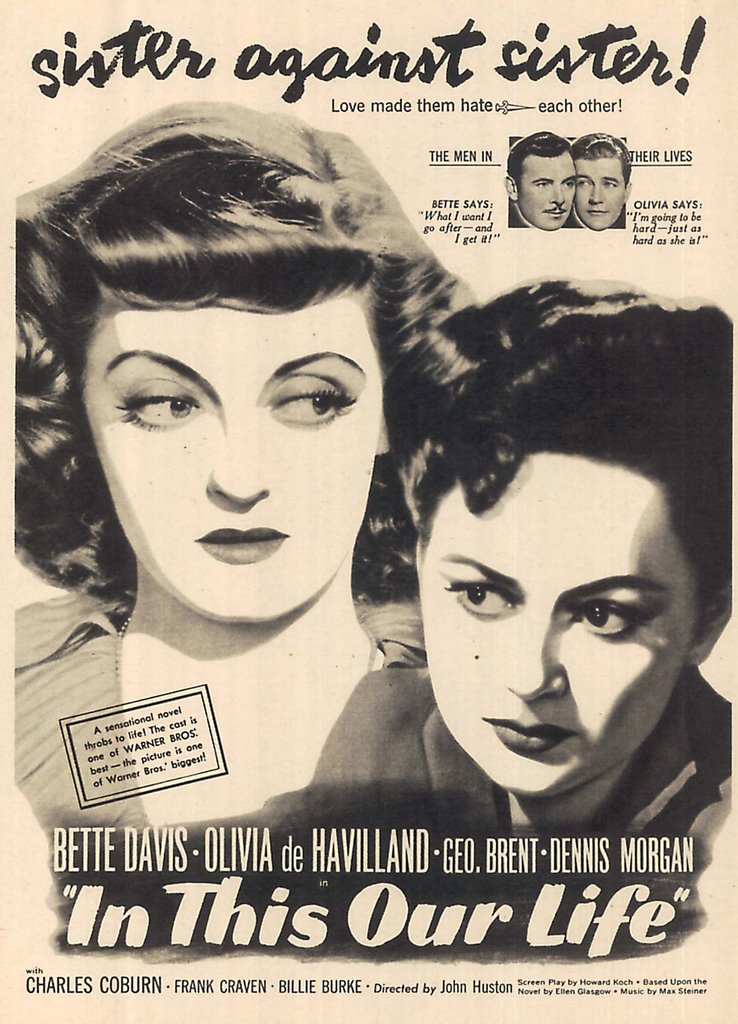
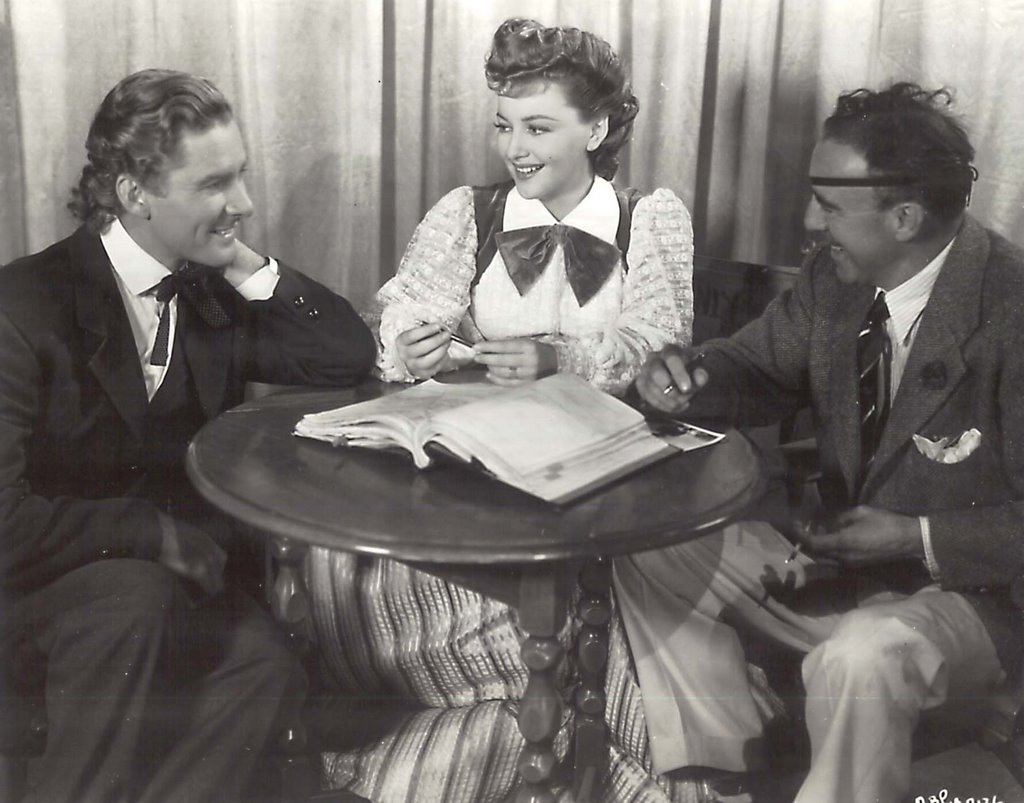
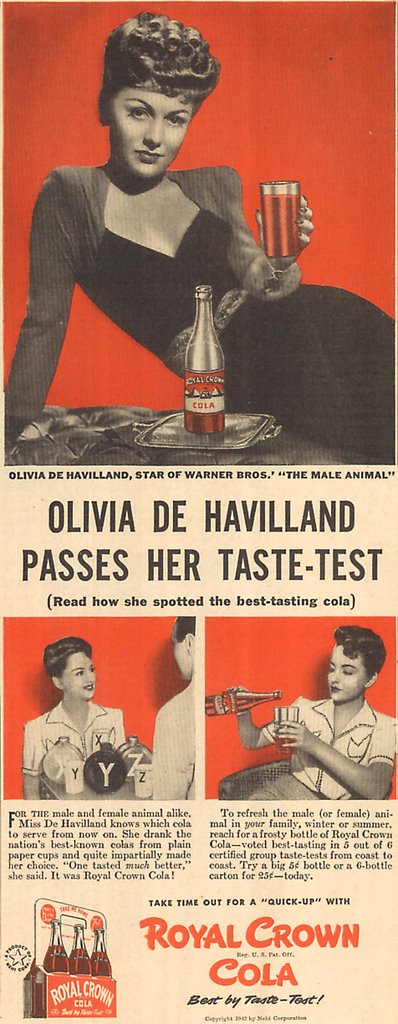
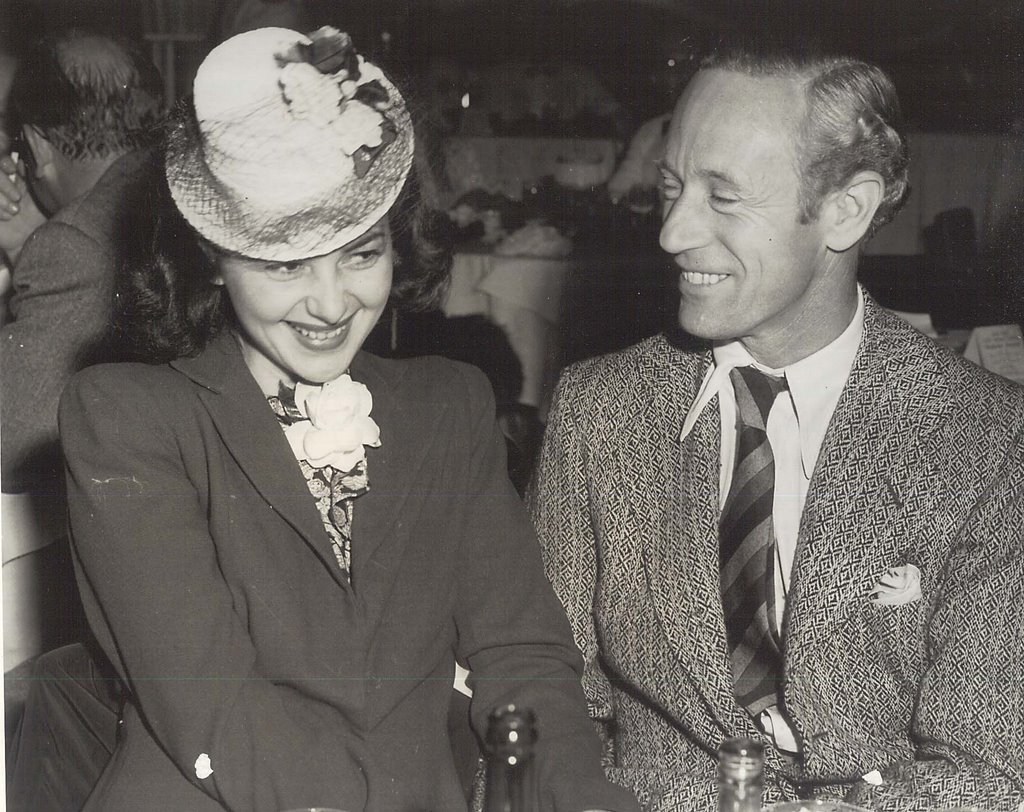
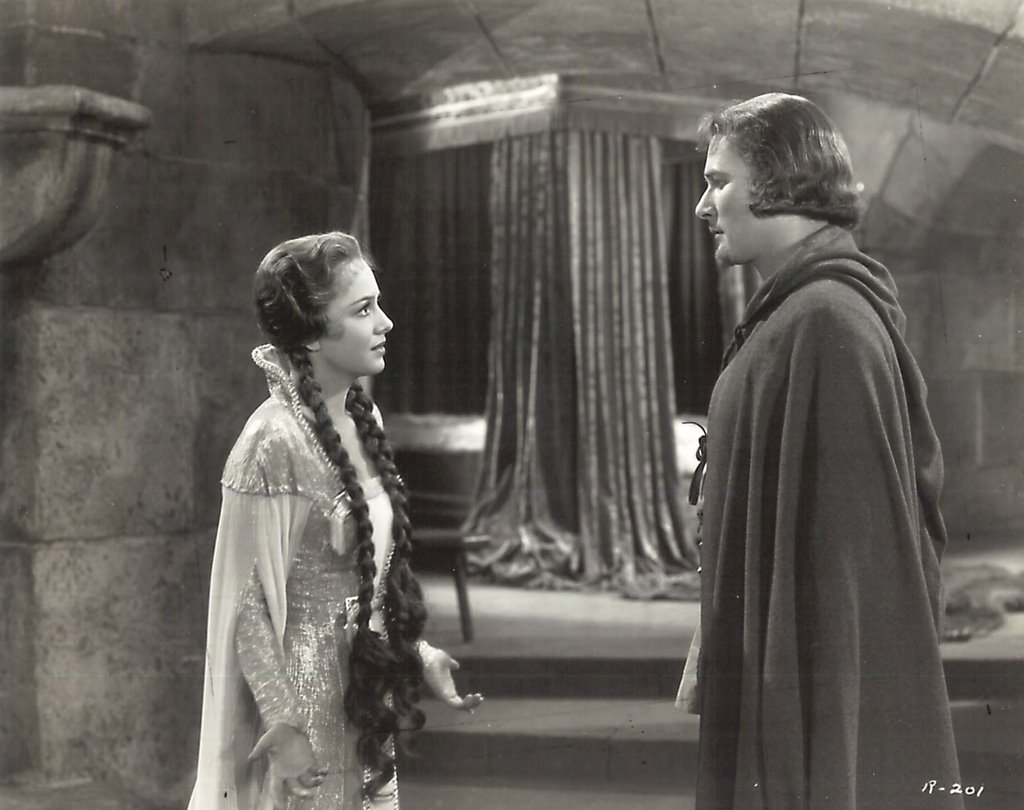
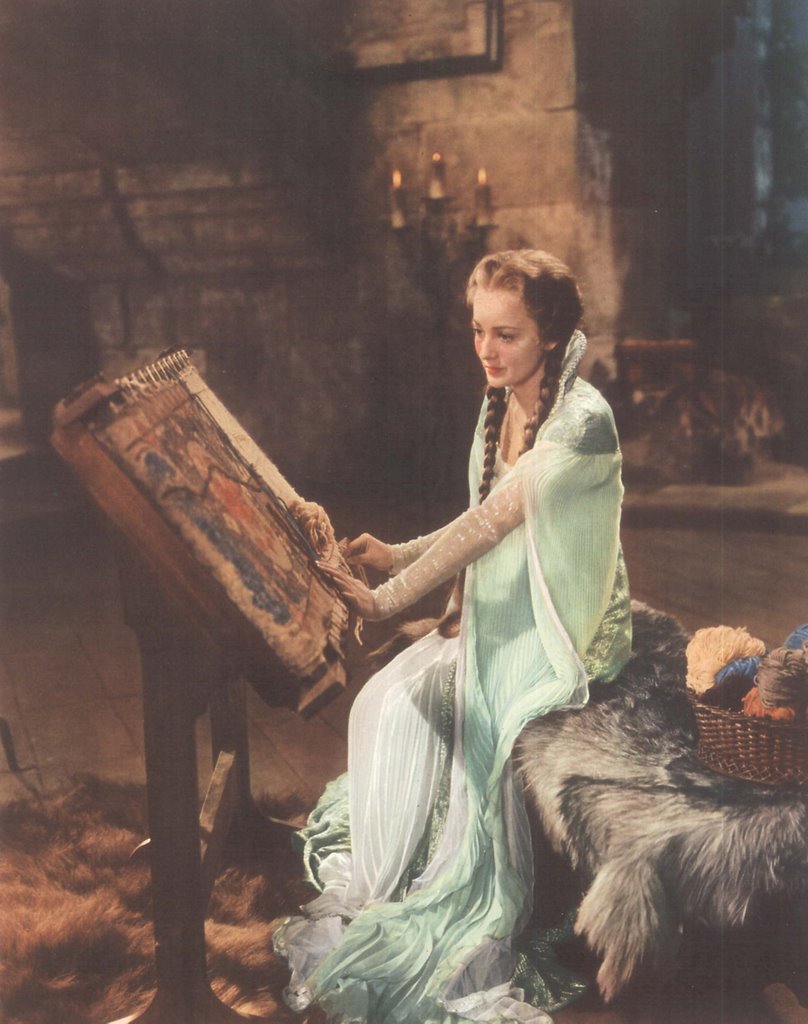
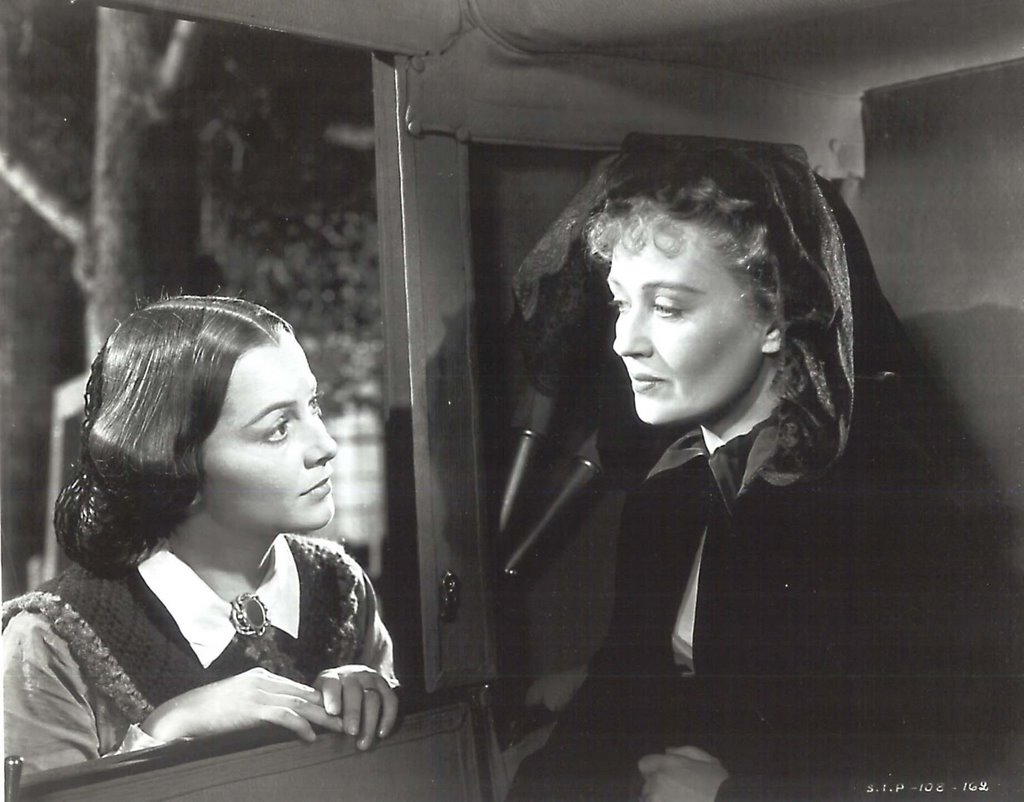
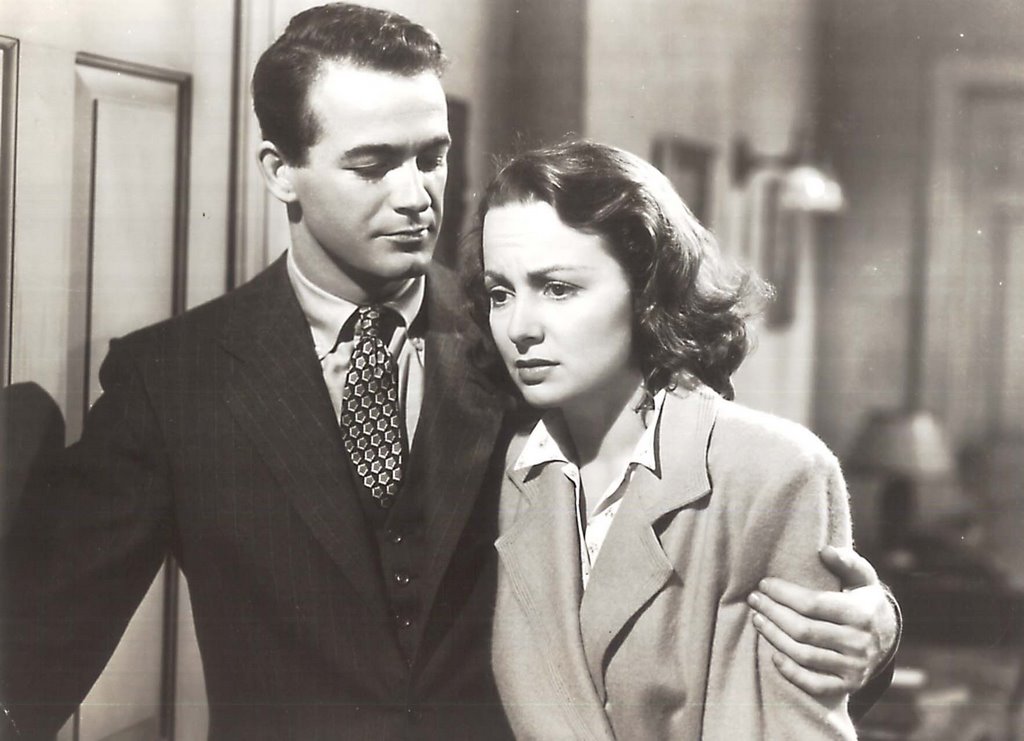
So just what was at stake when Olivia sued Warners to get out of her seven-year (and counting) contract? Well, as it turns out, just six months. That’s how much they’d tacked on after figuring in her suspentions, lost production time, etc. That means she ended up losing nearly three years of screen time for the sake of one sixth that. She stood on principle and won, but was it worth the struggle? Her legal fees must have been astronomical. Warners sent out a letter that effectively blacklisted her during the pendency of the trial, and other than a few radio gigs, she had to idle out all that time with no assurance her public would be waiting at the finish. I’ve got to say this was one gutsy woman. They named the new law after her, and she’s justifiably proud of it to this day. If you took away all Olivia’s movies, she’d still be a noteworthy personage just for this ---the first person to take on the Hollywood slavemasters and win. Two academy awards within four years must have looked like a sure-fire insurance policy against unemployment, but as things turned out, The Heiress would be both her summit and finish. There just aren’t any outstanding Olivia DeHavilland pictures after that --- at least none that revolve around her. Bette Davis experienced the same thing, and around the same time, with All About Eve. You’re at the top, but there’s younger faces beating at thedoor, and those increasingly wizened leading men (Flynn,Gable, Cooper, etc.),not to mention post-war starters of theMitchum,Lancaster, andKirk Douglasvariety, are leaning toward fresher faces for the sake of their own appearance ofyouth. How it must have rankled to seeGrace Kelly, Audrey Hepburn and all the rest scooping up the plum roles Olivia could have more than played. Her own determination to have something of a normal offscreen life does at least partly explain it. DeHavilland’s list of priorities never found movies at the top. UnlikeBette Davis, she never clutched at the work, and bad pictures of the sort Bette embraced were more or less avoided. Grocers like to be paid, however, and that no doubt explains her participation in The Swarm and various TV movies that came later. You gotta hand it to Olivia for still having the juice to play bed scenes as late as 1970 in The Adventurers (not quite as loathsome a picture as its reputation would indicate), and to this day, she makes no apologies for LadyIn The Cage, one of the meanest thrillers the sixties ever produced. Just a comment or two about yesterday’s images. Anybody like to take a guess at whatwas going throughLeslie Howard’s mind when he posed for that 1937 shot with delectable Olivia? Bet she could throw down some ribald anecdotes about him, as Les was without peer among Hollywood seducers --- something tells me he missed the boat with Olivia, however --- though youjust know he tried. Same goes forFredric March (from Anthony Adverse) --- his methods were more direct, I understand, but honestly, when you’re confronted with Olivia at age 19, you can hardly blame the poor man for trying. A commenter from Part One noticed that unretouched shot and wondered if Olivia might have partied to excess the night before --- I say probably not --- a few of those Warner workdaysand I’d probably look likeEddie Robinson at the end of Scarlet Street. As fortoday’s pics, I like this one of directorRaoul Walsh conferring with Errol and Olivia during They Died With Their Boots On --- I always bust out crying during that last scene they do together. RC Cola sure got around in those days --- it’s been forty years since I tried one --- maybe it’s time to take another flyer on that sparkling beverage, this time on Olivia’s recommendation.
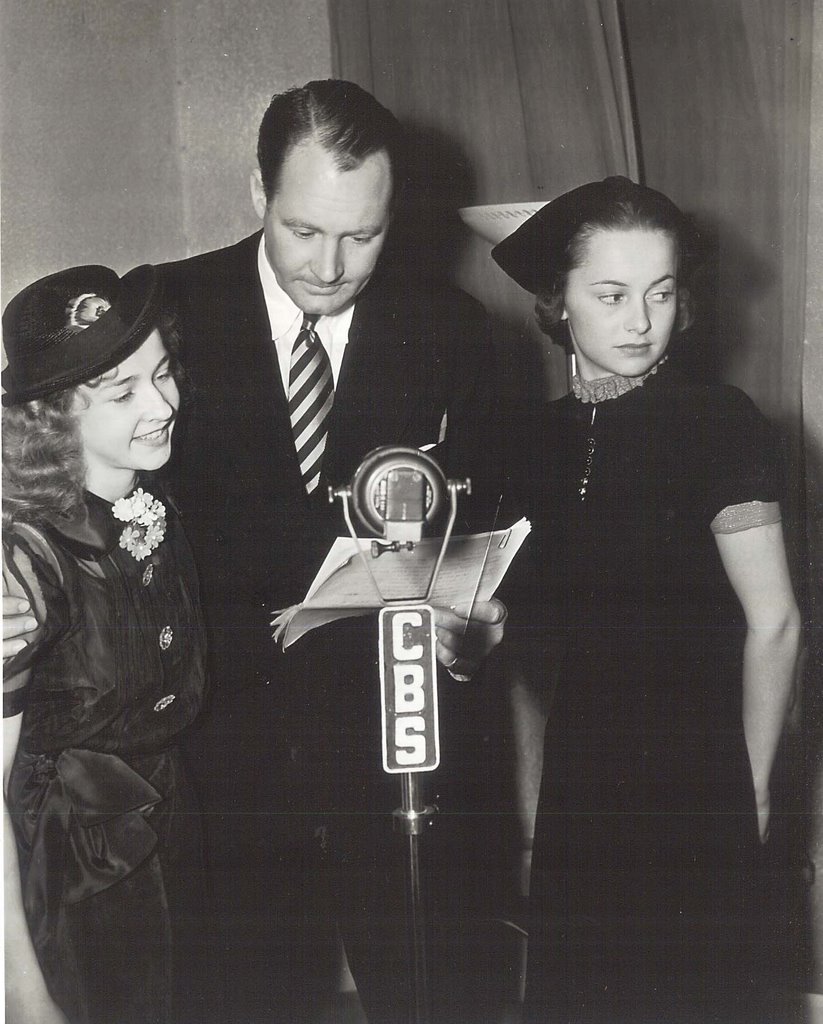
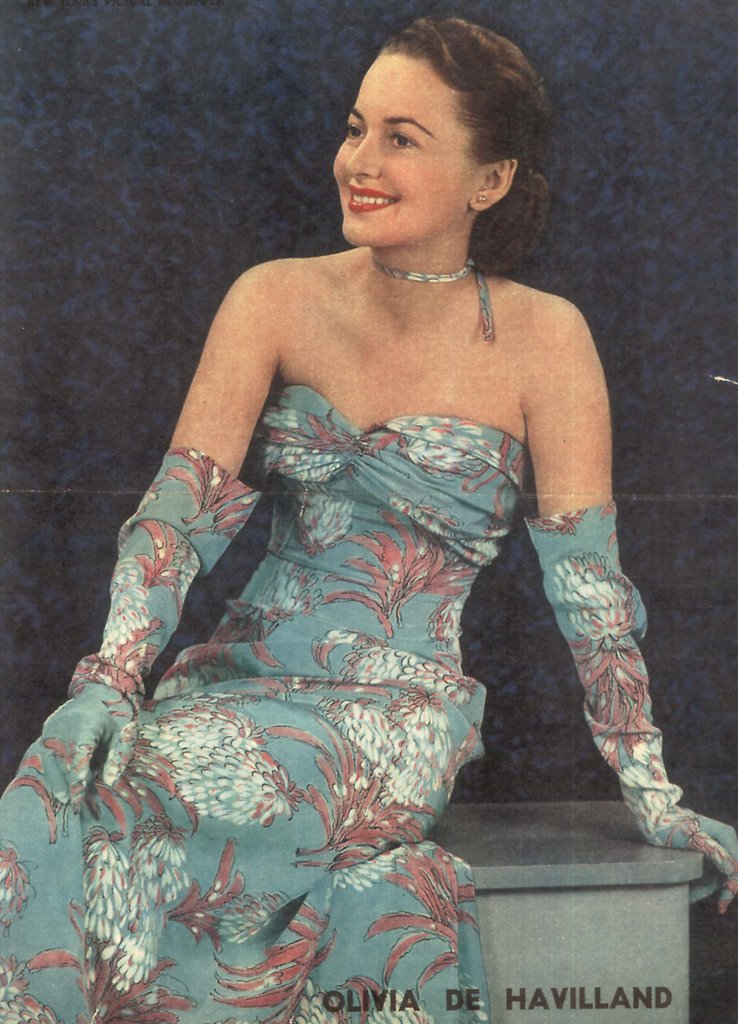
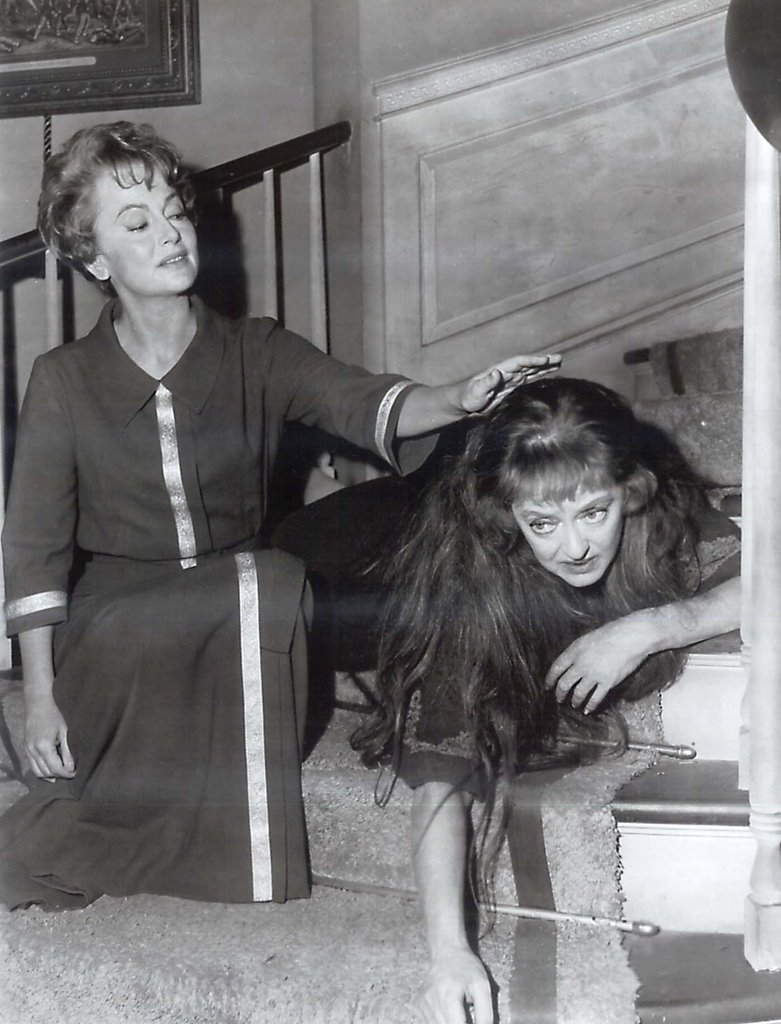
Stars always looked bored doing radio shows. It’s just reading dialogue, after all, with commercial breaks at that. I understand a lot of screen names dreaded that microphone --- never could get used to the format. Sunday rotogravures are irresistible here at the Greenbriar, mainly because few of them seem to get published elsewhere, so they’re always a kick to run across. Here’s two that Olivia did during the early forties. Maybe I should watch The Snake Pit someday, but I’m still a little afraid of it. I’d rather see our girl smooching with Errol than flailing around an asylum --- anyway, here she is with Mark Stevens. The Heiress was one of the first adult movies I watched and really enjoyed at age fourteen. I thought it then and think it now --- you just can’t make an ugly duckling out of this woman --- and besides that, I think she made a mistake turning the lock on Monty at the end. You know it’s the last chance she’s ever going to get with a man (judging by that sour attitude she’s developed), and it always seemed to me that the guy loved her well enough --- he just didn’t want to have to go out and work for a living. As long as money and lifestyle were part of the package, Morris would have made a great husband, especially with that hateful old Daddy out of the way. One of my favorite pictures ever made, and I keep hoping each time that somehow she’ll surprise me and go running back down those stairs at the end --- but it never happens. Finally, there’s Hush,Hush, Sweet Charlotte. Some of us went straight from school one afternoon in 1965 to see that one. We got into the auditorium a few minutes after it started, and the first thing I saw was Bruce Dern getting his hand chopped off. That, plus a Baby Ruth, was sheer nirvana for me. I knew I'd come to the right place. Definitely time to watch this one again. Always love seeing Olivia slapping Bette around in that car --- Now will you shut your mouth --- never tire of that deathless line …
Monday Glamour Starter --- Olivia De Havilland --- Part One
It seemed to me that Olivia De Havilland sort of merged with Melanie Hamilton about thirty years ago, hiding behind that persona so as to avoid revealing too much of her real self during all those dreary "nostalgia" oriented interviews. Melanie was a benign and beloved figure. Why not become her? There was a reasonably candid exchange with AFI students in October of 1974, but after that, she went into character and stayed there. More recently, there have been Academy Award appearances and a lengthy account on DVD of the Gone with the Wind filming. Her precise diction is to be admired, but it also creates a distance. Nothing seems spontaneous. Like a lot of elder statesmen, she’s got her line of anecdotes and she’s going to stick to them (a Los Angeles Times profile from just last week found her calling up many of them). It’s got to be tough when you’re nearing ninety to vary the dance card of memories when they go back nearly three quarters of a century. Just showing up should be more than enough, and yet one longs for a really knowledgeable interviewer to sit down with Olivia and get into specifics --- the junkets for Dodge City and SantaFe Trail --- working with James Whale in The Great Garrick --- hey, what about co-starring with Sonny Tufts? – twice! Too bad access is limited to those same tired MSM outlets, forever dumbing down their puffball questions, wasting what might otherwise be a unique opportunity to get some Hollywood lowdown from one of its last great survivors. I’d like to think there was some livelier Q&A at that recent Academy tribute, but being 3000 miles away, I can’t know for sure. Was anyone there?
I’m just going to do a blueprint for all these Glamour Starter entries and lay it down each week --- save myself some duplicated effort. Here goes --- strong mother, would-be actress daughter(s), distant and/or weak father, mother seeks separation in order to accommodate daughter’s career aspirations, and so on. The variations this time are as follows --- Dad was actually cool with the separation (he had a Japanese housekeeper girlfriend back home in Tokyo where Olivia was born), the daughters were fiercely competitive, and Olivia wasn’t even sure she wanted to be an actress. That I had not known. She was talked into staying with Max Reinhardt’s Midsummer Night’s Dream troupe after a sensational understudy turn for unavailable star Gloria Stuart. A teacher’s program scholarship at Mills College was eventually forfeited in favor of two-hundred a week at Warner Bros., where she’d debut in the 1935 film version of A Midsummer Night’s Dream. Sister Joan Fontaine (her name taken from a step-father) also started the climb, but prospects at RKO were less promising. For now, it looked as though Olivia would be the star breadwinner. Jack L. saw her as a standard issue ingenue, and look what became of those --- Anita Louise, Jean Muir, Margaret Lindsay --- scarcely names to reckon with outside a TCM marathon. If anything, Olivia was compromised by her looks. She was just too pretty to be taken seriously. Better to let her play insipid leads opposite Joe E. Brown and George Brent that any of the stock girls could have done in their sleep. This might have lasted the entire seven years of hercontract, but for the miraculous teaming withErrol Flynn in Captain Blood that would lead to seven more tandem appearances and still thriving multi-generational speculation as to the question of did they or didn’tthey? Let’s just say the relationship was a lot more complex than anyone then or now realized. If indeed Olivia has an unfinished memoir, I hope she’ll address the Flynn paradox at length.
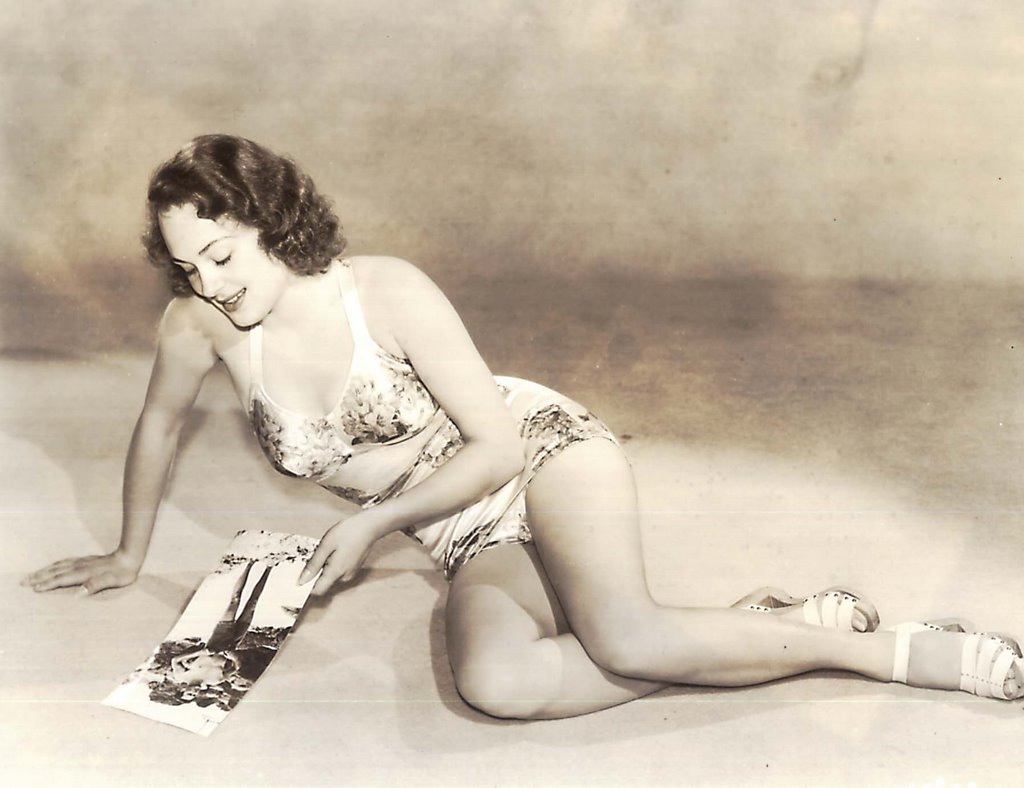
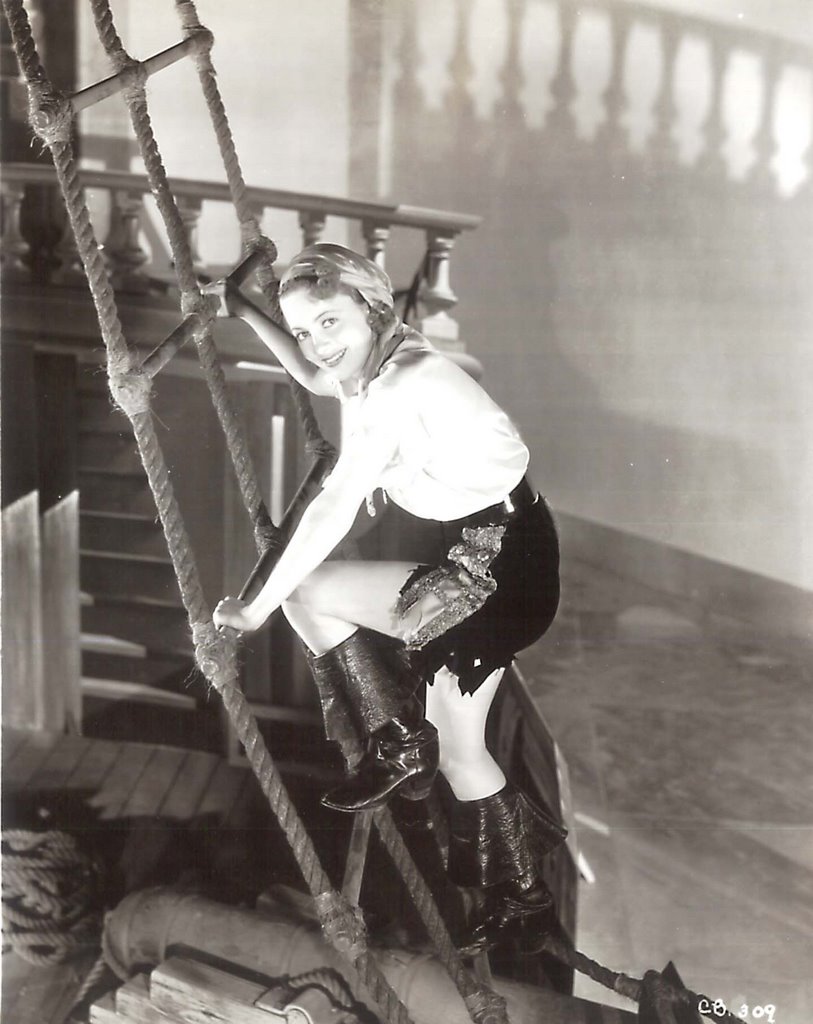
After Gone With The Wind (she’s here with Ona Munson), a part of Olivia De Havilland would forever be bathed in sweetness and light. The memory of Melanie would lend shock value to cast-against-type perfidy she’d display in Hush, Hush, Sweet Charlotte ("now-will-you-shut-your-mouth?"). After GWTW, we look for Melanie, I mean, Olivia, to drop her halo and join the rest of us fallen angels. There’s a great series of blooper reels Warners used to do each year for the Christmas parties. They weren’t meant for public consumption, and they’re laced with profanity (some are turning up on DVD --- watch for them). One clip finds Olivia blowing a line with Paul Henreid as they’re shooting Devotion. "Son-of-a-bitch!" she exclaims, giving each syllable the benefit of her precise, measured delivery. She really stole my heart with that one. Others on the Warner lot were similarly affected. According to Stuart Jerome’s delightfully ribald, if not downright nasty, reminiscence of his days as a WB messenger boy, Olivia was one dream girl the guys really lusted after. Her virginal image just made the package that much more enticing for those randy teenagers bicycling memos back and forth across the lot. Used copies of Those Crazy, Wonderful Days When WeRan Warner Bros. are available over at Amazon --- right now they’re going for less than two dollars (HERE). I laughed till I cried back in 1983 when it was first published. I don’t really blame J.L. for confining Olivia to ingenue parts. I mean, just look at these swimsuit poses, and that delightful little pirate rig she’s donned to help sell Captain Blood. Even unretouched, as shown here, she’s perfection. All those shrieking murderesseslocking unwanted husbands in garages with the car running parts wenttoBette Davis andIda Lupino. How could anyone with a face like the one George Hurrell photographed here for Dodge City resort to things like that? Better to let her remain Errol Flynn’s demure consort, even if it would take decades for the critical establishment (if not Olivia herself) to realize how wonderful those Flynn shows were, and how fortunate she was to have been a part of them. The big contract bust-out that made judicial history (and finally got her off the Warner lot) is something I still have mixed feelings about, but that’ll need to wait for Part 2.
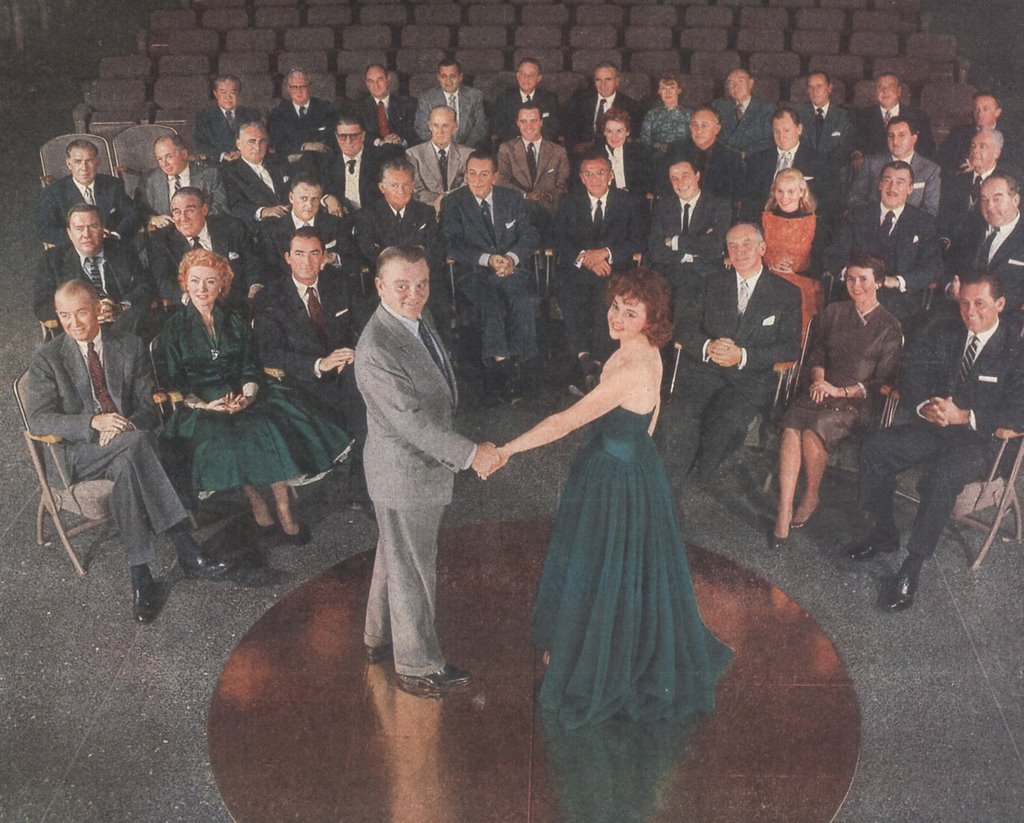
I do not have the answer to this riddle. That is why I’m presenting it to you. All I can do is date the still to 1955. I would really like to know why these people have gathered. Is it the Academy Awards for that year? If so, then why this peculiar seating arrangement? Here are the faces I recognize offhand --- James Cagney and Susan Hayward (standing), front row --- James Stewart, Greer Garson, Gregory Peck, Fredric March, not sure, and Bill Holden. Second row --- Edmond O’ Brien, Paul Douglas, don’t know, no idea, Walt Disney, don’t know, Gene Kelly, not sure (Eva Marie Saint?), Walter Pidgeon, Brod Crawford (Good! Glad they invited Brod). Third row --- I only recognize Billy Wilder, George Stevens, Jack Lemmon, (surely not) Joseph Schenck, Danny Thomas, Walter Wanger. Back row --- James Wong Howe on the left, I’m pretty sure, and Martin Scorsese (some funny joke, huh?). These other guys must be producers and/or executives…. Academy officers maybe? A once-in-a-lifetime gathering, in any event.
Oh, for the glamour of air travel so long ago as here. Observe the tie-in MGM has arranged with American Airlines for their 1951 comedy, Three Guys NamedMike. Flying was fun back then. At least that’s the way American and Air-France sold it. Also luxurious and comfortable. Look at that feast Jim’s sat down to! Nowadays you’re lucky to score a bag of peanuts on a continental flight. And yet another reminder of how guys dressed back then. Van and Jim knew how. That is fried chicken with the green peas and potatoes, isn’t it? I was born too late. If flying were anything like this today, maybe I’d have gone out to L.A. for that Academy tribute they just had for Olivia DeHavilland. As it is, I’ll have to settle for her as Glamour Starter this coming week. She turns 90 on July 1. Right now, she’s out there giving interviews. Hope when they fly her back home to France they’ll give her a meal as good as the one Jim’s eating, but if I were Olivia, I wouldn’t count on it.
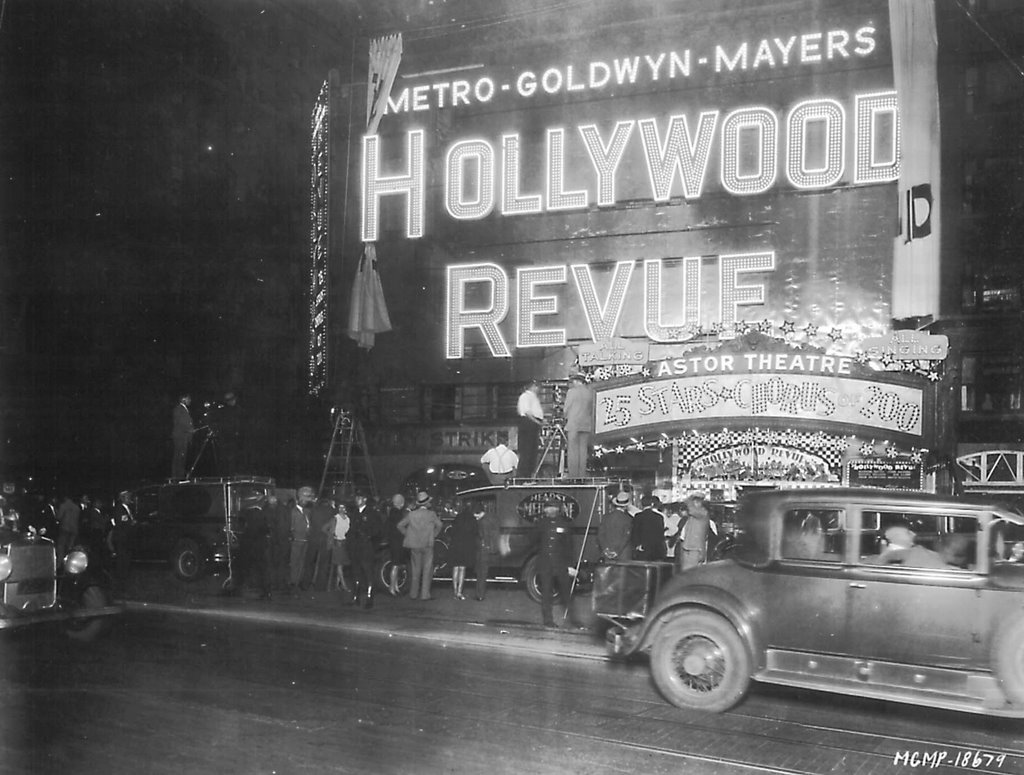
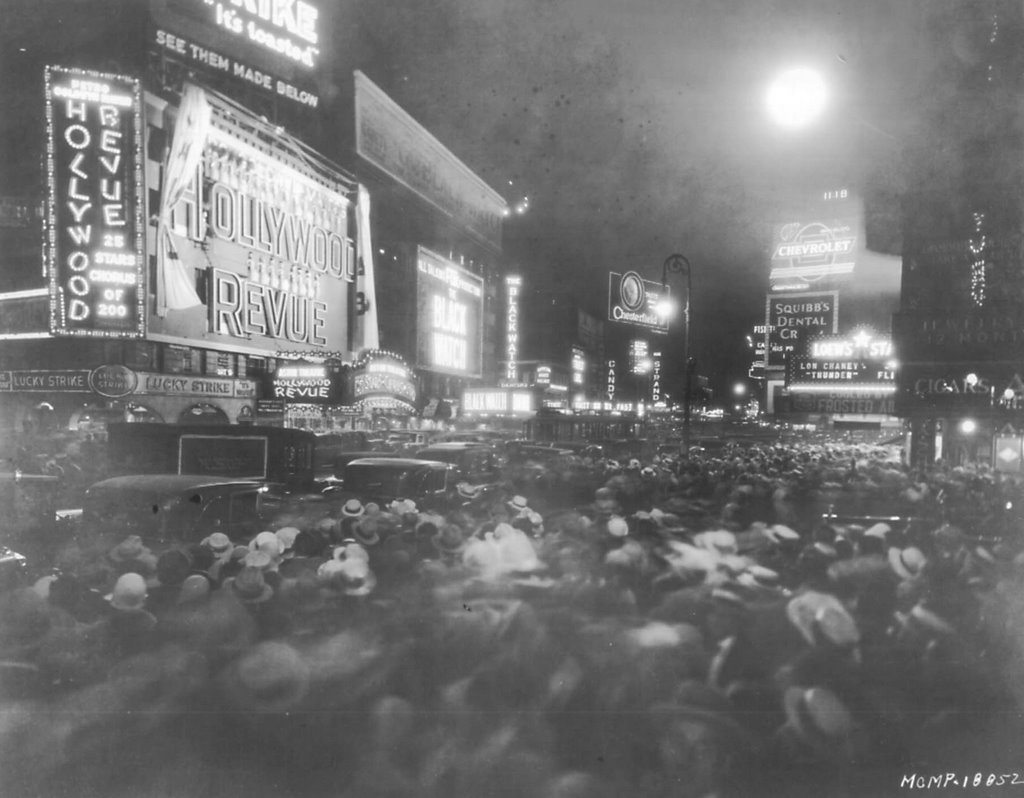
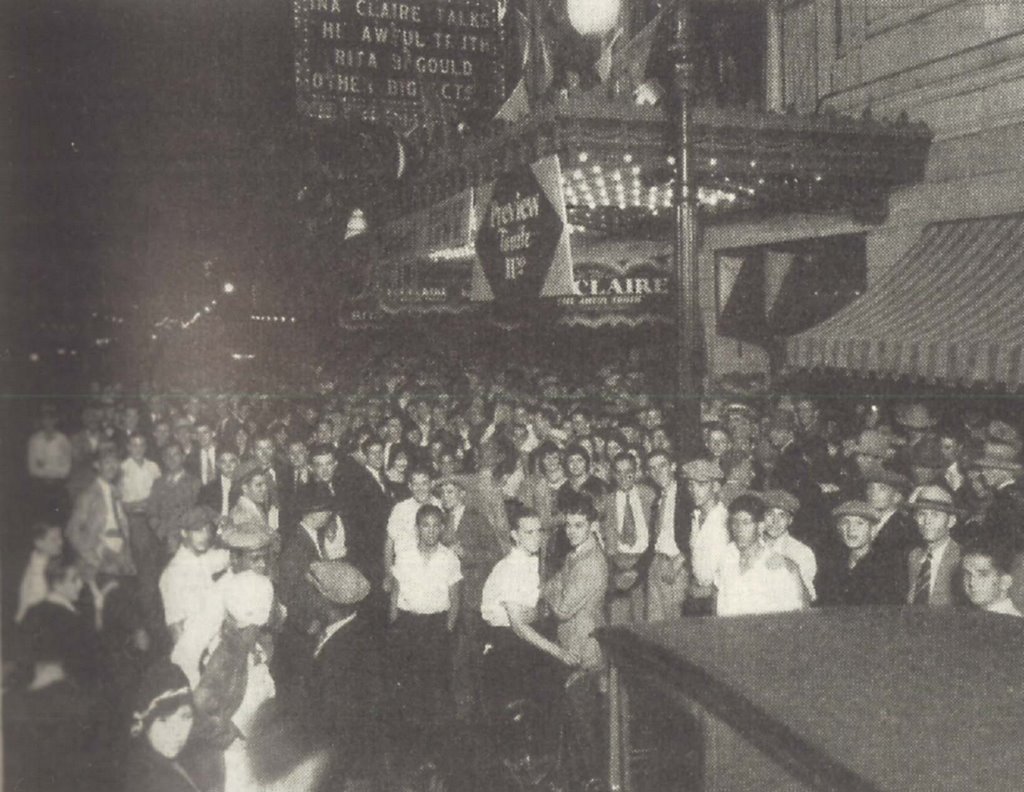
Are Human Billboards Necessary? One can only assume that human life was cheap back in 1929, or maybe they saw the big Crash coming and just said to hell with it all, because suddenly, and for a brief shining moment, those Broadway marquees lit up with some of the most bizarre and extravagant bally stunts in the history of showmanship. Trade observers gave MGM credit for the first "Human Billboard" --- shown here at the Astor Theatre’s opening for The HollywoodRevue Of 1929. Those showgirls were obliged to pose for hours atop the individual letters of an enormous electric sign as it faced out onto a nightly mob of spectators. Never mind the risk of electrocution. What if they’d fallen? Those were narrow catwalks as you can see, and blinding searchlights wouldn’t enhance anyone’s equilibrium. What a way to make a living! The far shot gives you an idea of what Broadway had to offer on this particular evening --- click and enlarge to see those marquees for The BlackWatch (John Ford’s first talking feature) andLon Chaney’s final silent film, Thunder. There’s no record of any of those girls having tumbled from their perch, though we all would within a few weeks when Wall Street laid its egg. Others would emulate the Hollywood Revue stunt. Cleveland banned the human billboard when Metro tried to erect it there, citing city code violations. The local fire department was instructed to turn their hoses on the girls should they venture out onto the sign (poor things would have lighted up like Man-MadeMonster’s Dan McCormick in that event!), while members of the constabulary stood by to arrest theatre staff members tempted to activate power. By the time the picture finally opened, controversy had stirred up sufficient press as to guarantee four thousand turnaways every day at the boxoffice. Metro’s mission was accomplished. A few weeks later, Fox went with a "Living Sign" for its Dallas, Texas engagement of The Cockeyed World. This time the billboard (shown above) was located two blocks from the MajesticTheatre where the show was playing. Buglers standing on the sign would sound off at regular intervals to be answered by more buglers stationed over the marquee back at the Majestic. Thirteen boys in Marine uniforms stood on the elevated billboard, accompanied by a thirty piece military band that played constantly. All this was to lead up to the midnight premiere of The CockeyedWorld, but no one anticipated the teeming mass of humanity that would clog streets on opening night (that's them above). Lines for the show extended two blocks in as many directions. People were pushed against store windows and they broke. Streetcars were immobile. Women fainted. It was a great night at the movies in Dallas.
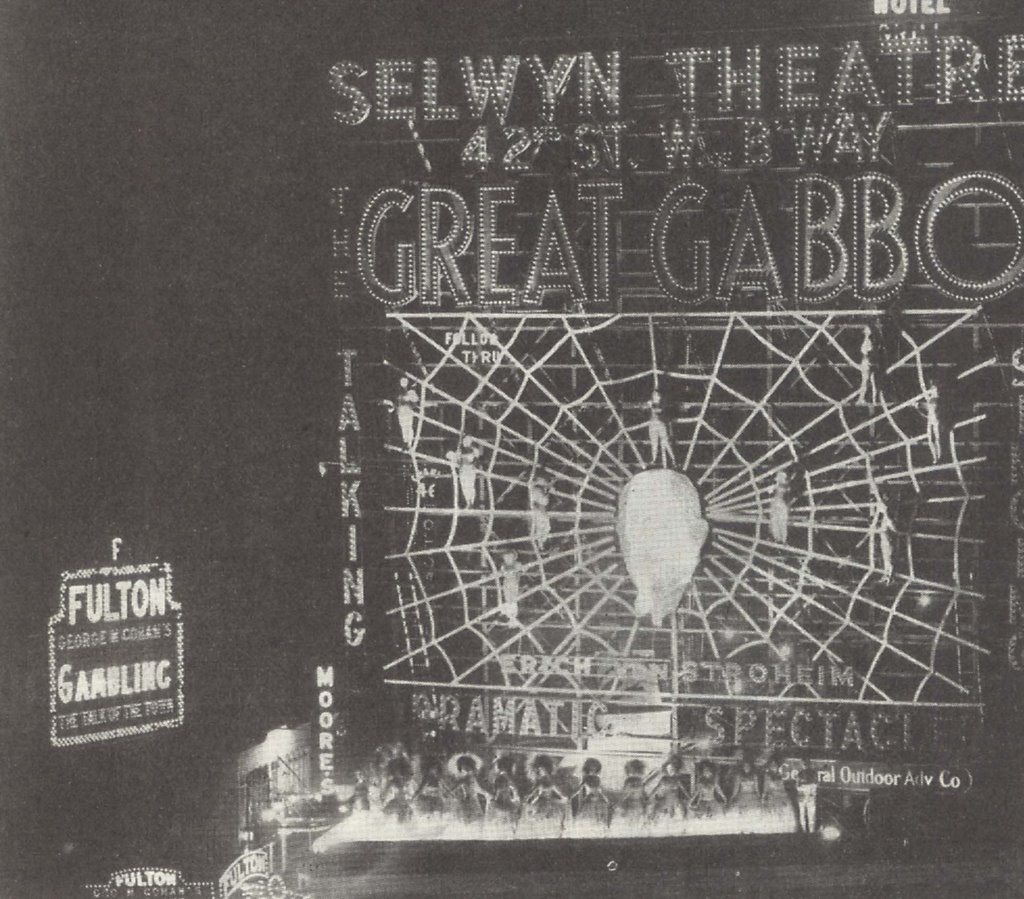
New York cops had a snoot-full of human billboards by the time The GreatGabbo blew into town in early October 1929, and now they were going to do something about it. A proposed court order alleged blockage of street traffic and needless congestion among pedestrians. Indeed, this bally was labeled "the first complete free show ever held on a Broadway roof to advertise a screen spectacle" --- a $12,000 structure featuring twenty showgirls dangling from an electrified spider’s web, while ten ballet dancers performed along the edge of the roof. As the still at left illustrates, all this took place 150 feet above street level. The presiding judge was persuaded by Gabbo producers to check out the billboard action for himself. Following a twenty-five minute view from an elevated vantage point opposite the sign, His Honor ruled in favor of the bally merchants and forbade further interference with their campaign, saying that "Broadway has become famous for its gargantuan display of mazda signs and that these electrical advertisements help to draw tourists to the thoroughfare from all parts of the world." Little did he realize that much of this was about to end, as that initial boom year for early talkies would soon be eclipsed by a stark downturn that would come with the Great Depression.
Vincent Sherman --- 1906-2006 I’m about to risk another of my blanket statements --- in fact, I’ll make two. First --- Vincent Sherman was the last major surviving director who had worked in the 1930’s. Second --- he was the only director from the thirties to participate in DVD extras. Right or wrong? I realize that Sherman helmed only one actual thirties release --- The Return Of Dr. X --- but still I’d maintain --- he was the last of them. Another four or so weeks and he’d have made it to 100 --- and sharp as a tack for all of that. There are Vincent Sherman audio commentaries we haven’t heard yet. Some of them are forthcoming on DVD --- The Hasty Heart, Return Of Dr. X, All Through The Night. I understand he recorded tracks for all of the Warner pictures he did, so his legacy will live on, as if the films and his incredible book (Studio Affairs) weren’t enough. This was a truly amazing man. He was making personal appearances right up to the end. Vincent Sherman was one Hollywood veteran you believed. There was a genuine modesty about him. Flamboyant types like Raoul Walsh and William Wellman back in the seventies were chock full of colorful insider tales, and tall ones at that --- these old-timers were no doubt trying to live up to countercultural expectations by presenting themselves as rebels against the system --- always getting the last word on studio bosses, forever pulling a producer’s bacon out of the fire. Vincent Sherman would never descend to such caricature. He was never hostile like John Ford. He didn’t fabricate like Howard Hawks (love ya, Howard, but you sure told some whoppers!). Mr. Sherman just sat back and calmly told it as it was. That book he wrote is hands down the best director memoir I’ve ever read. If you haven’t checked out Studio Affairs, HERE is where to get one. I challenge you to put it down once you've started. The last Courts autograph show I attended was in 2001. They used to be held at the Beverly Garland Holiday Inn in North Hollywood. Some of the dealers and celebrities would get there early in the morning. On this particular Saturday, I came directly from breakfast to the ballroom. It was a more or less vacant 7:00 a.m. --- except for a hale and hearty gentleman in his nineties seated at the far end of the room, clad in a turtleneck sweater and sport jacket --- all by himself. He’d probably been up for hours. Guys in their nineties don’t sleep late (unfortunately, neither do guys in their fifties). I walked up tentatively to this man who’d acted with Barrymore, directed Bogart, Flynn, Davis, Crawford, and Gable --- and introduced myself. Vincent Sherman invited me to sit down and talk. For twenty minutes, we did. I can’t remember one thing he said. I just kept pondering the fact that I was sitting at a table talking to the director of The Adventures Of Don Juan … and All Through The Night … and Mr. Skeffington … and …. Let’s just say this experience had it all over the time I spoke with Val Kilmer at the Virgin Megastore on Sunset --- and for the record, Vincent Sherman was about the nicest celebrity I ever met (take that, Adam West!).
These stills attempt to hit some highlights in a career filled with same. Counselor-At-Law saw fledgling actor Vincent Sherman (actually, he’d clocked several years on stage by that time) standing up to at-his-best John Barrymore in 1933. Read Studio Affairs for an amazing account of that experience. Sherman wrote insightfully of his working relationship with the great Claude Rains in the 1978 essay collection, Close-Ups, edited by Danny Peary (another fantastic book). Here they are in 1940 working on Saturday’s Children. Director John Huston’s just been called off to war, so he’s turning over Across The Pacific reins to Sherman, as co-stars Bogart, Mary Astor, and Sydney Greenstreet look on (guess we can applaud them both for the great movie that turned out to be). The Hard Way was embraced by feminists years after the fact. Speaking of the ladies, Sherman had a way with them. Those Studio Affairs included Davis, Crawford, and Rita Hayworth. The chapters on them are among the most revealing in his book. This set still with Hayworth was taken during Affair In Trinidad (1952). Errol Flynn gave rise to any number of Sherman anecdotes, all of them priceless. Here they are with Alan Hale on TheAdventures Of Don Juan. The Joan Crawford melodramas at Warners were best when they dealt with noir and crime themes --- The Damned Don’t Cry was Vincent Sherman’s contribution --- and a fine one. Finally, there is The Young Philadelphians, a criminally underrated Warners release from 1959 (that's Barbara Rush with Paul Newman). Can’t wait for that DVD. Vincent Sherman retired in 1983 with some episodes of Trapper John, MD. Truly one of the most versatile directors around. I never saw a bad picture with his name on it. He was our last great ambassador for classic Hollywood and he will be sorely missed.
Ever speculate as to what it might have been like to meet some of the great screen legends in their twilight years? Sometimes I’ll imagine a childhood encounter with one of my favorites. It’s 1965, I'm 11 at the time, and someone takes me to the location where Boris Karloff is shooting Die, Monster, Die (in England, yet!), or maybe I’m one of those kids in the rail car getting an autograph during the filming of Buster Keaton Rides Again. Karloff would have been great --- that much we know from accounts of those who did meet him. Buster polite, but a little more distracted. Visitors usually found him absorbed in the television or his electric trains. Not the chatty sort, nor given to small talk. But Stan Laurel. That’s something else again. He was totally accessible in retirement. Had a listed phone number. I knew one guy that lived in L.A. during the early sixties who used to take the bus on Saturdays into Santa Monica so he could visit Stan. He was a kid then too. Their conversations usually revolved around my friend’s barrage of questions --- very specific questions --- about films Stan had made over thirty years before. Don once showed up at Stan’s Oceana Hotel apartment after seeing Another Fine Mess on TV and asked where they filmed that tunnel scene at the very end. Stan told him exactly where. His memory as to those details was faultless. During one of the visits, there was a knock at the door --- it was Buster Keaton (hope Stan kept smelling salts --- I would have needed them!). Another friend, Lou Sabini, talked to Stan on the telephone during Christmas week of 1964. That would have beat the hell out of Santa Claus for me. Lou was twelve at the time. He wrote to Stan, and Stan wrote back. They corresponded for several years. Mr. Laurel congratulated Lou on his first 16mm projector. Everything I’ve read and heard about this man is positive. Nothing but glowing accounts. He always answered his fan mail --- personally. There had to be times when he wasn’t in the mood, but he never let those fans down.
Stan’s 116th birthday month seemed like a good time to post a few images I’ve not seen elsewhere. These were taken during the 1929-30 season. Those guys just home from a fishing expedition include, left to right, Stan Laurel, director James Parrott (Charley Chase’s brother), Eddie Dunn (identified as a "gagman"), and "well-known sportsman" Tom Andicott (he must have been the Bogartian To Have and Have Not angling guide type). Next there is Stan with Hal Roach and new studio employee Fred Karno (center) who had once been Laurel’s boss back in England (Chaplin’s too). Fred didn’t work out at Roach. He’d be gone within a few months. Finally, there are the three Blotto wives with Stan. Georgette Rhodes (left) appeared with him in the French version, Anita Garvin (center) was the one we know best --- she did the English language edition, and Linda Loredo (right) filled in for the Spanish role. Stan and Babe got to make Blotto three times, speaking phonetically in languages they weren’t otherwise conversant in, though you wouldn’t necessarily know it from watching those foreign versions that do survive.
The Clark Gable features in the new Warner DVD box are all pre-war, except Mogambo. That may be as well, for seeing a mix of Gable before and aft can be a little disconcerting. So much of what he represented before WWII would fly in the face of post-war sensibilities and priorities. All those free-wheeling soldiers of fortune had to be contained in this new world, and family obligation was to be preferred over gold prospecting, wildcat oil drilling, and test piloting. Gable the husband and father of Any Number Can Play is a far sight removed from Manhattan Melodrama, even though he plays gamblers in both. The difference lies in the fact that gambling in a post-war environment is something to be ashamed of, and only when Gable chucks the tables and devotes himself to home and hearth can he find happiness. Romance for a post-war Gable also came at a higher price. In Homecoming, his affair with army nurse Lana Turner is an indiscretion for which he’ll pay --- a Gable tryst he’d have laughed off in the early thirties now has grave consequence for the post-warrior. Not that I’m down on the later Gables. For me, they get better with each viewing --- and sometimes, of course, he did play the familiar roustabout, as in To Please ALady, Lone Star, Key To The City, and the like. None of these have the freshness of that pre-war group, however. Six movies are contained in this DVD box, and I like them all. So far I’ve looked at two, and as often happens with old friends, they play a little differently since our last visit of ten or so years ago.
Why would any man want to be mixed up with Jean Harlow in China Seas? She’s obviously trouble from the moment she boards ship --- she’s even indirectly responsible for a number of deaths during a pirate raid she enables. So how does Gable come off proposing to her at the end of this show? The woman’s bad news, pure and simple, and he should know better. I liked Jean in Red Dust. More subdued, but still pre-code brassy and amusing when the situation called for it. This time, she’s scary aggressive, shouts constantly, issues threats and worse, delivers on them. Gable’s preference for limp dishrag Rosalind Russell seems entirely sensible. Don’t misunderstand, however. ChinaSeas still rocks. It’s the kind of picture we think of when it’s time to name a "typical" pre-war Clark Gable vehicle. On and off in 90 minutes, it doesn’t lag. Torture scenes in movies can be unpleasant (as can torture in real life --- seen Batman Begins?), but China Seas has a doozy that’s fun and unsettling at once. That’s where Wallace Beery shines. Everybody’s rough on Beery these days, but when he had the right part, nobody was better. He puts a "Malay Boot" on Gable, then soothes him with an insincere speech about how awful it is to see a man suffer so. A great scene. Wally’s best when he’s dangerous, but deadly when he’s lovable. Stay away from this man when he co-stars with kids or Marjorie Main. Those are toxic combinations. The youthful visitor to the set is Freddie Bartholomew, around the time he was doing Anna Karenina with Garbo. The babe-in-Beery’s arms is his daughter,Carol Ann, who had a small role (and billing) in China Seas.
Gable nearly drowns in an ocean of sanctimony during San Francisco, but it isn’t his own. Paragons of rectitude Spencer Tracy (priest) and Jeannete MacDonald (sexless songbird) see to the gelding process, and by movie’s end, our man Blackie Norton is no longer the figure of raffish fun we’ve enjoyed for the preceding two hours. You can really do yourself a favor by turning this one off about five minutes before the end. That way you won’t have to see Blackie literally bend his knee to mid-thirties Code dictates. Audiences then knew how to tune out on the sell-outs. They got to where they could see them coming. Viewers had, in effect, learned how to decode the Code. It was enough to enjoy all the fun that led up to the last reel penance. No one would remember Blackie’s ultimate redemption --- at least they’d try not to. Gable’s so dynamic here that we can’t help deploring the party poopers anxious to bring him around to their pious way of thinking. The lifeblood of this movie resides in him. Maybe it was felt that any character so magnetic and compelling must somehow answer for it. It would happen again with Rocky Sullivan two years later --- indeed Angels With Dirty Faces had almost the identical storyline. Just as I questioned Gable’s judgment in aligning with Harlow in China Seas, so too am I perplexed by his ceaseless attentions to MacDonald in San Francisco. You figure that even if he got her, it won’t have been worth the wait, especially considering the massive effort involved. Part of the problem is Jeanette herself (with Gable here on the set). No longer the lingerie-clad pre-code siren of LoveMe Tonight and One Hour With You, here she’s the eternal Miss Touch-Me-Not, bursting into unwelcome song whenever Blackie gets too close (my fast-forward got a workout during those opera scenes). One guy I really like in this show is Ted Healy (that’s him with Gable and MacDonald). He was always the sour apple, wise-ass, splash of cold water presence that counterbalanced all those "nice" conventional folks that populate movies. Ted’s never a villain. Just truculent for the hell of it. He gives the impression of just not having liked people much. Remember how he smacked the Stooges around? You get a feeling he did it backstage as well. Speaking of Wally Beery again … do you suppose he really administered the fatal beating that killed Ted in 1937? There’s a persuasive theory he did, and that Metro covered it up. The two supposedly got into words at a bar before Beery took Healy outside and bashed his brains out. I told you this man was dangerous. Albert R. ("Cubby") Broccoli was an eyewitness (yes, the 007 guy) to Healy’s death. Papers said the whole thing was a fight among nameless drunks, and that Ted got the worst of it. His wife Betty never bought into that, but her entreaties to re-open the cursory investigation fell on deaf ears. By the way, this neat grouping of Metro players with Gable includes Robert Montgomery (in costume for Trouble For Two), Lionel Barrymore (same for Devil Doll), and Paul Muni (for The Good Earth). Those Metro stages were busy beehives in 1936.
Monday Glamour Starter --- Anita Page If Joan Crawford had flashedhot and burned out by 1930, she’d be Anita Page. But even if Anita had pushed harder and been luckier, she’d not likely have enjoyed the forty plus years of fantastic stardom Crawford carved out. These two are the perfect example of one who delivered over the long haul, and another who just couldn’t pack the gear. Anita ended up the footnote … Joan the legend. On the other hand, Anita’s had 95 years and counting. So who was the lucky one? Between stardom and living longer, I’ll always take the latter, but I’m not sure Joan would have. That’s how bad she wanted it. Anita can watch The HollywoodReview Of 1929 today with the satisfaction of knowing that out of that entire, monumental cast of MGM stars, she is the last and only survivor. That’s gotta be one helluva sensation. To hear Anita tell it, she got all the breaks from the moment she walked onto the Metro lot in 1928. Crawford had to struggle, do extra work, nameless bits, God knows what else. All Page had to do was show up. MGM took the seventeen-year old straight in to do a screen test with one of their biggest names, William Haines, and within days, she was signed and playing the lead opposite him in Telling The World. That must have been one amazing screen test! I don’t know of another Metro player who went to the head of the class so quickly. So just what kinda magic did this gal have?
A lot of people have written about the transition period from silents to talkies. Anita Page lived it. Her second MGM appearance found her playing a bad girl/drunk in Our Dancing Daughters, the seminal flapper-thon that among other things, put Crawford on the front studio burners. Anita’s on-screen dipso breakdown was altogether the product of imagination, so says she, as the teenage star had not yet permitted the demon rum to cross her virgin lips. It’s the same story you get in every silent era actress interview. They never drank --- mother always chaperoned on dates --- no man so much as touched the hem of their garment, etc. Really dullsville, and a tough swallow when you consider the law of the jungle those Metro predators were known to live by. Maybe Anita’s minor status saved her, at least initially. None of those guys wanted to go to jail, after all. As to her later fox amongst hounds experience, Page stripped off the gloves during a 2000 interview and spilled the dirt on a number of co-workers and obsessive fans. Seems Irving Thalberg was just nuts about her. Even wanted to leave Norma and marry Anita --- and yes, that flies in the face of everything I’ve ever read about Irving, so I’m a little skeptical. Nemesis Crawford put the make on our girl during one of their co-starring gigs, but of course, Anita would have none of it. Various interviews suggest Joan pulled that number on a lot of her female co-workers --- but wouldn’t it be great if just one of them would surprise us and say, "Oh yeah, baby. Joanie came on to me, and lemme tell ya, it was great!" --- I mean, surely one of Joan’s crushes over all those years put out! So anyway, Benito Mussolini (yeah, the Italian dictator guy) flipped for Anita and deluged Culver City postmen with near-daily proposals of marriage for the actress he idolized, but never met. She later speculated that WWII could have been averted if only she’d gone for the deal and thus stabilized her despotic admirer. Bear in mind, thiswas a late-in-life interview (but what’s "late-in-life" when you’re Anita Page?).
I saw Anita Page in a Burbank restaurant a few years ago. This woman who once co-starred with Lon Chaney Senior, played opposite Buster Keaton in his talking debut, appeared with Clark Gable in his very first MGM picture --- was now eating a twenty-first century cheeseburger at the Holiday Inn. Unbelievable. Even more so the fact that she might be doing the same thing tomorrow. What must it be like to live that long? Think about it as you look at these photos, all of them dating back a minimum of seventy-five years. The tigress pose with John Mack Brown is from Our Dancing Daughters, and she may well be the best thing about this show. Lon Sr. gave Anita acting tips in While The City Sleeps, a Chaney I’ve not seen but would like to. Everyone laughs at The Broadway Melody and calls it a stiff, but in early 1929, this was a marvel of early talkie sophistication, and a willingness to watch within that context bears much reward, not least of which is Anita and Bessie Love peeling off to no purpose other than giving the pre-code audience just what it came to see. Truck-driving Clark Gable was on the ascent when starting-on-a-decline Anita paired with him in support of stars Constance Bennett and Robert Montgomery in 1931’s The Easiest Way. From here, it was thankless background work for star comedians (including Marie Dressler, shown here with Anita in Reducing) that any actress on the lot could have filled, but who’s complaining when it’s Buster Keaton at the clowning helm (here in Sidewalks Of New York)? MGM had an odd tendency to pose Buster as though he were Ramon Novarro for some of those publicity stills with his leading ladies, but it's a nice effect all the same, as this was how a lot of women viewed Buster (still do --- he has a considerable distaff following today). Despite Anita’s efforts at explanation, I still wonder what went wrong for her at Metro. Did she just step down when she married songwriter Nacio Herb Brown in 1934? Not likely, as she was out of MGM at least a year prior to that. Maybe it was a distinct Queens accent that hampered her range beyond urban settings, or maybe, like Dorothy Sebastian, Mary Nolan, Madge Evans, and so many others, she just got winnowed out. There’s only so much room at the top, after all, and an actresses’ shelf life was, then as now, a limited one. In any case, Anita’s proposed title for her autobiography, Anita Page:The LastGreat Silent Star, may not be altogether justified by the facts, but when you’ve been around as long as she has, perhaps you can afford to toot your own horn a little louder, especially when the rest of the orchestra has long since filed out of the auditorium.
Stars and Their Movies At Home A few weeks ago, we got a glimpse of Ann Harding’s home movie installation, and being equipped with then-state of the art equipment (including 35mm projection), it was indeed quite a palace. Today we have a modest and likely more typical example of what stars dealt with when watching movies in their living room before the advent of television. That old 16mm sausage grinder might just as well have been one of the machines I used during my own collecting years, but here it’s Jeanne Crain and husband Paul Brinkman threading up a show. That’s a 400 foot reel Paul’s getting ready to unspool, so it looks as though the Brinkmans are settling down to a ten minute or thereabouts program. These two had a passel of kids, so maybe it’s a Castle Films Chilly Willy cartoon, or perhaps a grown-up screening of Castle’s News Parade Of 1949. Another possibility is home movies --- a number of stars shot theirs on 16mm (Harold Lloyd used 35mm!). Full length Hollywood features often found their way into celebrity collections --- Humphrey Bogart, Clark Gable, Abbott and Costello, Rock Hudson, Errol Flynn, many more --- maintained libraries of not only their own films, but others as well. Bogart used to run his print of the 1937 A Star Is Born every year at Christmas and cry profusely.
You had to wonder where some of those 3-D glasses had been when they were handing them out at theatre entrance doors back in 1953-54. A used Naturalvision viewing apparatus could be a hazardous thing. What if the previous user was some kid with lice in his/her hair, like Virginia Rappe (remember?), or one of those nasty moppets that parked bubble gum behind the ear? Any number of nauseating possibilities arise when you consider the prospect of recycling Polaroid spectacles. "The Permanent Type" 3-D glasses were not to be given away. They didn’t come cheap, you see, and a theaterman could go broke in a hurry if he provided them gratis with each ticket --- so they had to be surrendered by audience members at the end of each show, as illustrated in this lobby display. All of those used specs were then sterilized for ten minutes in a disinfecting solution, then dried on a wire rack below exhaust fans like the one you see here. Then it’s back downstairs to the lobby in individual envelopes for the next show (yeah, I can just imagine some of our local houses going to all that trouble for the sake of better hygiene). Patrons were advised to discard the envelopes in the auditorium (nice clean-up job for the custodial staff) and return the glasses as they were leaving. This was to circumvent souvenir hunters who might substitute something else in that envelope and make off with expensive glasses. Of course, some exhibitors simply increased admissions and passed the cost of the viewers along to the customers, assuring them of the "investment" advantage of owning glasses you could use for future 3-D shows. Any number of firms sold them in bulk to theatres. Here’s an ad featuring viewers with "spring tension" fold lines, and that "Lucky 7" kiddie model with rocket ship art would have gone nicely with a screening of Cat Women Of The Moon.
Forever Darling is one of those geriatric MGM shows from the fifties where it seemed like pre-war business as usual. You’d think Louis B. Mayer was still in charge. The story had been developed for Tracy and Hepburn. Grafting this onto Lucy and Desi wasn’t a bad idea in itself, but the thing is hopelessly old-fashioned, and more than a little reminiscent of comedies like Two-Faced Woman and HerCardboard Lover, themselves dismissed (way) back in 1942 for being out ofstep with the times. Forever, Darling is less traumatic than The Long, LongTrailer, but audiences didn’t like it as much, and so much red ink spilled put paid to any notion of more Lucy and Desi features. The notion of L&D as a typical MGM couple on a soundstage House Beautiful is a mite unsettling --- and must Louis Calhern play Lucy’s father? We’re more accustomed to seeing the couple on TV amidst cardboard sets with plywood furniture. Now Lucy’s playing an heiress and a newlywed (marrying a little late judging by her appearance), and Calhern’s going along as if he’s still Dad toJane Powell andLiz Taylor. On-screen marital misunderstandings forecast the coming real-life Arnaz divorce, and you wonder how accurately these scenes reflect what was going on at home (Lucy later acknowledged things were indeed very bad during this period). Audiences wouldn’t have been hep to that in 1956, when Lucy and Desi were still being sold as the perfect show-biz couple. We do get a glimpse of Lucy’s strident and bossy off-screen persona as revealed by latter-day bios. The final third plays like a short subject tacked on when somebody realized there were I Love Lucy fans that needed to be catered to, and the slapsticking here is completely out of whack with what has gone before. The trailer and much of the ad campaign was built around this camp-out disaster, wherein the middle-aged couple plunge repeatedly into a muddy and all too convincing Yosemite Park mosquito pond. Again, I know my complaint is a product of age. Kids could probably watch this and howl. I just sat there thinking about a mid-forties Lucy having to do this stuff, and how miserably uncomfortable she must have been.
Don’t know whose idea it was to put movie passes inside cereal boxes, but MGM and Quaker Oats ran with it for two of the studio’s major 1956 releases --- Forever Darling and Forbidden Planet. Kids under twelve would be admitted free upon presentation of tickets found inside Quaker Puffed Rice, Shredded Wheat, Oatmeal Mix --- sixty million ducats stuffed in as many Quaker boxes. As between MGM and the cereal company, no monies were exchanged. One hand washed the other. Fifty-seven theatre circuit heads agreed to honor the tickets. Small exhibitors not in on the initial deal were free to reject the passes … at their peril. Breakfast food promotionals were recognized attention getters among kids. The tickets started going into boxes on December 27 1955. Forever Darling would be released February 10 1956, and Forbidden Planet would follow on March 30. The circuit guys hedged their bets by requiring the lucky youngsters to be accompanied by an adult, which assured at least one ticket sale. Quaker had 75 merchandising men and 485 salespeople assigned to the project. Their job was to get displays into every grocery store and super market. I wonder what it must have been like to work for Quaker back in 1956. On the one hand, it would have been neat putting up colorful standees promoting free Forever Darling and Forbidden Planet tickets in all those stores. The flip side, of course, would be those district and regional Quaker managers with their clapboards and quotas, forever second guessing me and tattling to headquarters (especially about those Robby The Robot standees disappearing into the trunk of my car).
Desi was at all times a snappy dresser. Guy had an incredible fashion sense as far as I’m concerned, so it’s no surprise to see him in the window of Bigelow’s Department Store during the movie’s opening week in Jamestown, New York (Lucy's hometown). Bride’s Magazine tied-in with Forever Darling for a Valentine’s Day promotion --- here’s an exhibitor handing out complimentary copies in the lobby. Desi cut a platter of his title song rendition for MGM Records, and appeared on What’s My Line, as well as The Ed Sullivan Show with Lucy. The mob surrounding the theatre marquee is awaiting the world premiere and "Welcome Home" celebration that was held for Lucy when the couple arrived. Schools let out for a day, and the entire population of 40,000 jammed the streets for this two-day event. It was the biggest thing Jamestown had ever experienced. I’ll bet you could go there today and ask anybody sixty or older and they’d still be able to tell you all about it. For all this showmanship effort, however, ForeverDarling failed to find an audience. Even with a modest negative cost of $951,000, there was not enough in domestic rentals of just $1.9 million (plus $485,000 foreign) to insure a profit. The final loss stood at $158,000.
Do the names Perry Sheehan and Kathryn Reed ring a bell for anyone? I mention these forgotten MGM starlets as they were elected to accompany the New Moon trailer shown here on its cross-country tour to promote The Long, Long Trailer, Metro’s 1954 comedy feature with Lucille Ball and Desi Arnaz. For every Lucy, there were a hundred --- no, make that a thousand --- Perrys and Kathryns. They were the utility girls, $200 a week (if that) contract players being tried out in bit roles and walk-ons to determine whether they had the stuff for a major stardom push. I looked up both ladies on imdb. Perry Sheehan was two years at Metro. She was never credited. Her "parts" amounted to extra and/or walk-on. A magnifying glass might reveal Perry in Dream Wife, The Girl Who Had Everything, Battle Circus, or TheLong, Long Trailer. Kathryn Reed (if it’s the right person) came up on my search, with a credit for Around The World In 80 Days, in which she too is listed as an extra. Non-starters both, but if either are alive today, I wonder how they look back upon those weeks of travelling the countryside on Metro’s behalf, meeting with fans, exhibitors, car dealers, Philip Morris field men --- that vast army of advertising troops deployed on a mission to sell The Long, Long Trailer during a cold 1954 winter. Omaha mayor Glenn Cunningham gave them the key to the city, shown here. Glenn no doubt assumed Perry and Kathryn were stars because someone told him they were stars. Folks took things pretty much at face value in Omaha, I suspect. These cash awards being dispersed in Jacksonville were MGM Record’s recognition for the best display window tie-up for The Long, Long Trailer album. Perry and Kathryn are greeting a department store employee, a theatre manager, and an art shop designer. Each of these guys probably picked up fifty or so dollars that day for jobs well done and were surely thrilled to get it, for like the two starlets, they were cogs in a well-oiled Metro publicity machine, still operating at maximum efficiency, even in this twilight of the golden age of the studio system.
New Moon trailers aren’t around anymore, but they were a big deal in the fifties. So were Ford-Mercury automobiles. And Philip Morris cigarettes. All of them wanted to climb aboard that parade float with Lucy and Desi as it headed for the bank deposit window. MGM hated television, but they weren’t above doing business with the most popular couple in America, and their weekly viewership of fifty million people (imagine any program pulling that on a regular basis today). By the summer of 1953, when The Long, Long Trailer went into production, Desilu Manufacturers had developed a full line of varied products, all of which figured into the campaign. There were dress patterns, Little Ricky dolls (here’s Lucy and Desi inspecting one of those), smoking jackets, his and her pajamas, furniture, sport shirts, hobby horses, and puppets. Philip Morris was ILove Lucy’s principal TV sponsor, so they naturally wanted in on the action. Five hundred of their field men went to work on co-ops with Blue Moon and Mercury (Philip Morris signs show up twice in the finished movie). A work print of the feature was shown at the Cleveland Trailer Exhibition in the fall of 1953, and Blue Moon dealers were addressed by Lucy and Desi via long-distance hook-up. The trailer/starlet junket set forth on January 19, 1954, four weeks in advance of the opening at Radio City Music Hall. A shimmering new 1954 Mercury, just like the one Desi drives in the movie, was used to pull the trailer. Local dealers were briefed as to the caravan’s arrival, and seven-foot standees were provided to decorate Mercury showrooms. B.W. Faires was a trailer dealer in Charlotte, NC who was handling the Blue Moon line. He got permission from the local police to park one of his leviathans in front of the Carolina Theatre for their engagement, and from that vantage point, he conducted tours for departing patrons. A lot of people bought their first home on wheels as a direct result of seeing The Long, Long Trailer. The money train might have derailed in September 1953 were it not for Metro’s expert intervention in a ticklish situation that had developed for Lucy. Scandalmongers claimed she was a communist sympathizer, and The New YorkTimes reported her admission of having registered with the party seventeen years before. It was one thing to pillory a Larry Parks or Gale Sondergaard, but this was the most beloved comedienne in the nation, and her public wasn’t about to accept an industry shutout for their Lucy. The expected avalanche of letters and telegrams, all of them spread thin across the columns by MGM flacks, took care of the naysayers, and fans were reassured that The Long, Long Trailer would indeed open on schedule (here's Lucy and Desi on the set with Keenan Wynn and MGM boss Dore Schary). That crucial period between production (June/July 1953) and release (February 1954) saw thenationwide rollout ofCinemascopeand remodeling of the Radio City Music Hall, The Long, Long Trailer’s premiere site. Their new screen, shown here, was a whopping seventy feet wide and thirty-two feet high. MGM’s first Cinemascope release, Knights Of TheRound Table, had just come off a triumphal engagement when the standard ratio Trailer opened. It seemed the public now wanted everything projected on a wide screen. Toward satisfying this unexpected demand, Metro issued fresh (if not misleading) ad art heralding the "Great Panoramic Screen" upon which TheLong, Long Trailer would be projected. Exhibitor attempts to impose the wide screen projectionwould find directorVincente Minnelli’scompositions badly mangled. Minnelli was also heard to complain about economy measures with regards the color. Ansco was anything but flattering to human subjects. Actresses’ faceslook dirty, he said, but the director's warnings went unheeded --- for as it turned out, seeing Lucy and Desi even in substandard color proved irresistible for ticket-buyers. The mop-up started with domestic rentals of $3.9 million against a negative cost of $1.5 (Lucy and Desi took a $250,000 fee for their combined effort), and foreign rentals were $1.1 (their names didn’t mean so much in television deprived territories). Profits amounted to $1.6 million.
Ann and I watched The Long, Long Trailer this week. She is one of those who loves Lucy. I’ve seen only three of four of the TV episodes. The two of us were in agreement about this feature, however. It is anything but funny. Disturbing might be a better word to describe this one. Obviously, it worked better in the fifties. The Long, Long,Trailer has always been fairly well regarded, so perhaps I’m just too old for these gags and situations to work anymore. The prospect of Desi’s character investing every penny he owns into such a colossally misguided venture proved every bit as stressful for me as for him. The orgy of destruction and misfortune that dogs the couple, augmented by Lucy’s non-stop hectoring (itself a slippery slope on her TV programs), really gets out of hand here. Ann said Trailer played like I Love Lucy on speed. If nothing else, it shows how vitally these two needed another couple to play shock absorber. The Mertz equivalent is sorely missed. Marjorie Main and Keenan Wynn might have filled the breach, but they’re only in for what amounts to extended cameos, leaving the Arnazes to flail about in mudholes, fall face first into gooey cakes, and otherwise engage in conduct unbecoming a middle-aged romantic comedy couple. Pratfalls on a black-and-white apartment set are one thing. These slapstick set pieces are staged all too realistically on what look to be dangerous locations. When Lucy and Desi attempt to pull their overloaded trailer up the side of a mountain, the thing assumes a Wages Of Fear level of tension, and shots of them hangingprecariously at the edge of the abyss evokeCary Grant’slater imperilment in North By Northwest, only Cary manages to get more laughs. The fact no one wore seat belts in those days makes it all the more threatening. When Desi unintentionally wrecks a house (on the old Meet Me In St. Louis street), I felt every bit as abashed as he. Do we find destruction of property less a source of humor as we grow older and appreciate the value of money? While all this wreckage piled up, I kept thinking of the character's increasingly desperate financial position. I just don’t like to laugh when they hurt, and there are moments when Desi in particular conveys desperate hurt. That opening, for instance, plays like noir, even to the point of having Maroni Olsen, MildredPierce’s old interrogator, as an underlit counsel to Arnaz. For what it’s worth, Imuch prefer Forever Darling, the despised Lucy/Desi follow-up feature, and the subject of tomorrow’s Part 2.
If I’d been a raw enlistee headed for basic training in 1943, I can’t think of a more reassuring prospect than having George Reeves for my company sergeant. That was his rank at the time, and if ever there was the personification of a steady and dependable leader of men, George was it. If he’d lived into the sixties and become a campus ROTC recruiter, every branch of the service would have filled to capacity with boomers who’d grown up watching and admiring him. These photos were taken at the time of Winged Victory, and they’re authentic shots of George on duty as a supply sergeant in the Army Air Force. He was only incidentally featured in this fan mag profile of actor Lon McCallister, who was in George’s company. The captions barely mentioned Reeves. Sixty years later, we could care less about Lon, but at the time, he was the bright young star being groomed at Fox, while George Reeves was struggling along in short subjects and "B" pics, such as Man At Large (1941), shown here. The war interrupted a lot of promising careers. Who knows what might have happened for George had his progress not been stymied by the greater conflict? Anyway, he looks relaxed and confidant in these camp shots with Lon. They’re trying to put across the impression that Lon’s instructing George in this one shot, but I’m not buying it. I figure George probably saved Lon’s life at least once while he was in basic, and might have even talked him out of going over the hill, just like Jack Webb did with Don Dubbins in The D.I.
There’s a George Reeves tribute coming up this weekend, June 16 – 18, in Woolstock, Iowa, George’s birthplace. As you may recall, it was June 16th 1959 that George died. The purpose of the festival is not only to celebrate his life, but to also help raise money to restore his birthplace home and convert it into a museum to showcase memorabilia associated with the actor. It is also an effort to help stimulate the economy of the area. The George Reeves Memorial web site (HERE) can give you the information you need. Thanks to good friend Carl Glass for passing along the info about this event (his terrific Glass House website is HERE), and thanks too for the neat Superman image created by Jim Bowers, John Field, and Ramon Casares.
The traumatizing prospect of a Loopy De Loop cartoon being shown theatrically would seem a near-impossibility today, yet such a thing did happen when Columbia announced its glittering roster of short subjects for the 1967-68 season. I hesitate to dwell upon the horrific bill of fare on studio schedules during that benighted year, a truly frightful period for theatre-goers. 1967-68 heard the dying gasp of old-time exhibition --- showmen and distributors still clinging to antiquated notions that short subjects could bring customers back to theatres. Newsreels had finally disappeared with the closure of Universal and Metro’s units, and cartoons were being farmed out to independent producers or temporary hirelings whose sole concern was to make them cheap and quick. I can still recall the feeling of dread evoked by opening fanfares for sixties cartoons. Knowing the vintage ones on TV were infinitely better, we’d have better been spared Pink Panther or Woody Woodpecker intrusions into otherwise desirable programs. I was shocked to learn that there were over 300 short subjects released in 1967-68. This sounds very much like the motion picture equivalent of as many shots in the belly they give when you're bitten by a rabid dog (okay, maybe 300's a bit of an exxageration, but it was at least 20). I can’t imagine their being shown to any audience today other than recalcitrant prisoners of war from whom one is trying to extract classified information. As you’ll note in the captioned still, "the gentle wolf" Loopy De Loop was Columbia’s star attraction for the season. Hanna-Barbera had been commissioned by the studio to produce these cartoons for theatres. An act of colossal effrontery, you might say, considering the fact we’d been getting all of H&B’s output for free on the home screen since, what, 1959? Was that the year Huck Hound first appeared? Anyway, things had deteriorated far enough by the mid-sixties that I for one could no longer tell these Photostatic characters apart. There was a Hokey Wolf, as I recall. How did he differ from Loopy? No doubt they were both gentle, befitting pabulum diets we were getting from TV cartoons by way of vigilant cereal and toy sponsors determined not to frighten children or offend their parents. Other than minor species differentials, what indeed was the distinction between Wally Gator, Lippy Lion, Magilla Gorilla, and The Hillbilly Bears? These were dark days for animation. It’s a wonder our generation survived it. Never mind the damage sustained by Viet Nam and the drug culture. It was these cartoons that consigned many of us to a lifetime of sloth and indirection. Hanna andBarbera, you were great withTom and Jerry, but you still have much to answer for! One can overlook Universal. Those Woodpeckers were never much good to begin with, let alone Chilly Willy and the rest of the Lantz menagerie, but Warners! How could they? By this time, they’d even junked the tunnel opening for their cartoons. Sacrilege! NoteBugs Bunny and his welcome banner for the two arriving nondescripts. Was there ever an uglier logo than that of Warner Bros./Seven Arts? The idea that it would now open a WB cartoon is a stench in the nostrils of Heaven. I’ll not speculate as to who Cool Cat and Merlin The Magic Mouse are. I’ve not seen any of their adventures, hope never to, have no idea how many cartoons they appeared in, and refuse to look it up. Am I too harsh? Are they undiscovered classics? Merlin looks sorta like a Chuck Jones creation in this trade ad, while Cool looks like a H&B clone --- but wait, Top Cat was cool too, and he came first (and for free), so why pay to see this guy? I wonder if any of the Cartoon Network offshoots run these late Warner shorts. I do know what some of them cost to make. On the high end, there was Bunny and Claude, a "special", which had a negative cost of $35,360. Chimp and Z was $35,065. Average cost for the 1967-68 group was a lean $26,704. This was only a couple thousand more than they were spending in the early fifties, but in those days, of course, you got a lot more for the money (Duck Dodgers was made for $24,022 in 1953).
MGM promised eight new Tom and Jerry cartoons for 1967-68, along with twelve "Gold Medal" subjects (re-issues). Average cost for a T&J that year was $32,603. The total cost for the season was $260,826, but rentals only added up to $199,386. The Tom and Jerry series was now a losing proposition theatrically, but television revenues from the cartoons would make up the loss. The twelve re-issues were more lucrative. Total rentals for these were $179,833, and this was clear profit, beyond prints and distribution cost. Car Of Tomorrow was making its third go-round for rentals of $15,657 --- it had gotten over $135,000 total since initial release in 1951. Bad as these new Tom and Jerrys were, Metro at least knew how to market them. While other cartoon libraries were being ground up in syndication, the T&J series enjoyed network play throughout the sixties and much of the seventies. These sales helped MGM get back that money they’d lost in the theatres. United Artists, meanwhile, had over a dozen Pink Panther cartoons in the pipeline, along with the Inspector series. The formulaic structure of these was rigid, if not calcified. I used to take seven minutes to linger around the snack bar and check out posters in the lobby whenever one would start. The live action shorts mentioned in these ads were about as stimulating as filmstrips at school, notwithstanding the fact that we were watching them on our own time, and paying an admission for the dubious privilege of doing so. Our suffering wouldn’t last much longer, as short subjects disappeared altogether within a few years. No frills exhibition would soon become the norm. If there is a modern equivalent of shorts, it may well be the endless commercials that delay the start of contemporary movies by as much as twenty minutes.
Mary Miles Minter was cursed from the day her evil mother committed an unholy act that surely consigned the two of them to eternal damnation. More about that in a minute. First, I’d address the question of why an actress who disappeared from the screen in 1923 should qualify as a Greenbriar GlamourStarter. Was she good? Nobody really knows. They probably never will, because most of the films have long since gone to nitrate heaven. If we hear of Mary Miles Minter nowadays, it’s probably in connection with an unsolved Hollywood murder she was mixed up in. Frankly, I’m writing about her because I think she’s kinda hot --- a sexy Mary Pickford (after whom her career was patterned) who seems to have had a refreshingly robust libido beneath those ribbons and pinafores. Pickford always looked shapeless to me, forever doing the take charge thing as she dragged orphans out of gator-infested swamps. She’ll never make the Glamour Starter cut, I fear, unless they come up with some footage to redeem that cold and sexless image I have of her. Not so Mary Miles Minter. Her life ran the gamut from Hell to stardom, whichwas Hell itself for Mary, then back to just plain Hell, as she went theNorma Desmond/Baby Jane route so beloved of writers anxious to shock and titillate their editors and readers. I pledge to remain above such lazy devices --- Mary was not Norma --- Norma wanted back in, Mary never did --- Baby Jane maybe, but more about that later as well.
Juliet Reilly was her real name. That got changed when her diabolical mother packed off Juliet and her sister for New York and the stage. There was a father once, but he’d been jettisoned after raising objections over Charlotte’s plans for their daughters. Even among ultra-aggressive stage mothers, Charlotte was a bitter pill. She once advised Juliet to "be powerful, even if you have to walk across the graves of others to get it!" Well, that’s exactly what they ended up doing when the Gerry Society (a group set up to enforce child labor laws) expelled ten year old Juliet from her long running stage hit, TheLittlest Rebel, where she had the title role. Seems Charlotte had a sister and a niece who’d died seven years previous --- mother and daughter had both consumed apple cider laced with lethal snake venom. Now, I can’t let that last part go by without comment, like for instance, how the deuce would snake venom wind up in a barrel of apple cider?? Was this somebody’s idea of a flavor enhancement? They sure had some radical ways of checking out during the teens. But back to Charlotte’s niece. Her name was Marie Miles Minter. She was only ten when she died. In those days before Social Security numbers, it wasn’t that difficult to purloin someone else’s identity. Charlotte stole the dead child’s birth certificate and did just that, assigning Marie’s name to Juliet (with the slight modification of "Marie" to "Mary") and "introducing" the now seventeen-year old Mary Miles Minter as the new star of The Littlest Rebel (there’s gotta be a real pay-off in perdition for somebody who would do a thing like this). Movie offers followed, and they prospered. Paramount would eventually dangle $1.3 million for a twenty-picture commitment (here’s Mary with two massive piles of fan photos ready to go out in the mail). Charlotte spent the money as fast as Mary could earn it (that’s become almost a parable around here, hasn’t it?). The sister, Margaret, seethed with jealousy (like Blanche Hudson?). Mother clearly missed her calling as a white slaver, for she had poor Mary down to a minute schedule as efficient as any of the streetcar companies, so much so as to make the teenager positively loathe her star status and obligations. Was this, then, the dead girl’s curse? Had the real Marie Miles Minter, whose name and identity they’d stolen, come back to collect? If so, she had a large account, because Mary, her mother, and her sister, would pay … and pay … and pay. William Desmond Taylor was a bon vivant fifty-year old director with a cultured manner and apparent pedigree. Truth is he was a rotter who’d abandoned his family back in New York years before (guys did that a lot back then) and had since barnstormed the country in alternating roles as gold prospector, hotel night clerk, and finally, a berth for which he was ideally suited, acting. The grass widow back home spotted him on a Nickelodeon screen and the jig was up. By then, Taylor (his seventh adopted alias) had taken up the megaphone and was now directing Mary Miles Minter, a winsome lass who missed her own daddy what got left behind and tagged Bill for a surrogate (here are two pics of Bill with Mary --- Bill’s holding the leaf branch in the three-shot). Contemporary accounts in defense of the old fox vowed her advances were rebuffed, but methinks his "Go away, little girl" entreaties were half-hearted at best, cause pretty soon twenty-year old Mary was pitching camp in front of Bill’s fire. Charlotte saw red in any case. She’d already threatened leading man James Kirkwood with a shootin’ iron after the actor conducted an impromptu, and very private "wedding" ceremony with Mary deep in the woodland location of their recent co-starring film. Jimmy had convinced Minter they were "married in the eyes of God" and managed to square away the consummation before the two were even missed by an inattentive camera crew. Charlotte was, if anything, even more determined to keep her investment away from Taylor. By February 1922, the thing had come to a boil, and on the night of the eleventh, Bill was found on the floor of his bungalow with a bullet in his back. Police dicks found Mary’s love letters hidden in the deceased’s riding boots (nice touch, Bill) and the star was brought in for questioning. Charlotte was the one they should have grilled, and indeed they would, but Mary took the brunt of bad publicity, and was just waiting out her twenty-first birthday anyway so she could dump Mom and the whole dirty star racket. Myth has it that Taylor’s death wrecked her career, but Paramount used Minter in six features following the incident (several of them solid hits), and wanted her for The Covered Wagon, but instead bought out the contract at Charlotte’s insistence. After 1923, Mary Miles Minter would never stand in front of a camera again.
The longer the Taylor case went unsolved the worse it smelled. Mary stayed in the headlines by foolishly brandishing her ongoing romantic obsession with the dead man, boasting of how she’d gone by the morgue to give him a goodbye kiss. Rumors were rife, and suspects plentiful. Had Bill been offed by drug pushers? Each wild speculation beget more, as Mary, Charlotte, and Margaret sued and counter-sued one another through decades of bitter exchange. Mary said Charlotte had looted the million she’d made in movies. Charlotte tried to have Margaret put into a mental institution. Margaret tried to pin the Taylor murder on Charlotte. Charlotte sued a guy for stealing the money she had stolen from Mary. Round and round it went. Mary got round too, ballooning up to 300 pounds in an effort to make up for that starvation diet she’d been on when she was a star. Sister Margaret died a hopeless alcoholic in 1939, and sainted mother Charlotte departed in 1957 --- or did she? Neighbors reported sightings into the sixties, and swore a now reclusive Mary had the old woman sequestered upstairs. Not likely though, as Mary actually wed later in that same year, and had a lucrative second career in real estate. Film historian David Bradley took some of Mary’s old films over to her house for a show, but she was largely indifferent to them. A few times she threatened to sue producers and writers of would-be Taylor exposes and dramatizations (one of them Rod Serling), but those usually fizzled after the obligatory "Where Is She Now" stories ran their course. Silent director King Vidor tried to get a coherent interview out of her in the late sixties, but she was way gone by then. Fans could still get autographs by mail, however, and she’d been the last surviving principal in the Taylor case for some time when she died in 1984 at the age of eighty-two.
We’ll definitely be revisiting Jacques Kapralik from time to time at Greenbriar Picture Shows, as his caricatures (and he seems to have produced thousands of them) are the most distinctive of any we’ve ever run across. The process was called "3-D Paper Structure", and he maintained drawers filled with tiny props that he’d use to decorate his canvas. Tiny shoes, jewelry, lamps, pots and pans --- whatever he needed to get the effect he was after. There were facsimiles of popular brand name items, like coffee, flour, and cereals. Endless samples of cloth and yarn were used to create realistic backgrounds. Kapralik would often take six or more weeks to get out just one of his little masterpieces. MGM used him often. These are just three of the projects he completed for them, but there were lots of others. Keeper Of The Flame, Babes On Broadway, and The Hucksters will do for a start, but keep watching for (many) more of these as we come across them….
Billy Wilder had a Christmas present for exhibitors in December 1961. During a freewheeling press club talk, Wilder said theatre men were "completely uninterested" in the films they’re programming. Furthermore, they’d failed to maintain their theatres in a way so as to attract business. This was just the opening salvo. Wilder flatly accused exhibition of "being here to steal." Rebel trade reporter Pete Harrison called the director on his incendiary statements and the war was on. Harrison’s Reports lambasted other trade publications as well. Their cozy arrangement with ad-purchasing distributors made them back down from controversies like this, so once again, as was often the case, Pete’s was the voice in the wilderness. Harrison subscribers did get up in arms however, and Wilder was obliged to issue a half-hearted retraction several weeks later. Exhibitors weren’t all thieves, he said, just "certain types" of them. Billy’s latest comedy, One, Two, Three, was by then making the rounds. Pete Harrison ridiculed Wilder for placing himself front and center for the poster art, ignoring star James Cagney. "The Man With The Three Balloons" was how Pete referred to the director. Did the rift between Wilder and exhibition ever heal? Maybe not --- after one more major hit, Irma La Douce (the biggest of Wilder’s career), those balloons began their slow deflation. Kiss, Me Stupid, TheFortune Cookie, The Private Life Of Sherlock Holmes --- as far as showmen were concerned, the Wilder touch had become untouchable.
Fifty Years Of The Searchers --- Part 2 The Searchers never had a theatrical re-issue. Prints did languish in various Warner exchanges over a period of years, but its value was compromised by an early sale to television in mid-1960. That’s when Warner Bros. announced the lease of 122 features produced between 1948 and 1958. Many of these were produced in color. New York’s WOR-TV gleefully posted the happy news for their viewers in Cue magazine during March of 1961. "Movies are better than ever on television", they promised, and color prints would be broadcast for the benefit of those with proper sets to receive them. A Star Is Born, The Princeand TheShowgirl, The High and The Mighty, andRebelWithout A Causewere all on the schedule --- and oh yes, The Searchers. This is when and where the burial took place. Audiences would henceforth take The Searchers in bite size ---prints mutilated to accommodate endless commercials, black-and-white telecasts for the most part, and a Vistavision frame cropped to fit the home screen. The film’s critical reputation remained stagnant. An entry in the first edition of Leonard Maltin’s TV Movies book, published in September 1969, tells the story. Accorded three stars, the thumbnail review reads thus --- Well-turnedaccount of Wayne and Hunter seeking Wood and Miles (Miles?!?), kidnapped by Indians; convincing throughout and highly actionful. Thirty-five years later, a revised review in an updated edition would award four stars to a superbwestern saga … color, scenery, photography all splendid, with moving, insightfulFrank Nugent script to match. By this time, of course, we had uninterrupted satellite broadcasts, DVD availability, and even theatrical revivals here and there. But during the sixties and seventies, The Searchers wandered between the winds of syndication and 16mm non-theatrical rental. We still had prints coming out of the Charlotte exchange to service drive-ins and grind bookings --- I found three engagements for Greensboro, NC between 1964 and 1966. The South Drive-In ad shown here was April 8, 1965, and the combo of TheSearchers with Yellowstone Kelly would return to Greensboro the following year. Both had rotated several times through the local TV market by then. In fact, Yellowstone Kelly played Greensboro’s Channel 2 the week before the 1965 date. Those Charlotte exchanges closed during the mid-seventies, no doubt reflecting much of what was going on throughout the country. All the 35mm prints were junked. No doubt The Searchers (in irreplaceable Technicolor) went out with the rest. Warner Bros. Film Gallery used to rent movies to my college during the early to mid seventies. They had a deal where you could get an entire season of shows for a reduced rate. It was a lot like block booking or television packages. Out of thirty features for the academic year, you’d get ten good ones, ten that were mediocre, and ten dogs. The choice was Warner’s. For 1974-75, they sent us TheSearchers. Standard rental was $100 for their John Wayne pictures. You paid the same for Big Jim McClain as you would for The Searchers. Their catalogue page for these is shown here. Do please note the wildly inaccurate description of the film’s narrative ("A white girl captured by Indians as a child, who, upon discovery, is more savage than her abductors"), as well asJohn Ford’s credit for having directed Red River! Obviously, The Searchers had not yet achieved the status in 1974 that it enjoys today. Our Sunday night campus show that year was my first encounter with the movie. I was bowled over, mesmerized, the earth moved --- and being a nascent 16mm collector, I had to have my own print. The search for The Searchers ended at the High Point, NC (of all places) residence of a well-known film dealer and freebooter who would always greet you with a tumbler of whiskey in hand, be it ten in the morning or five in the afternoon. On this occasion, early in 1975, I had come to reason George out of his 16mm IB Technicolor print of The Searchers, surely the rarest and most desirable treasure I’d ever sought --- the film collector’s equivalent of a Van Gogh. You could always hear George running movies inside as you got out of the car. He used to enjoy tormenting me by putting on something he knew I’d want just prior to my E.T.A. One time it was They Died With Their Boots On. Another occasion found he and his long estranged wife, making one of her infrequent, melancholy visits, watching a Technicolor Mogambo in the den. On the Searchers day, I came forearmed with my trade goods, just like Ethan and Martin when they swapped for Look. My dupes of Mutiny On The Bounty and SanFrancisco didn’t impress George much, but after three hours of intense negotiation, we finally closed a deal, which called for both my prints, plus some cash. I was the happiest twenty-year old in the world that day. My Searchers and I roamed the North Carolina wilderness for years afterward, showing up together for Christmas parties, college classroom showings, and even outdoor camping retreats. In those days before video, it was a thrill showing this great movie to so many people who'd not seen or heard of it. The first time I really noticed a heavy Searchers presence on television was when the Atlanta "Superstation" started running it in the late seventies. That satellite feed got it out to cable subscribers all over the country. I’d submit that this is where the larger viewing public really began to notice The Searchers.
That whirlwindJohn Wayne/Ward Bond tour of theatres for The Searchers opening continues. First Duke gets a "wheel of fortune" from the Detroit Department of Recreation during a western style breakfast, and if he went to the bother of hauling that cumbersome thing along for the rest of the junket, then I’m a three-horned billygoat. Next there’s a plaque from the governor of Illinois. Bet the hotel maids ended up with that as well. This pose of United Detroit Theatres boss Harold Brown posing with Wayne and Bond illustrates one of the cardinal rules in the business --- always be nice to big exhibitors. Here are the two stars in Syracuse --- conferring with a young lady identified as "the drama editor of the leading Polish language newspaper" (no kidding!). Bet rough edges Ward made some crude jokes about that later on when the serious drinking got underway. Ongoing salesmanship for The Searchers includes these suggestions --- a book/comic tie-in, puzzle and coloring contest, and of course, Natalie Wood’sbeauty aids. She must have applied them during all those years she spent living with Scar, cause when Ethan and Marty finally find her, Natalie’s as cute as any prom queen I’ve ever seen. If this is what gals look like after ten years living with the Indians, maybe it’s time we all checked out the Reservation. The amazing clarity of that new DVD held one unexpected discovery for me in that scene where they picked up the rock to reveal the "dead" Indian. No need for Ethan to shoot out his eyes, as this guy’s not readyfor any spirit world yet. Note that deep breath he takes when we first see him. Hey, wait a minute --- this makes Ethan a cold-blooded murderer! It’s a whole new revisionist reading of his character! Maybe now I can get Warners to let me do the audio commentary for their next DVD release of the Ultimate, Ultimate Edition of The Searchers.
An announcer on one of our non-profit radio stations will often remind us that "all classical music was once new." That’s to say it was designed to appeal to listeners once upon a long time ago, even if they amounted to no more than a handful of guests gathered at the home of the composer’s patron and provider. Hollywood movies never played to such an exclusive audience, of course, though some achieved critical standing so lofty as to make it difficult for us to picture them at drive-ins and ingrindhouses. For all the respect and reverence accorded TheSearchers today, we tend to forget that it was once a product like any other on the Warners conveyer line --- merchandise to be sold like the rest. Those books, articles, and DVD extras wax eloquently on the subjects of EthanEdward’s racism,John Ford’s disillusionment with America, etc. --- but did the folks arriving at the Loew’s Route 35 Drive-In in July 1956 really care a damn about such matters? Click and enlarge on the montage before you and observe the fun time to be had that summer evening fifty years ago. First, you had a massive playground, featuring a power-driven merry-go-round, plus "The Loew’s 35 Flyer", a miniature railroad with a diesel locomotive. A legion of attendants served up cafeteria style goodies in a concession complex with patio seating. In the face of all this, plus TheMagnificent Roughnecks (Jack Carson!) as a second feature, even TheSearchers becomes a fairly prosaic viewing experience. By the time this venerated fifty years hence Ford/Wayne western arrived at the Loew’s 35, it had been kicking around various playdates for a couple of months, having premiered at the fabulous Chicago Theatre on May 16, 1956 (check out their splendid marquee here). What led up to that opening,and what took place after, is what we’re about today (and tomorrow inPart 2), so if you’re looking for further musings as to whether old Mose Harper actually represents a Shakespearean Holy Fool archetype, chances are, you’ve come to the wrong webpage. The drumbeat began with trade screenings announced for March 12, 1956. Few of us remember Serenade today, but Mario Lanza was still a name to be reckoned with in 1956, and this was his first for Warners. Prospects for another Lanza hit loomed large in the minds of exhibitors still recalling those wheelbarrows they pushed to the bank with Great Caruso money. More trade ads would follow in advance of the opening. Here’s one from April 28, 1956 --- encouraging showmen to line up their bookings for "Decoration Day." Producers C.V. Whitney and Merian C. Cooper had devised The Searchers as the opening chapter for a whole series of patriotic dramas in which Americana themes would be explored. It was an ambitious program, and these lavish announcements were inserted into various trade journals and direct mailings as a means of generating exhibitor support. Among other things, Whitney and Cooper would mount an epic Civil War story to follow The Searchers with John Ford again at the helm (that did not come to fruition). Maybe it was a gesture of good will that inspired them to appoint Jack’s scapegrace son, Patrick, as associate producer on The Searchers and their modest follow-up Americana subject, The MissouriTraveler. Pat is shown here with Whitney, wearing not only his father’s signature dark glasses, but sporting two pipes as well. Talk about living in Pop’s shadow! Those generous captions would suggest quite a distinguished producing background for Pat. He would end up working for the probation office in Los Angeles County. These tributes to stuntmen and Indian extras illustrate the kind of serious money that went into advance promotion for this show. Whitney and Cooper were counting on The Searchers to not only succeed on its own merits, but to provide the impetus for an entire slate of major independent productions.
That world premiere for The Searchers brought out most of Illinois’ VIP’s, including the state’s governor and Chicago mayor Dick Daley. There was a live CBS-TV broadcast from the theatre lobby in which starJohn Wayneand boon companion Ward Bond were interviewed (oh, to have a video of that!). Guests included Harry Belafonte and Nat "King" Cole. Receipts for the night added up to five thousand, and the five-day take was a princely $34,560. Here’s that spectacular Chicago Theatre marquee on the day of the opening, and a shot of Duke and Ward Bond dropping in on local radio personality Tony Weitzel. By the end of May, The Searchers had widened out to Buffalo, Detroit, Cleveland, and Philadelphia. That Detroit engagement found a genial J.W. roped and tied by a bevy of co-eds from Wayne University as smiling Ward Bond looks on (more shots from this junket tomorrow, so check back). The Searchers played off to strong returns across the country, although exhibitors complained bitterly about the unyielding percentage terms imposed by Warners which called for a strict fifty percent of all boxoffice receipts, with no adjustments made for poor grosses. Smaller houses, in particular, suffered in the face of these distributor policies. Companies in the past had allowed for a second look at terms following slow engagements as a means of helping out the independent showmen, but lately this concession had been abandoned in favor of strict accountings. Warners was even shipping flat rental prints C.O.D., which meant, of course, that theatres could not take delivery until they were paid for --- in advance of the playdate. This caused a lot of ill will between industry factions whose working relationship had been difficult at best, and was now reaching a breaking point, what with large blocks of pre-48 features being sold off by the studios to television (exhibition's implacable enemy). Despite the friction, domestic rentals for The Searchers were a whopping $4.3 million (topped only by thatyear’s Moby Dick and Giant) against a negative cost of $2.5. Foreign rentals added another $2.5 for a worldwide total of $6.8 million. Final profit was $2.6 million. Hard to believe that within five years, this Vistavision/Technicolor hit would be playing syndicated television, a Warners move that would further increase resentment among the ranks of exhibition as the one-eyed monster at home began gobbling up the post-48 studio libraries … but that is a story for tomorrow’s Part 2.
As we haven’t featured concession stands in any previous posting, a salute is long overdue. Here are a few that stand out. Decoration and promotion were always prominent in the bigger houses. Planter’s Peanuts has evidently taken over one of these counters, while ice-cream sales are emphasized on another. That lavish stand underneath the stairway looks inviting --- what a selection these vendors must have had --- and in those days, of course, a round of snacks didn’t have to cost ten or fifteen dollars as they would today. I remember going to see Miracle Of The White Stallions in 1963 with only three cents left as I entered the lobby from the boxoffice. Old Frank at the confection window looked askance when I asked for a pack of Kits with water, but what more could a few pennies buy, even then? I always avoided popcorn, having read of a boy who’d choked to death on an errant kernel while watching a double feature in some unnamed locale. My idea of Heaven was a ten-cent Baby Ruth --- those jumbo treats put today’s Lilliputian bars to shame. They even sold hamburgers at the Liberty. I used to have one of those on Saturdays, only I didn’t care for the rancid slaw they used as a garnishment, so I just scraped it off onto the floor. Another boy slid on it the day we went to see The Reptile and took quite a spill over the seats in front of us. My viewing of Cat Ballou was spoiled by a mouthful of Pom Poms that neatly separated a very large filling from one of my back teeth. I’ve avoided that movie ever since. Some high school friends and I brazenly entered the Liberty’s auditorium during the 1972 re-issue of The TenCommandments with a box of Krispy Kreme doughnuts, on the theory that one might need fortification in the face of a four-hour show. That thirty-two-ounce bottle of Coca-Cola we brought to wash them down only compounded our error. Management invited us to enjoy our picnic on the street, as glassware and baked goods were not welcome on the premises. Maybe these pictures will evoke concession memories for some of you. If so, by all means feel free to permeate the Greenbriar lobby with your own popcorn-scented recollections.
Gene Tierney --- Part 2 Training camp war movies have always been more pleasurable for me than the combat shows. For one thing, you’re not stuck in one place. When it’s Bataan or Wake Island, you know those guys aren’t going anyplace, other than a last reel eternal reward, and there’s no stopover in the base canteen or the officer’s dance like you get in the campers. No dress uniforms either. Just dirty fatigues that get dirtier as the enemy gets closer. For all the fun of To The Shores Of Tripoli, Buck Privates, and Fox’s new DVD release, Thunder Birds, there is the flip side reality of early-in-the-war calls to alarm where our boys were outnumbered and often overrun, and it’s no fun seeing Bob Taylor or Dana Andrews facing hopeless odds. Campers were designed to enhance enlistment. Recruits were assured of excitement and romance on a training base. Senior officers often as not had daughters like Maureen O’ Hara, and to uniformed victors went the spoils, be it Anne Baxter, Jane Frazee, or in the case of Thunder Birds, Gene Tierney. Flying fields were like baseball diamonds. Just a couple of loops, and the boys would adjourn to a night club to hear Betty Grable sing or a dress shop to pick up some nylons and flirt with Gene Tierney. War was never hell in a trainer. Thunder Birds has Preston Foster swooping down for a aerial peek at Gene in her water tank bath --- business as usual when you’re a flight instructor --- and later on, romantic rival John Sutton takes time off his training schedule for a Technicolored moonlight horseback ride with the same Miss Tierney. Was army life ever like this? Must have been pretty intoxicating stuff for impressionable boys just finishing high school --- why wait to be drafted when you can sign up now and get a date with Gene Tierney? Thunder Birds was one I’d not seen --- it never seemed to turn up in 16mm or syndication --- and though it lags a bit here and there (even at a brief 78 minutes), there’s still a lot of satisfaction in seeing a Fox Technicolor feature from this period on DVD --- and this one looks stunning (as witness Gene Tierney in this color frame). Those Sunday rotogravure sections were ideal for glamour shots, and by the time Gene Tierney achieved stardom, the fan magazines were running high gear with color pages and Kodachrome covers. These portraits are typical of what a quarter could buy in those days. Leave Her To Heaven found Gene in a swimsuit again, and this was far and away her biggest commercial smash, due in no small part to that shocker moment when she lets Daryl Hickman drown in the lake. That scene alone generated word-of-mouth that brought out mobs of curiosity seekers. Never had a leading lady behaved like this on screen. I’ll bet the auditorium silence was deafening during those few minutes. It still packs a queasy wallop today. The Razor’s Edge was said to be the most expensive black-and-white movie ever made up to that time. For such a monster grosser ($7.0 million worldwide), there was only $450,000 profit at the end of the day, and by then, a post-war slump was already on the horizon.
Divorcement decrees, changing audience habits (they were changing alright --- moving into suburbs and giving up movies), and eventually television --- all these eroded the industry and especially Fox. 1947 started the flow of red ink, and by the following year, it was a torrent. Gene Tierney in a bad picture lost money (That Wonderful Urge), but so did Gene Tierney in a good picture (TheGhost and Mrs. Muir --- it came up short by $650,000). She wasn’t alone. All the women on 20th payrolls suffered --- Betty Grable was in one loser after another after Mother Wore Tights, Linda Darnell was re-routed into low-grade westerns and mysteries, new personalities like Peggy Cummins proved impossible to launch. Gene Tierney fell into the quagmire of what we worshipfully now call "film noir" --- back then, it was a black-and-white ghetto for fading actresses no longer trusted with Technicolor or best-seller adaptations --- instead of Gentleman’s Agreement and Forever Amber, she got Whirlpool, Where The Sidewalk Ends, and Night and The City. All these were commercial failures, and critics couldn’t be bothered. We love looking at them today, but in the late forties, you couldn’t walk down the street without tripping over a crime thriller, and Gene Tierney could scarcely have increased her fan base for having appeared in them (now, of course, they’resome of the films for which she’s best remembered).
Personal travails increased as the career wound down --- friends and family started noticing irrational episodes around 1952. Tierney thought she could cure it with increased work. Plymouth Adventure was released that year. One of these days we’ll do a posting on this underrated gem --- for now, I’ll merely refer to it as the first and only Mayflower noir --- take away his period outfit, and Spencer Tracy could be the anti-hero in any post-war urban landscape. Plymouth Adventure failed commercially. School kids on a field trip would no doubt have been put off by the bleak mood, and others must have seen it as further evidence of Metro’s artistic decline --- it’s still misunderstood today. Clark Gable helped Gene spend some of MGM’s frozen funds in Never Let Me Go, rescuing her from behind the iron curtain --- it too lost money. She made a last stand with Humphrey Bogart in The Left Hand Of God --- he recognized the signs of a mental breakdown, having had a sister with the same problem, so he knew just how to get her through the shoot. Later on, she’d barely remember making it. This would be Gene Tierney’s final starring role. She’d live another thirty-six years, several of those a resident in various institutions, before a Texas oilman (and ex-husband to Hedy Lamarr) rescued her. There was a memoir published in 1979 called Self-Portrait, and that led to some talk show appearances, but she was fragile to the end. Emphysema finally got her at the age of seventy in 1991. She’d started smoking at the beginning of her movie career in the hopes it would help lower her voice.Finally it did.
Monday Glamour Starter --- Gene Tierney --- Part 1 One night when I was ten, some of us camped out in the back yard of a friend whose neighbors included an elderly couple with a daughter well known around the neighborhood for having a mental illness. We all knew the woman --- she’d been this way for as long as we could remember, and there were stories of how her folks had to take her away from time-to-time for "shock treatments." It was hard for me to believe such things went on in real life, so I dismissed it as so much child-generated rumor. The horrific reality came home as we lay sleeping in our bags around five that morning. Awakened by an unearthly scream, we saw the dim lights from the garage next door and the two shadowy figures dragging the woman toward their car with ignition running. I’d never heard a human being utter such sounds. Haven’t since. The idea of shock therapy still evokes a chill for me. Probably does for everyone. Do they still apply these procedures? They did in the fifties, when Gene Tierney endured thirty-two sessions with the electrodes. How could she have survived a thing like that? I’d like to think the places she described in her memoirs don’t exist anymore, but I bet they do. In fact, I’d wager they’re worse. There’s a really good Biography episode on Gene Tierney that comes as an extra with the Laura DVD. First husband Oleg Cassini (who comes across as very perceptive, by the way) said that Gene was one of the luckiest people that ever lived until one day when her luck ran out. After that, it was hell. If stardom has a price, she paid it, and then some. The story that always chilled me to the bone (notwithstanding the shock treatments) was the one about her first child and the German measles. Tierney stopped by the Canteen in 1943 and met a fan who’d broken quarantine in order to meet her favorite actress. Gene was pregnant at the time and got the measles. Her child’s numerous birth defects were the result. Eventually, they had to put the baby in a "home." Years, or months, later (according to which account you read), Gene was approached by the woman who would now unknowingly reveal the whole thing. According to Tierney’s memoirs, she was stunned to silence, and never told the woman what she’d actually done. Years later, in a homage of epochal bad taste, Agatha Christie would use the real-life tragedy as a hook for her 1962 mystery novel, The Mirror Crack’d From Side To Side. Gene Tierney’s father started out with money and ended flat. During the interim, he sent her to private schools and bankrolled the acting lessons. The family set up a corporation and Dad managed all her Hollywood loot. Guess you’ve already figured out how this oneends up. TheCoogan-esque paterfamilias cleaned the accounts in a bid to salvage his own flagging business, and on top of that, left Gene’s mother for another woman. Maybe he’d seen the emotional problems on the horizon early on, for when Gene announced her intention to marry Oleg Cassini, Howard Tierney threatened to have his daughter committed for mental incompetence. He even sued her for monies he’d misappropriated. Needless to say, daughter and father were estranged for good. As for Oleg (shown here twice withGene), he was no Ty Power, but you wouldn’t know it from the score he’d accumulate with Hollywood beauties all the way into his nineties (he just died a few months ago at 92). Besides Gene, there would be involvements with Lana Turner,Grace Kelly, Ursula Andress, Betty Grable, many more. This guy demolishes any stereotype one might entertain about dress designers. Besides his legendary way with women, Oleg was a fearless scrapper. Nightclub fistfights (often over Gene) were not uncommon, andonce he chasedHoward Hughes away from an intended trespass upon the wife with every intention of caving in the billionaire’s skull with a two by four. Check out that interview with him in the Biography show. Oleg really had it together.
A two-part Glamour Starter for Gene Tierney won’t begin to cover all the gorgeous images that are out there --- many of them in color --- but we persevere. The grimy hillbilly look can be a fetching thing when it’s Gene crawling among the turnips --- I’ve not seen Tobacco Road, though it played drive-ins around me all the way into the seventies, often on a tandem bill with Thunder Road. Don’t know what’s happened to it since. That head-banging color tinted portrait is by courtesy of Tom Maroudas (Dream Pin-Ups --- check out his auctions HERE). There need be no justification made for swimsuit portraits --- thus here are two --- and there will be more. The grass skirt enhanced Son Of Fury in 1942, one of my all-time favorites. When I was in college, we had a renegade UHF channel in town that had leased a big Fox package, then kept eight or ten of the prints after their license had expired, showing them on odd, unannounced, and unauthorized occasions. I got into the habit of calling up the night duty man and asking him to run Son Of Fury. He was always cool with that --- even letting me pick the broadcast time! It was better than a Top 40 request line. How I miss those free and easy days of local television. Anyway, next is The Shanghai Gesture, a queer sort of uneventful movie, but has any woman ever looked so ravishing as this? Too bad the extant prints aren’t in better shape. Everybody did the war stamp pose. This was probably around the time of Gene’s fatefulmeeting I mentioned earlier. Finally, here’s a nice shot with Dana Andrews in Laura. I remember reading once in the mid-eighties that Good Morning America was doing a cast reunion on that movie, and everyone was supposedly there (well, all except Clifton Webb). That’s one video excerpt I’d love to see, assuming it actually took place (I missed the original show). Does anyone recall seeing this, or was it all just a figment of my fevered imagination?
Continuing our weekend tribute to exhibitors committing acts of sheer madness, we salute this hirsute performance artist who’s clearly tossed aside all notions of self-preservation as he combines those time-honored showman staples --- the gorilla suit and the human fly. Was the success of Mighty Joe Young at the Criterion worth a man’s life? Evidently, management thought so. Otherwise, they wouldn’t have sent this hapless hireling out on such a fool’s errand. Ballyhoo is all well and good, but crossing Broadway hand over hand on a wire --- fifteen stories up --- suggests a theatre employee dedicated to the point of lunacy. That crowd below registers genuine alarm, but would they necessarily rush off to the Criterion in the wake of such an exhibition, or simply call the nearest police officer to throw a net over an obviously disturbed individual? Something must have gone right, because that mob of patrons looks ready enough to part with their fifty-cent admission --- but then, who among us wouldn’t have been happy to do the same?
I can’t imagine any late forties exhibitor being applauded for putting a television set in his lobby, but Paramount Theatre manager M.D. "Babe" Cohn reckoned in September 1949 that the best way to meet oncoming competition was to embrace it. Kansas City did not yet have an operating broadcast station, but WDAF-TV was set to go on the air October 16, and Cohn was determined to commemorate the occasion with a miniature "home theatre" display featuring an Altec set provided by one of the local dealers. Viewers could only look at a test pattern until the sign-on date, but the novelty of seeing an actual TV set was sufficient to draw a crowd. Good will amongst rivals is one thing, but this was like hens opening their barnyard door to a salivating fox. In addition to pushing TV in his entry area, Babe was working co-op displays with local stores (one shown here) to emphasize television and films as harmonious providers of entertainment for K.C. families. What was this guy thinking? "Television is a partnership enterprise rather than a competitive one," said Cohn as his gates opened wide to welcome this Trojan horse. No doubt fellow showmen reminded Babe of his folly in coming years when the home screen wreaked its havoc on exhibition nationwide, but who would have dreamed that quaint test pattern in the Paramount’s foyer would grow into such a monster?
Do Murder and Calm Go Together? --- Calm and Murder?
Vincent Canby, a former New York Times film critic of impeccable taste, wrote the following on February 9, 1967 --- "That the American movie public is not particularly homogenized, nor quite as sophisticated as might be indicated by the success of Who’s Afraid Of Virginia Woolf is illustrated by the success of The Ghost and Mr.Chicken, a film that is probably unknown to most New Yorkers." Canby went on to marvel at the $2.5 million in rentals Universal had so far collected "from what the trade calls the "cornball" territories in the Middle West and the South." Well, a lot of us unsophisticated cornballs look back on The Ghost and Mr. Chicken with great fondness. I suspect there are even pockets of near-illiterate rubes that consider it one of the sixties' best. Who’s Afraid Of Virginia Woolf may command more respect, butI’d lots rather see Don Knotts than 129 minutes ofLiz and Dick shrieking at one another (and pass me the gas pipe in lieu of sitting through that one again). Mr. Chicken’s impact upon our culture should not be underestimated. A few years ago, I had on CNN during a press conference for a candidate announcing withdrawal from a senatorial election. Just as the guy made his announcement before the packed assemblage, some wag among the crowd shouted Attaboy, Luther! and broke up the place. Suddenly there was consensus, and this group became a non-partisan body celebrating an immortal catch phrase from a comedy masterpiece filled with such pearls of wit. Our own Liberty Theatre brought it back by popular demand within a month of its initial March 1965 booking. I shall always remember that engagement for a shocking incident I witnessed in the upstairs lobby, but let that keep a moment --- first; there is The Ghost and Mr.Chicken’s premiere to consider …
Universal figured this one for regional saturation openings. The test market would be New Orleans and surrounding territories. A world premiere for late January 1966 brought Don Knotts, Joan Staley, Dick Sargent, and producer Edward Montagne to town for three days of promotional activity. "Autograph parties" for the stars were lined up for Baton Rouge, Alexandria, and Shreveport. A special luncheon found various local leaders being named "honorary mayor" of Universal City (as was Joan Staley as shown here). Local television outlets conducted a contest to designate "The Girl That I Would Like Most To Haunt My House." A no-doubt boozy cocktail reception with the New Orleans mayor (shown at right shaking hands with libation-fueled producer Montagne) was no doubt a welcome break from Willie Stark-ish business as usual, and race track fair grounds provided background for an orgy of beauty contests, auto competitions ("The Ghost and Mr. Chicken Handicap"), braying disc jockeys, and a parade featuring sixteen torch bearers and a Dixieland band (shown here aboard one of the floats). Don Knotts was awarded a black belt by the local Karate association, no doubt inspired by body-as-a-weapon gags in the pic. As you’ll see from the trade ad, attendance was boffo. Universal accountants would later acknowledge this as the year's biggest profit show, despite their greater advertising push on TheRare Breed, Beau Geste, and others destined for lesser profits. Prerelease openings took place next in the Charlotte market, starting January 27, and it was only after these regional play-offs through late winter and early Spring that The Ghost and Mr. Chicken finally saw general release in May of 1966. By summer, the kiddie market was fairly choked with competition --- A Man Called Flintstone, Birds Do It!, Munsters Go Home, Batman, Tarzan andThe Valley Of Gold --- the list seemed endless. One exhibitor who got in on some pre-release money rhapsodized over Mr. Chicken --- "they stood in line for over a block in freezing weather … it pleased his fans one-hundred percent, as it was the Don Knotts they all loved on TV." At the time it was new, The Ghost and Mr. Chicken played like a Disney live-action comedy when they used to be good. By 1966, the Flubbers and Parent Traps had become ossified Ugly Dachshunds --- excruciating Lt. RobinCrusoes. Mr. Chicken was just what that exhibitor, and all the rest of us liked --- lots of fun and laffs with tele-established Don Knotts --- a moviegoing comfort level equal to that of watching it at home in your pajamas. TV in Techniscope. "Rachel, Kansas" was the sort of place most likely to book Mr.Chicken and its Universal brethren, and indeed, this might have been the last year when small-town formula pics could still work, as such places were themselves becoming the stuff of quaint nostalgia. In Rachel, ladies wear hats and gloves, no irony intended or implied. Everyone’s familiar from some other movie or TV show. We took them all for granted then, not realizing how soon most would be gone (excepting Charles Lane, of course!). Don’s character is the perfect adult identification figure for kids --- no doubt, like them, he’d been picked on at school, and characters make sport of him yet. How likely was it that former Playmate bombshell Joan Staley would choose Don over slickster Skip Homeier? This alone was sufficient wish fulfillment for most boys in the audience. If Don could triumph over grown-up bullies and get a girl like this, maybe there’s hope for us all. Biggest laugh? I’d submit the elevator scene with Eddie Quillan --- the payoff fairly shook the house --- still one of the funniest moments in movies. Always nice to greet an old friend as we hear thunderstorm effects they used back in Frankenstein days, and speaking of sound, you can have scores from Lawrence Of Arabia and Doctor Zhivago --- give me Vic Mizzy any day. Wish they’d play him on classical music stations I listen to --- maybe then I’d be more receptive to interminable pledge drives they’re always having. Subsequent Don Knotts features couldn’t measure up to The Ghost and Mr. Chicken. I remember a bitter Saturday morning disappointment seeing The Reluctant Astronaut in 1967 (the horribleness and the awfulness of it will never actually be forgotten).
That shocking incident mentioned earlier involved one of my eleven-year old classmates and a much older and worldlier girl of twelve. Tony had vaulted the customary social barriers separating fifth grade boys from sixth grade girls and managed to entice one of these unobtainables into becoming his steady. This vexing goddess, whom I shall call "Debbie" (because that was, after all, her name, and presumably still is) waslocked in a passionate embrace with Tony in theLiberty'supstairs lobby during a matinee performance of The Ghost and Mr. Chicken. Several of us concealed on the stairway were witnesses to said brazen display of public osculation, and a frenzied response brought Col. Forehand out of his manager’s office. Efforts to collar the miscreants went unrewarded, so he asked that my group flush Tony out of the auditorium where he'd sought refuge and bring him to justice. Despite the offer of free passes, this did not seem cricket to me (plus the fact I was already getting all the Colonel's discarded pressbooks --- why jeopardize that with what might turn out to be a bungled manhunt?). Within moments, the Liberty’s screen was obscured by rapidly moving silhouettes of adolescent boys in search of their prey. Tony was found cowering near the back. Debbie had long since fled the building. The vigilantes he once called friends dragged him screaming up those stairs. I’ve seen fear in men, but never a thing like this. Whatever punishment the Colonel meted out that day was never disclosed to me. Just last week, I saw one of the survivors eating barbecue in town. Tony's fate is less certain, though there is reason to believe he remains to this day under psychiatric observation.