Classic movie site with rare images (no web grabs!), original ads, and behind-the-scenes photos, with informative and insightful commentary. We like to have fun with movies!
Archive and Links
grbrpix@aol.com
Search Index Here


Monday, October 30, 2006


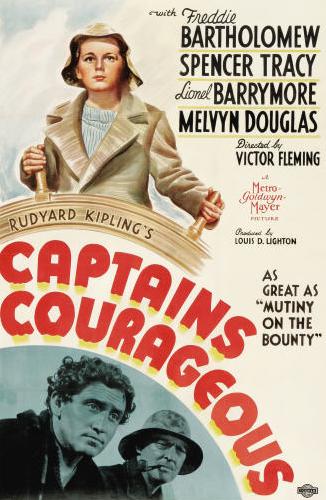
Captains Courageous and Freddie's Liberty No-Show
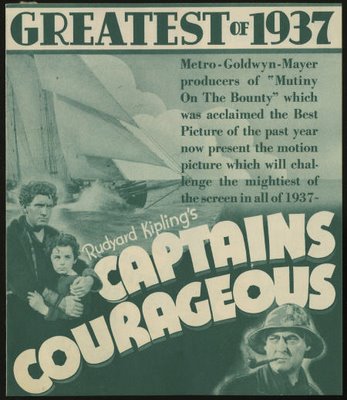
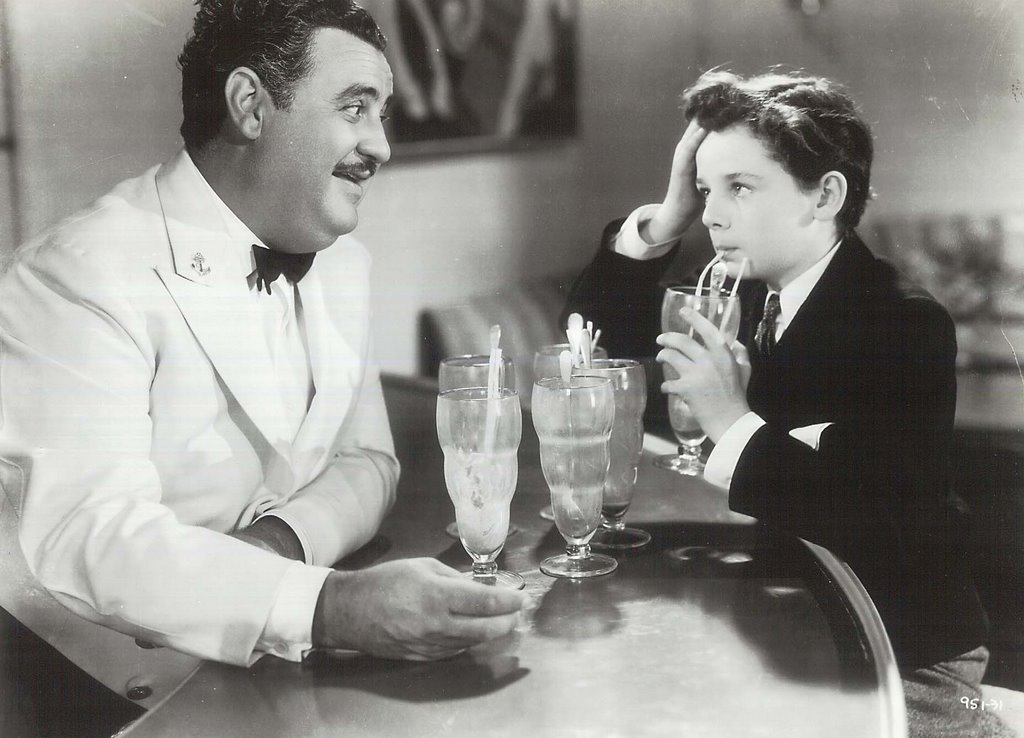
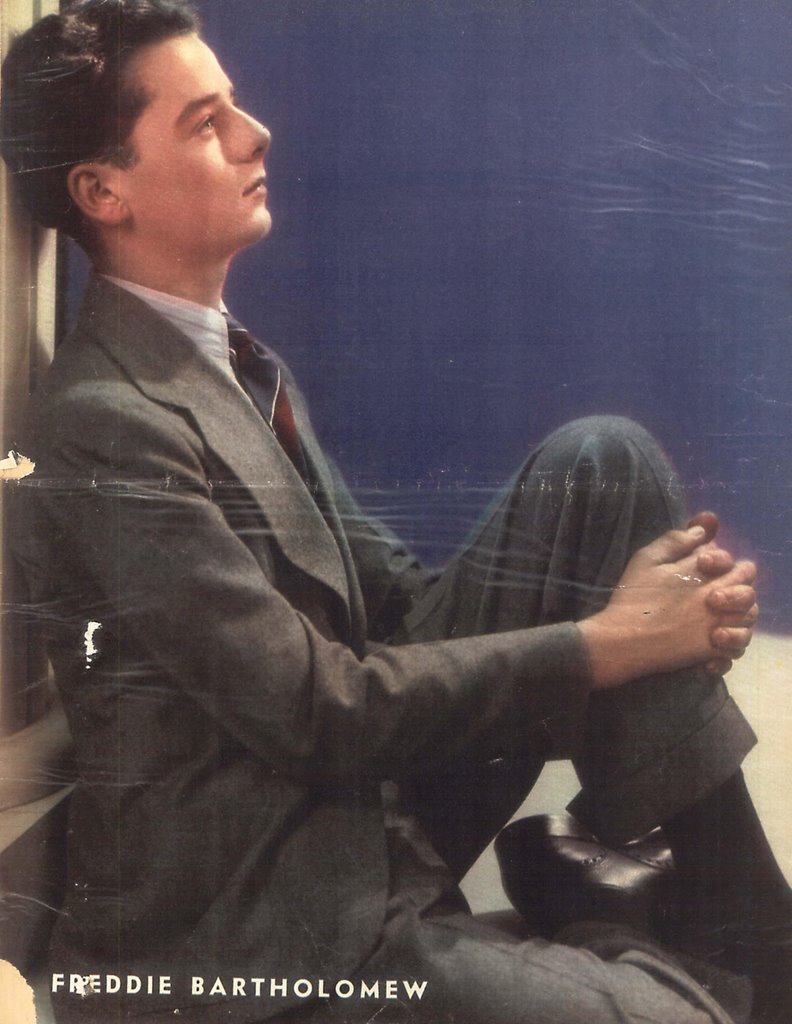
Jason Apuzzo over at LIBERTAS recommended Captains Courageous a week or so ago and I decided to take another look at it. You go for years ignoring pictures like this and they’re always a surprise upon revisiting. C.C. asserted itself often enough in documentaries where that clip of Spencer Tracy singing with an accent played seemingly on a loop. For a lot of people, it summed up the meaning of a classic movie moment. Captains Courageous has long been recognized as Tracy’s picture, but for me, the billing tells the truer story. This is Freddie Bartholomew’s show, and he’s fantastic throughout. I’d forgotten how effective kid actors could be in those days. What a shame Freddie had to grow up, and how unfortunate that MGM dropped him so callously after typecasting the child into a rut during his prime earning years. Audiences react differently to bratty kids in movies. It’s enough for most of us to wait for the character to receive his comeuppance and become a better boy. Sometimes if the youngster is particularly revolting like Jackie Searle or David Holt, we long for him to be punished straightaway, if not killed off altogether. Bartholomew walks that fine line of viewer tolerance, but never crosses it. I was happy to see him fall off the ocean liner, but I didn’t want to see him drown. Is this what separates great child actors from merely competent ones? For such a fine performer, Freddie got a bum deal in American movies. His British propriety looked sissified to many, and some of the roles seemed old-fashioned even then (Little Lord Fauntleroy). I’ll bet there were gangs of boys waiting around stage doors to beat him up after personal appearances. His was the persistent voice of reason that kept scrappier youth like Mickey Rooney and Jackie Cooper out of harm’s way. Too often his character came across as a prig and a party pooper, but more about Freddie later …
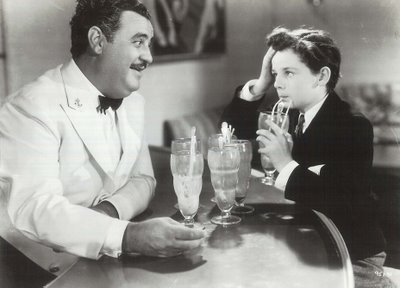
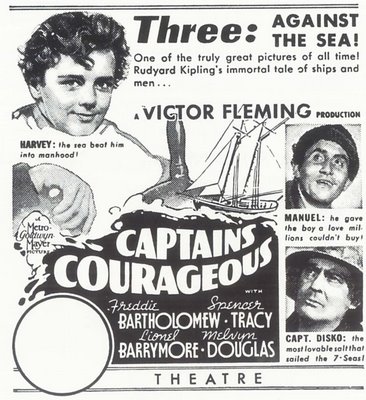
Accents are a curse upon otherwise fine actors. I cringe whenever John Barrymore or Laurence Olivier enter a room and make with the foreign inflections, because you know you’re stuck with it for the run of the feature, and most of the time, that’s agony. Even regional dialects culled from within our own shores can play like broken air-conditioners in a suffocating room. Of the countless southerners I’ve encountered over a life lived in Dixie environs, none have addressed me as Orson Welles does other cast members in The Long, Hot Summer. My query, then, to MGM producers --- Why must Spencer Tracy be Portuguese at all? They’re not shipping out of Portugal in Captains Courageous, and I dare say, fishermen from that country would almost certainly be loathe to go about speaking like Chico Marx. Joan Crawford immediately drew that comparison when she first saw Tracy in costume, and it’s impossible to watch Captains Courageous without making the unfortunate connection. I keep thinking of how powerful Spence could have been if they’d just let him use his natural voice (and that’s director Victor Fleming with the actor on the set of C.C.). As it is, I actually prefer Freddie’s scenes with Lionel Barrymore; indeed this would be one of that actor’s final roles standing up, as within a year he’d be confined to either crutches or a wheelchair. Tracy does become more palatable as the story progresses --- the real Oscar-worthiness of his performance lay in Spence’s ability to overcome the disadvantages inherent in the role (and that ringlet-curled hair!). It may have been the engraver’s idea of a joke when they inscribed the name Dick Tracy on the initial Best Actor award he was given for Captains Courageous, but the more unwelcome gesture came when MGM chief Louis B. Mayer stepped to the podium that night to pay his own acid tribute --- Tracy is a fine actor, but he is most important because he understands why it is necessary to take orders from the front office. Was this a public admonition for the sometimes drink-addled Tracy, whose disappearances from the set had caused production delays and overruns? Captains Courageous actually had a negative cost of 1.6 million, which was considerable money for 1937 (but surprisingly, the same year's A Day At The Races cost even more). Domestic rentals were 1.6 million, with foreign at 1.4. Final profit for the picture was $355,000.
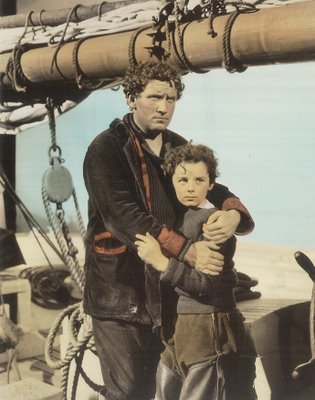
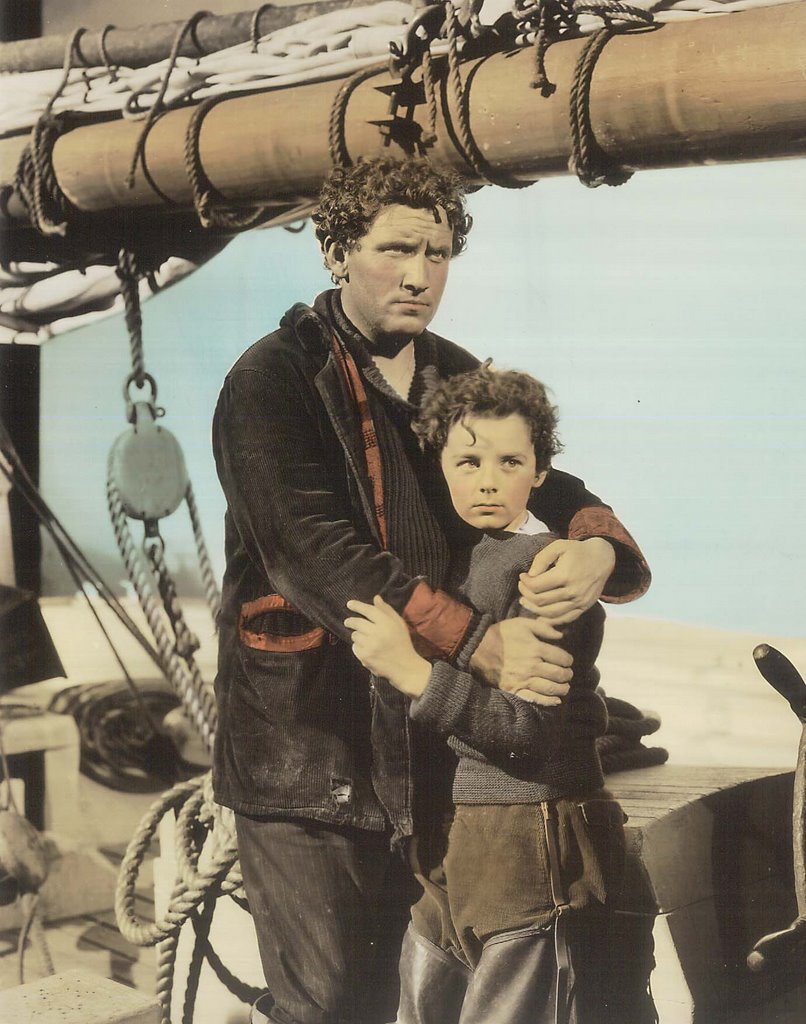


So it’s designated a Family Classic, but would youngsters today be enticed by the likes of Captains Courageous? Initial obstacles are considerable. Black-and-white, for one thing, but that Warners DVD is sufficiently rich to hopefully overcome at least some of that prejudice. Otherwise, I think it may still work with kids. Has anyone tried it on theirs? Any film that traffics in emotional content like this is a gamble by definition. Chances are they’ll laugh or dismiss it as hopelessly maudlin pap (but who knew they'd shot that final sequence in front of Andy Hardy's house as this backlot candid reveals ...). How many movies today deal (seriously) with coming of age subjects? Father-son alienation and reconciliation? You have to admire anyone’s sheer audacity in playing such material straight, for there’s nothing I can think of that’s harder to pull off. If this kind of sentiment works even for an instant, all else is forgiven and you’ve got a picture that will be admired and warmly remembered. I’ve read accounts of those who saw Captains Courageous first-run and never forgot the impact. We can’t know what it was like for audiences in 1937, but after watching that DVD last week, I could guess. This is yet another of those movies you think you’re seeing from an objective distance until one little moment comes along and there you are with the same tear in your eye that the rest of them dabbed away nearly seventy years ago. Any picture that can deliver even so fleeting a glow is well worth cherishing.


Back to Freddie. Long after the world’s applause had subsided, Freddie
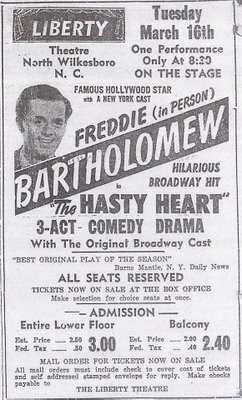
Bartholomew took to the road a six-foot gangly stage hopeful in a stock version of The Hasty Heart during the Spring of 1948. It seemed incredible that David Copperfield himself would turn up in a backwoods jerkwater town like ours, but Liberty owner Ivan Anderson and his manager Colonel Roy Forehand weren’t kidding when they advertised Bartholomew and the original Broadway cast for one performance only on March 16. Rest assured these admission prices ($3.00 for the lower floor!) were quite unheard of in a town where big-time stage attractions usually amounted to no-name bands, hillbilly singers, and sometime cowboy sidekicks (previously reported on HERE). Mail order tickets were something I never experienced at the Liberty in all my years going there. Truly this was the season event for 1948 … and then it got cancelled. The specifics of what happened are lost in the mists of time, but Mr. Anderson was determined to get back the $1,592.37 in lost revenue (mostly those advance tickets he had to make good on). Toward that end, he filed a lawsuit against the stage company after tracing their whereabouts to Savannah, Georgia, where lawyers on behalf of the Liberty Theatre impounded all the props and costumes for The Hasty Heart. The defendant was identified as one Larry Lerouge, representing Imperial Players out of New York. By this time, Freddie had repaired to his hotel digs, having lost a tooth filling. Freddie has played shows when he had a fever of 103 and a cracked rib, said his chagrined wife when advised the show may not go on, and shortly after Freddie defended his own thespic honor by declaring this was merely an argument between theatres and managers having nothing to do with him. With regards the final outcome, I’ve no idea as to whether Mr. Anderson got his money back, though I suspect a few of those ticket holders may still be waiting to see The Hasty Heart on the Liberty’s stage …


Sunday, October 29, 2006


Monday Glamour Starter --- Evelyn Keyes


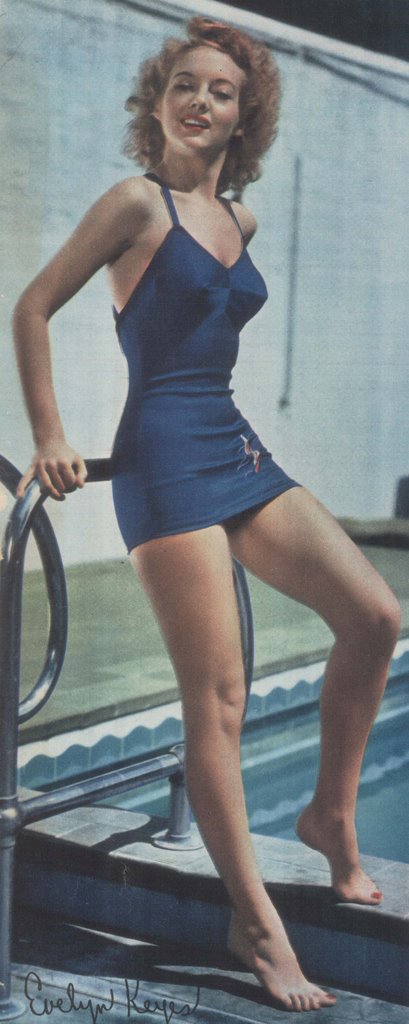
Evelyn Keyes is one of those hardy survivors of the Golden Age who’s gotten to outlive other members of her club, becoming a sort of gatekeeper between here and eternity. Our modern day perceptions of classic Hollywood are based largely on what folks like Evelyn have had to say about it. If you stay around long enough in this business, you get to write the history for those of us too young to have known it first hand. For some old-timers, that’s an opportunity to settle scores of long standing and serve themselves at the expense of those who can’t answer back, but Evelyn Keyes strikes me as one of the more clear-headed and reliable diarists of that era. For most people, she provides an affirmative answer to the age-old trivia question, Who’s left from Gone With the Wind? For years, Evelyn Keyes signed whatever mementos turned up in her mailbox and sent them back … gratis. About ten years ago, requests (and photos) began returning to fans with a form demand of twenty-five dollars for each autograph. Well, if Evelyn’s going to outlast the rest of that legendary group, why should she spend all that time helping "Windies" (her phrase) bolster up their collections on a movie she made back in 1939? That question’s been lately rendered moot by health circumstances that have confined this once-dynamic veteran to a nursing facility, where she’s currently residing at age 89.


It wasn’t the movies she did, but the friends she made, that inspire our interest in Evelyn Keyes today. Her 1977 autobiography, Scarlett O'Hara's Younger Sister: My Lively Life in and Out of Hollywood, is a randy tome chock full of wild and wooly anecdotes of fast-lane encounters with industry men of the world who bedded and (sometimes) married her. These swimsuit poses go at least part of the way toward explaining what attracted John Huston, Charles Vidor, Michael Todd, and Artie Shaw, but there’s an intellect at work in this book that better accounts for her presence alongside filmland’s best and brightest of that era (and you can pick up a used copy on Amazon for one penny, according to current listings). If she’d worked somewhere other than Columbia, Evelyn Keyes might have become a bigger name, but few stars emerged from Gower Street, and she stymied whatever chance she might have had at that modest address when she rebuffed the crude advances of studio boss Harry Cohn. Once the applause died down for her biggest personal success, The Jolson Story, Cohn assured Keyes she’d never be a bigger star than she was at that moment, and he seemed to have made good on the promise by consigning her to what appeared to be low-grade crime thrillers coming off late 40’s/early 50’s assembly lines. The happy irony lay in the fact that these would become some of the most notable features on her credits list --- The Killer That Stalked New York, The Prowler, 99 River Street, etc. --- a circumstance that led to Keyes’ inclusion among noir names featured in Eddie Muller’s excellent interview collection, Dark City Dames (available HERE).


After so many years fielding endless questions about Gone With the Wind, it must have been refreshing to finally take bows for those noir titles, but again, this is an actress who’s been around long enough to see one vogue discarded in favor of another. Publishers had imposed that book title on her. GWTW was still riding a crest of latter-day popularity in 1977, having recently had its television premiere on NBC. Any connection between Evelyn’s memoirs and the movie would assure sales. The thirty years since then have not been kind to Gone With the Wind. The one time theatrical stalwart that remained exclusive to big screens for nearly four decades is now filler on TCM. All the plates, dolls, limited-edition collectibles and so forth that drove the nostalgia market during the seventies and eighties have gone in search of other idols to worship, and the prospect of Gone With the Wind achieving such singular prominence again seems less likely with each passing year. Worth noting is the fact that Scarlett’s two younger sisters (Evelyn and Ann Rutherford) will have outlived her by forty years as of 2007 (Vivien Leigh having died in 1967).


I’d read that Evelyn Keyes was companion to producer Michael Todd between 1953 and 1956, but I hadn’t realized she was also involved in the financing and promotion of Around The World In 80 Days. This is one Best Picture award winner universally reviled today, proof positive, as if more were needed, that Oscars are bought, not earned (though personally, I kinda like it). Todd seems to have financed this extravaganza on a week-by-week basis, and the life he shared with Evelyn usually revolved around hustle dinners where some clueless investor was gathered into the net. It was inevitable that Keyes herself would be snookered as well, but this deal differed in that Todd pledged five percent of Around The World In 80 Days to Keyes in exchange for $25,000 and her continuing efforts on behalf of the picture. The 32.8 million worldwide rentals eventually realized from the show made a lot of people rich, but not Evelyn, who by then had split with Michael Todd. By the time she smelled a rat, he’d perished in a plane crash over New Mexico and her five percent was something estate lawyers, working at the behest of Todd’s son, had no interest in discussing. The protracted lawsuit finally paid out, but for less than Evelyn had coming. She was so dispirited by the whole experience that it was enough just to salvage something from the ordeal and move on. A final marriage to one-time musician Artie Shaw was complicated by his (extreme) temperament, and once again, there was a deal between the two that put Keyes back into litigation in the wake of his death just two years ago. Their agreement had called for each to inherit the estate of the other, whichever died first, and never mind the fact they’d been divorced since the eighties. Evelyn was probably not aware of the court action on her behalf, having relocated for treatment of Alzheimer’s disease. Actor and friend Tab Hunter has assisted with her affairs since that time, and according to wire reports, she did receive the compensation due her from Shaw’s estate.

Photo Captions

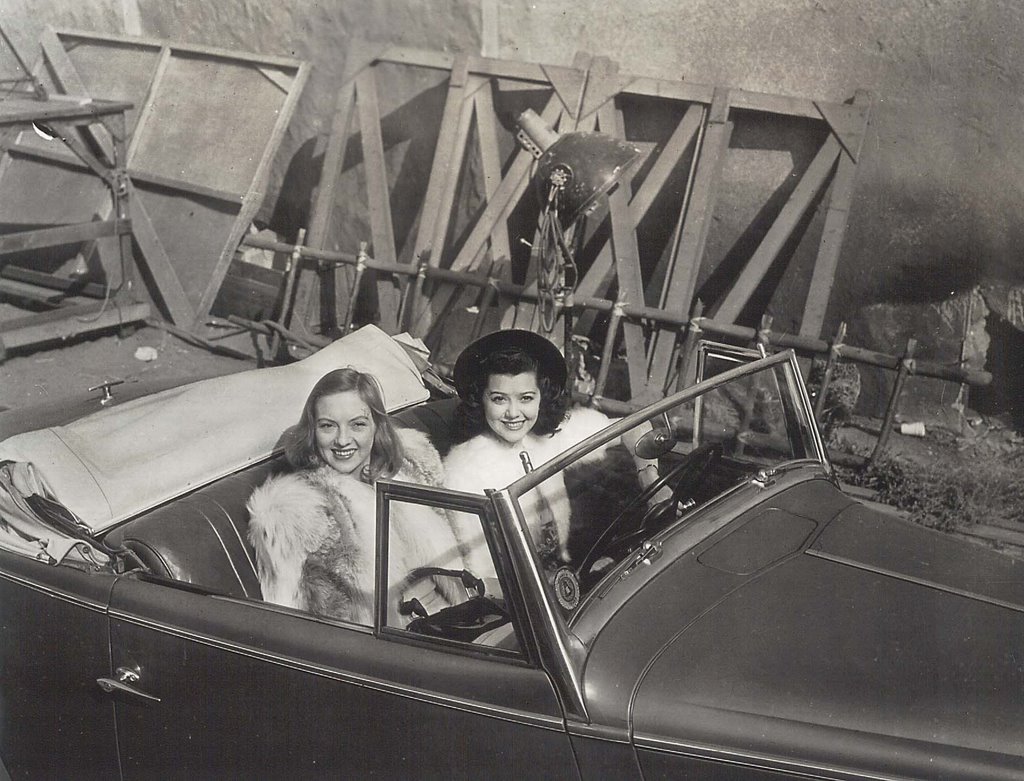
Evelyn Keyes and Ann Ritherford arrive at the Selznick lot to shoot Gone With The Wind
Swimsuit Publicity for Columbia Pictures
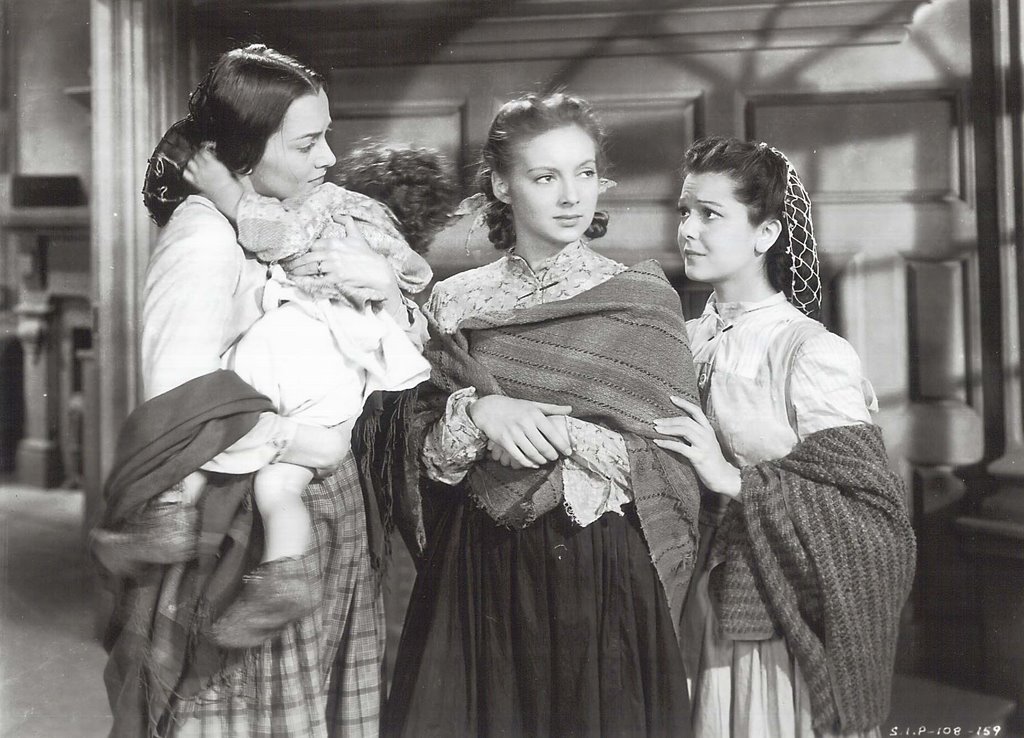
With Olivia DeHavilland and Ann Rutherford in Gone With The Wind
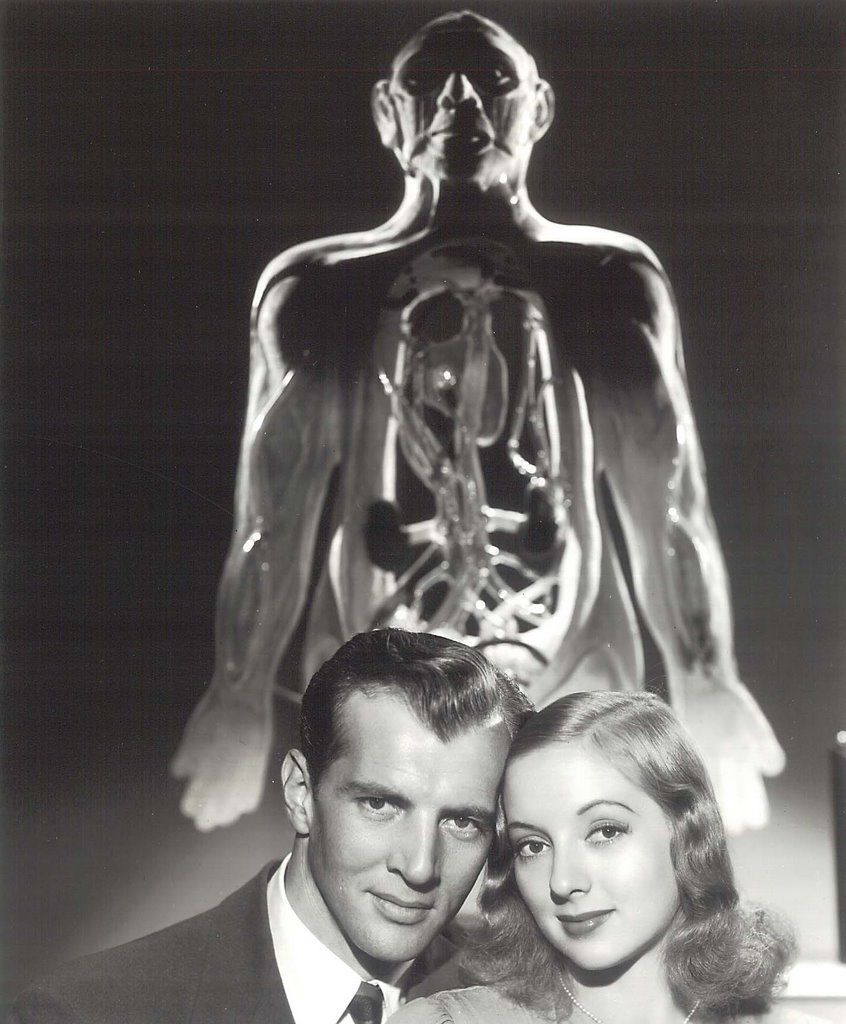
With Bruce Bennett in Before I Hang
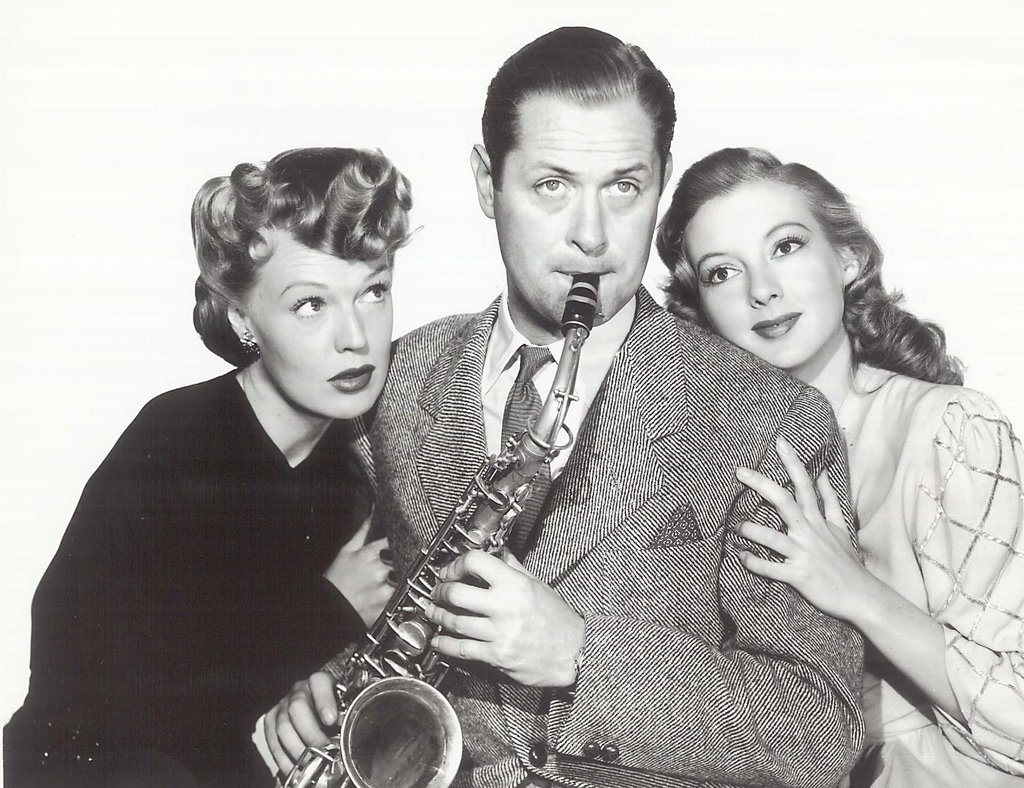
With Rita Johnson and Robert Montgomery in Here Comes Mr. Jordan
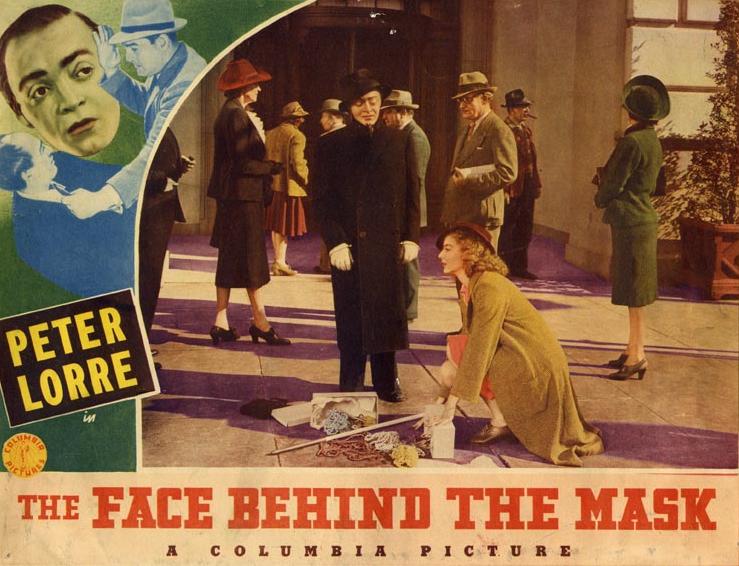
One-Sheet and Lobby Card for The Face Behind The Mask
More Swimsuit Publicity
With Dick Powell in Johnny O'Clock
The Killer That Stalked New York
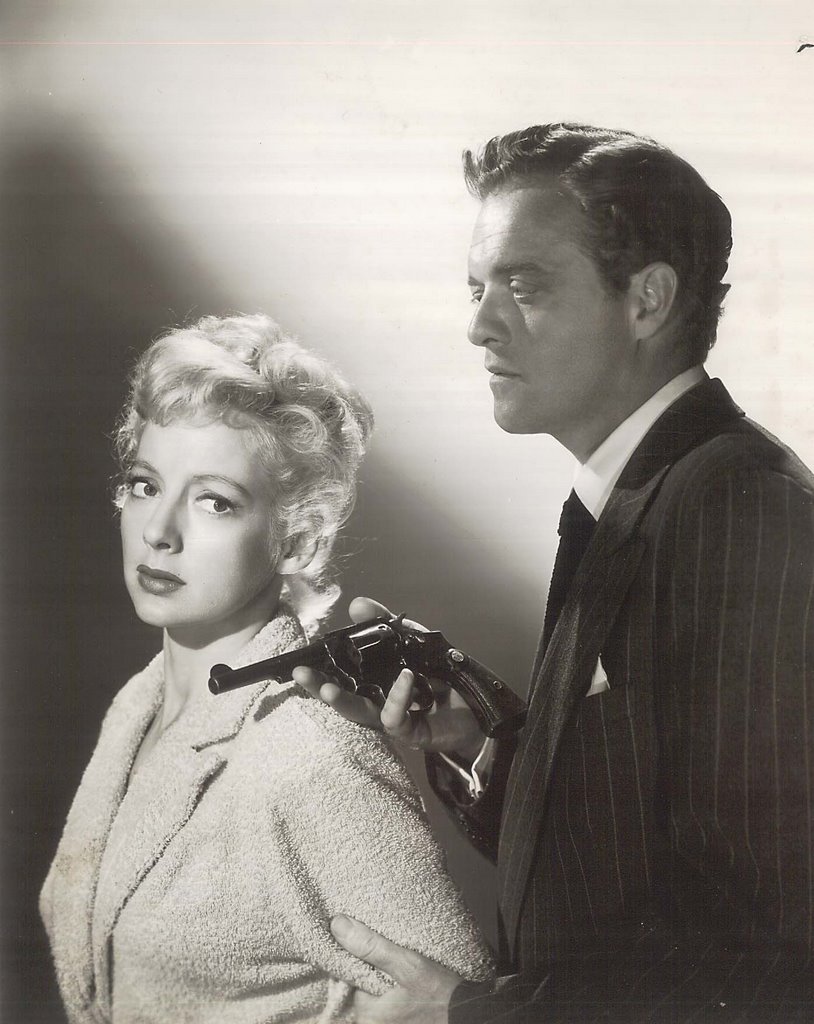
With Van Heflin in The Prowler
With John Payne in 99 River Street


They're Autumn Appropriate, So Here They Are

With Halloween only days off, it's only fitting that we recognize a few seasonal shots that were part of ongoing publicity efforts by the studios. Every actress eventually found herself in the company of black cats, jack-o-lanterns, and what not. Within the month, a turkey or Pilgrim pose would be on their schedule. Someone should do a compilation of Christmas themed stills. There must be thousands of them. I'll surely be digging out a few for Greenbriar this December. In the meantime, here's Deanna Durbin and Gloria DeHaven celebrating the Fall season.


Wednesday, October 25, 2006


Fox Starlets In Revue


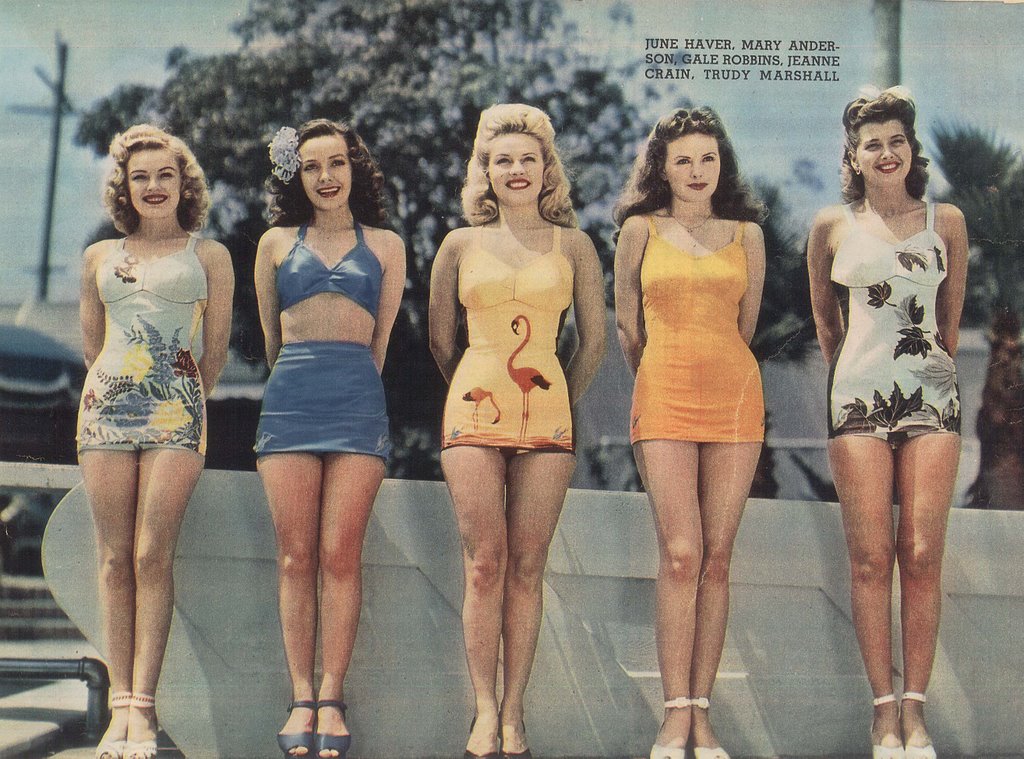
Here are five Twentieth-Century Fox hopefuls around 1943. From the left, there is June Haver, who had a number of leads in musicals before entering a convent (!), which she soon abandoned to marry Fred MacMurray (!!). Mary Anderson had been in Gone With The Wind before she was twenty. Her Fox appearances included Lifeboat, The Song Of Bernadette, and Wilson. It would appear she’s still with us, at age 86. Gale Robbins seems to have made only one Fox picture during this period, In The Meantime, Darling, which was a starring vehicle for Jeanne Crain, by far the biggest name in this group. There was a brief moment during the mid-forties when she was the hottest property on the lot, thanks to shows like Margie and State Fair. Trudy Marshall is best remembered for having worked with Laurel and Hardy in The Dancing Masters. That credit gave her a seat of honor at a number of Sons Of The Desert gatherings.


The Incredibly Unsettling Shrinking Man


There used to be a cat in the yard that I shared with a neighbor. We’d take turns feeding it, which sometimes yielded four or so meals a day. Being a natural predator, T.C. (their name for him --- mine was Satan) would drag his belly over the grass in search of yet more food, usually field mice. On one occasion, I watched T.C./Satan presiding over the slow death of a rodent he’d captured in the yard, knowing full well that were I shrunken to that diminutive size, the cat I served each day would happily and unhesitatingly feed upon me. In short, I’d be Scott Carey! That frightful image of a tiny man fleeing his own ravenous pet has endured in the hearts and minds of all those who saw The Incredible Shrinking Man at an impressionable age. I had lunch last week with a longtime friend who’s now a District Court Judge. He experienced it the same day as I, in July of 1964, on a double feature with Jack The Giant Killer. His astonishing recall of that Saturday so many years ago, and the details he related, confirmed this as having been the most horrific movie encounter that six-year-old ever had. For myself, ten at the time, The Incredible Shrinking Man touched nerves hitherto impervious to the likes of Konga, Tarantula, or even The Amazing Colossal Man, for this was clearly science-fiction not to be laughed at. I was quite unprepared for that sobering finish. This may have been the first occasion for a whole generation of kids to ponder those larger life issues Grant Williams submits for our consideration as he shrinks to infinity. What I failed to recognize at that time was just how effectively The Incredible Shrinking Man tapped into adult fears as well, for this was really a movie about terminal illness and slow death, subjects mainstream Hollywood loathed to address, but ones that might be concealed deep within the framework of a modestly budgeted sci-fi movie.


All this came home to me when I watched the new DVD last week. I’ve had several friends lately who’ve gotten bad news from doctors. That happens as one gets older. Each time, you wonder when it’s going to be your turn. Scott Carey’s ordeal was no different in its essentials from a negative prognosis any of us might receive. However this movie may have dated since 1957, this is one aspect that hasn’t. Children watching The Incredible Shrinking Man need only worry about cats and spiders. For adults, there are grimmer possibilities, and they can’t be resolved with a knitting needle. Is this why I hesitated to watch it again? I’d challenge anyone who calls this a "fun" movie. That’s a domain for giant ants, Creatures from lagoons, and Metaluna mutants. They offer escapes from life, not confrontations with death. Monsters kill people in sci-fi movies and it doesn’t bother us. Scott Carey loses hope for recovery and it’s shattering. We’re all of us reasonably safe from attack by a rampaging stegosaurus, but what about that biopsy result that’s due back? It’s difficult in middle age to watch The Incredible Shrinking Man and not imagine yourself standing naked and vulnerable in a doctor's office. There are few movies so clinical in their depiction of a man doomed. The underlying theme is even spelled out when specialist Raymond Bailey refers to the anti-cancer causing a diminution of all organs proportionately, while the fear of abandonment during one’s final illness is slammed home in that unbearably sad moment with the wedding ring. Unlike a lot of movies that ultimately pull their punches, this one follows through on its despairing promise, for Scott will indeed be abandoned in the end.


Now about that spider scene. There have been noises among online discussion groups that some of it may have been trimmed from the DVD. You recall the noxious creature hovers over Grant Williams for what seems an eternity before being impaled by his intended victim. The flow of blood that spews from the monster’s wound still inspires universal (and international) cringing among audience members. Posted complaints said there was much more blood in theatrical prints, but could these rose (or crimson) colored memories be an exaggeration of what we really saw? I can only relate the moment as it unspooled before me in 1964: The spider was preparing to seize Grant in its fearsome jaws. Grant thrust the needle into that soft belly. Torrents of blood gushed out. It not only covered Grant’s arm, but his entire body. The man was drenched. He had to swim through this muck as the beast’s foul carcass threatened to settle upon him. It was the most violent and explicit sequence in the entire history of motion pictures. The Liberty’s 35mm print was seized by federal authorities and offending footage removed by editors equipped with sidearms. No one has seen it since. How’s that for an enhanced recollection? Minus the gory river, armed officials, and disappearing reel, here’s what I do remember --- Yes, there was a little more blood in the scene and some of it ran down Grant William’s arm and on to his chest. Did I actually see it, or is this too an embellishment, albeit an unintended one? This is one movie argument that will never be settled.


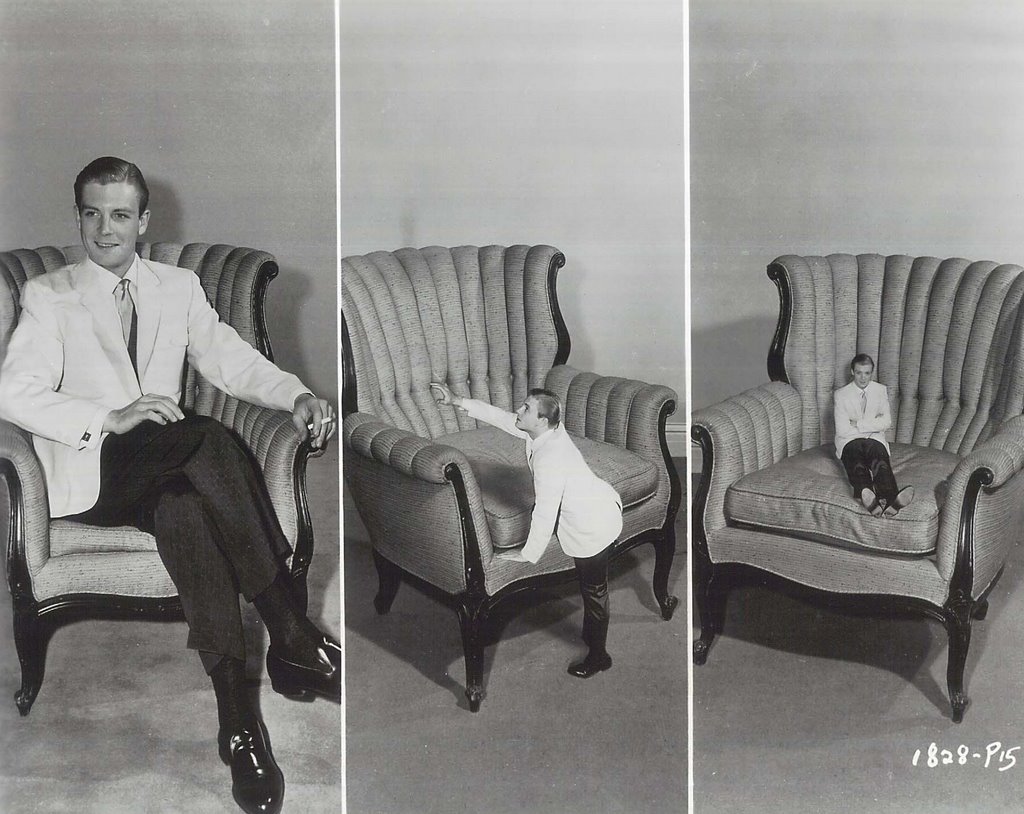
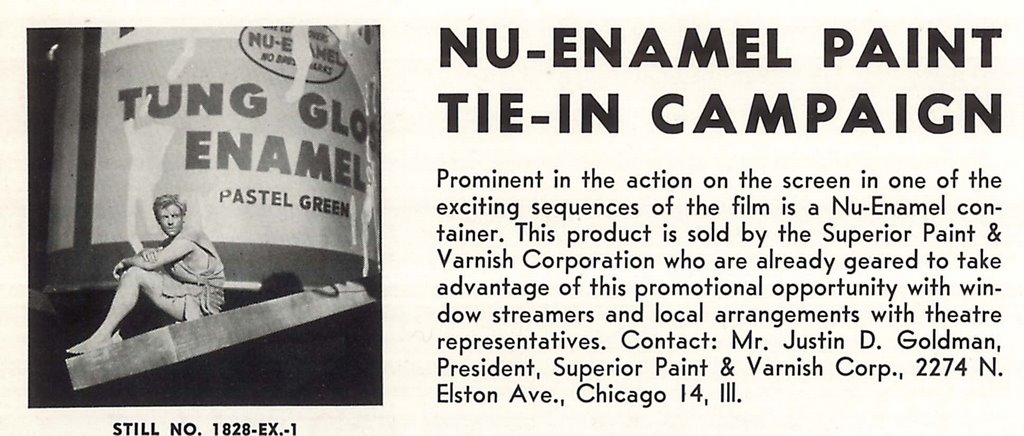
What a great still of director Jack Arnold and producer Albert Zugsmith being denied access to the Shrinking Man set! Why don’t they do shots like this anymore? Must current movies take themselves so seriously? Zuggy was hanging his hat at Universal during the mid to late fifties, and some of the credits he accumulated were pretty impressive. Written On The Wind, The Tarnished Angels (was Zugsmith the real architect behind that fabled Sirkian touch?), Man In The Shadow (Jeff Chandler as a conflicted western sheriff!), Star In the Dust (John Agar as a conflicted western sheriff!), and TOUCH OF EVIL!! Do we owe Orson Welles’ mid-career triumph to Zuggy? After all, he gave O.W. a nice supporting role for one show (Man In The Shadow) and arranged for him to direct another (Touch Of Evil). The least Orson could do is lend his mellifluous voice to A.Z.’s trailer for The Incredible Shrinking Man. Too bad Universal included only a teaser version on the DVD. The full-length theatrical preview is a real treat, and Welles delivers his narration with gusto. How about these product placements? I hadn’t realized Fire Chief Matches, Superior Paint & Varnish Company, and Authentic Furniture Products had men in the field poised to take orders for this stuff, but I guess there were patrons inspired to buy an extra box of lights after seeing Grant Williams use one of them for a residence. I particularly like that Captain’s Chair they’re touting, but can’t help wondering if some potential customer might have called in a request for an oversized version similar to the one that swallows up poor Scott Carey. Do you suppose any of these gigantic props still exist in a Universal storage warehouse? I read most of them were too flimsy to use for promotions at the time, but who knows? There may be a few left. I'd love to have that giant pencil standing against the wall in my den, but I guess it got ruined during Scott's basement flood.


Tuesday, October 24, 2006


Three Cheers For The Vanishing Legion!


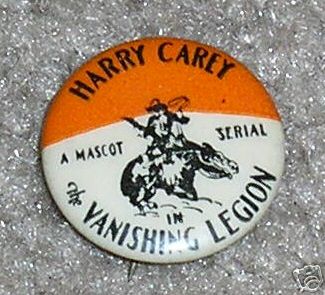
There are varying endurance levels when it comes to watching movie serials, usually depending on who produced them. First, there is Republic, the slickest outfit of the lot, and certainly the most efficient in its day. Their serials call to mind precise movements of a fine watch. Stuntwork, music, special effects --- all out of the top drawer. If anything, Republic chapterplays are too polished. Then there is Universal and Columbia. These were not companies dedicated to serials, but they maintained units for manufacturing them, and most were slick affairs. Beneath this level, we have the independent and poverty row output, and this is where we separate Iron Men from those mere dilettantes who but casually watch serials. The stoutest chapterplay completist might boast of having seen all the surviving Mascot serials, a feat requiring epic patience and an appetite for primitivism in movies at least the equal of screening twelve Edison silent shorts end-to-end. I like Mascot serials. I enjoy the sound of horse’s hooves as they race past prehistoric recording equipment. Scuffling noises during fight scenes have a raw and realistic flavor. Sound effects and dialogue are seldom, if ever, dubbed in. You often hear things clearly not meant to be heard. Lines are muffed or altogether forgotten. Actors stand and wait for cues not forthcoming. Sometimes stunts go wrong, or else guys don’t mind crashing open roadsters and having the things flip over on top of them. You always get the feeling there were people killed on these shows and nobody said anything because these were, after all, fringe productions. Nat Levine was the mastermind behind Mascot serials. He shot The Vanishing Legion in 18 days for three thousand dollars a chapter (with the exception of a lavish opening installment at five thousand). If you can get through all twelve, there’s a G.M.B. (Greenbriar Merit Badge) waiting for you in our lobby …
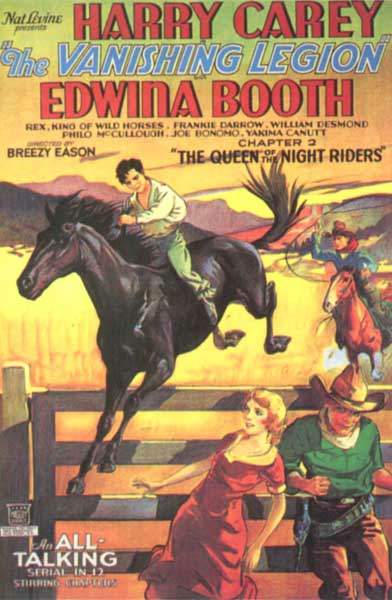


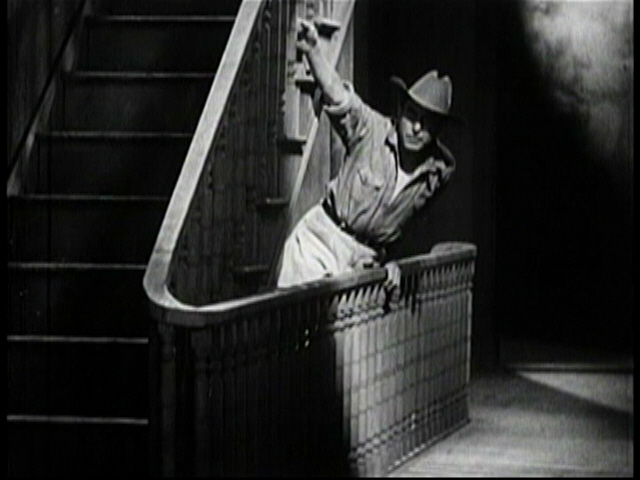
Mascots are the only serials that look as though they were shot in my Grandmother’s backyard. Austere is the operative word here. Harry Carey chases miscreants down streets and through buildings that appear as though they’re still waiting to be wired for electricity. There are no paved roads in this serial, even in the face of its "modern" setting. The town where much of the action takes place is devoid of extras. It’s like everyone either died or cleared out. All the backgrounds have a look of utter desolation. Whatever object or advantage is being fought over could have little monetary or spiritual value against such a bleak void. As with so many serials, you lose track of who’s pursuing who, let alone why. The chase becomes the end in itself, and men exist merely to fall out of windows or be shot at. The alternate Mascot universe never acknowledges ordinary concerns in life. To maintain the pace of a Harry Carey in this show (53 when he made it), you must submit to bullet wounds (Only a scratch, Jimmy), topple off rockbound cliffs (I’ll be all right, Jimmy), and plunge from atop oil derricks (That was a close one, Jimmy!). You can do this sort of thing in the cartoon world of Republic because their chapterplays offered a comforting remove from any sort of recognizable reality, while Mascot serials are all the more unsettling in suggesting, by way of their crudity and obvious lack of studied preparation, that much of this is actually happening to harassed and underpaid cast members. Good God, is that poor Harry being thrown backward down a flight of stairs? Will someone among the threadbare crew drive him to a hospital in the event he really gets hurt? The tension these cliffhangers create is sometimes too real for comfort. You imagine a secret burial on location for some luckless stuntman with a family back in Oshkosh that hasn’t seen him in eighteen years. Who would ever be the wiser?


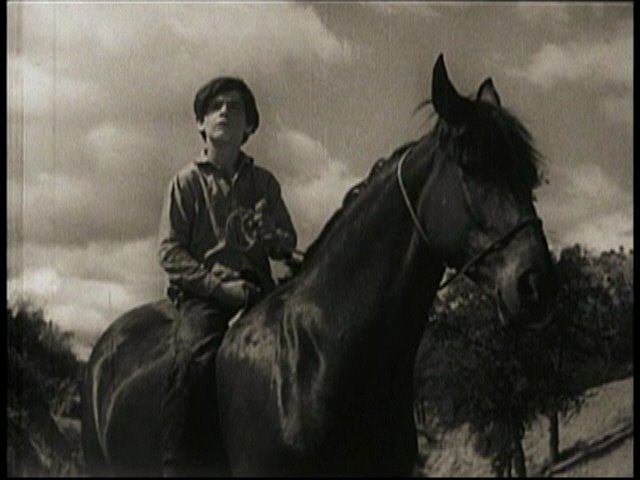
Nat Levine used faded names and anxious beginners. Harry Carey had been around since Biograph days, but his kind of westerner had gone out with Bill Hart, and despite a recent success with MGM’s Trader Horn, he couldn’t be choosy. Edwina Booth was another Trader Horn veteran, though her inept dialogue delivery here caused even producer Levine to blanch with embarrassment. Twelve-year-old Frankie Darro served as audience identification figure and got one thousand dollars for doing this serial, while Rex, King Of The Wild Horses was coming off a series of silent westerns for Hal Roach. Stunt pioneer Yakima Canutt supervised the riskier action, with much footage purloined from features going back ten years. The Vanishing Legion was enlivened by a mystery villain known as The Voice, so-called because we never glimpse his face, at least not before the unmasking in Chapter Twelve. Pre-stardom Boris Karloff
supplies the unseen, but oft-heard, presence throughout, and it’s a credit sometimes omitted from the actor’s filmography. The Voice commands the titular legion. We’re never briefed as to how he imposes his will upon such a large body of men, since they seem to be the only henchmen available to him. Perhaps his sinister intonations are sufficient to assure loyalty. I’m ashamed to say I failed to guess the identity of Mister Big prior to his unmasking (it isn't Boris but another actor who's revealed at the end) --- that may be the result of sheer indifference on my part, as the numbing effect of the glacial narrative over twelve seemingly identical chapters left my head swimming with befuddlement. Based upon the foregoing, you’d not think I’d seek out further Mascot encounters, but something in me longs for The Devil Horse, Mystery Mountain, The Lightning Warrior (Rin-Tin-Tin’s final film!), and all the rest. The only problem, and it’s a major one, is the lack of quality DVD’s available. Insofar as that goes, The Vanishing Legion is a remarkable exception. There is a concern known as The Serial Squadron that offers restorations of many chapterplay favorites. Their transfer of The Vanishing Legion is all digital, and by far the best quality DVD of any Mascot serial I’ve seen. Here's hoping they’ll continue mining these treasures (and you can check out The Serial Squadron’s website HERE).


How To Fill Your Lot On a Friday Night in 1952


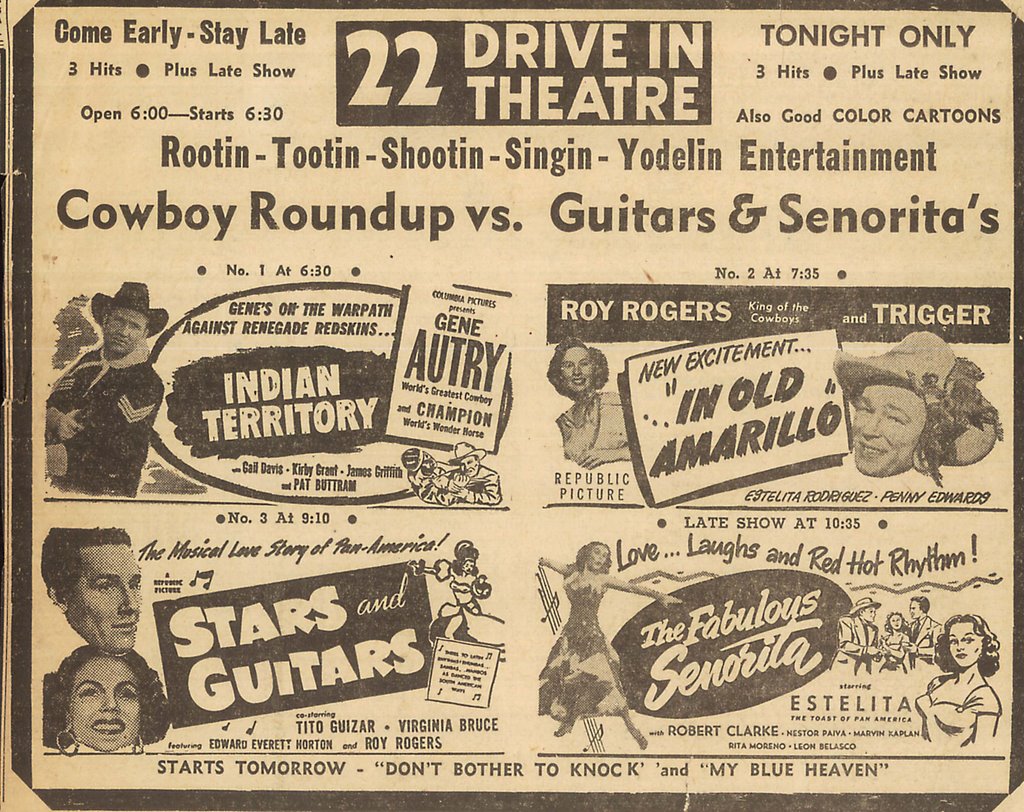
Just a sampling of the kind of shows that used to pack them in during the early fifties. This one, from November 1952, was typical of combinations that catered to audiences out in the hinterlands. Columbia and Republic used to service a lot of these. Westerns were steady reliables for exhibitors and dependable merchandise for producers. $184,000 in domestic rentals may not seem like a lot for Gene Autry’s Indian Territory, but it was money you could count on, and as long as budgets stayed within prescribed limits, profits were virtually guaranteed. Truly a well-oiled machine, and it ran successfully until television flooded homes with the same stuff for free. Pictures like these died hard in the south, though. In the wake of The Beverly Hillbillies’ success on the home screen, our local Starlite Drive-In booked several nights of Judy Canova oldies in the hopes such relics would sate our presumed appetites for all things country --- and those Columbia Autrys were still kicking around our area right through the mid-sixties. A lot of these westerns have been released on DVD, by the way, and all of them sparkle, having been made from negatives retained by Autry's estate. The ones I've watched have been outstanding.


Monday, October 23, 2006


Jean Harlow --- Part Two


Code enforcement signaled the end for Jean Harlow’s established image as surely as it had for Mae West. The character may have been played out in any case, but clearly something had to be done to accommodate the Code and maintain Harlow as a viable ongoing attraction. Hold Your Man was produced and released before the crackdown of mid-1934, but already MGM was softening content, perhaps in response to outcry over Red Dust. This second Gable/Harlow co-starring vehicle was like two wildly disparate movies under a single wobbly umbrella. The first thirty-five or so minutes was bare knuckle pre-code hijinks we could all appreciate (and still do), but that final half doled out excessive punishment to both the actors and their audience, as if to chastise us for having enjoyed what went before. It was a harbinger of worse things to come, not only for Jean Harlow but for a generation of actresses who’d defined themselves in terms of pre-code freedom of expression. Things would never be the same for any of them after this. The Girl From Missouri was the final selection from a menu of titles --- Born To Be Kissed clearly wouldn’t do under the new order, 100% Pure was someone's idea of sarcasm, while Eadie Was A Lady sounded like a Stay Home warning to Harlow’s fan following. August 1934 was the release date, and The Girl From Missouri proudly displayed its PCA seal before the opening credits, assurance for local censors otherwise inclined to apply their own scissors. We’re briefed within minutes as to the rules, and by Harlow herself. I have ideals … I’m a lady … etcetera … a whole new declaration of principles from an actress whose characters had gotten along nicely without them. Harlow was swimming against a new tide, and 1934 audiences had to wonder if they weren’t being sold mislabeled product.


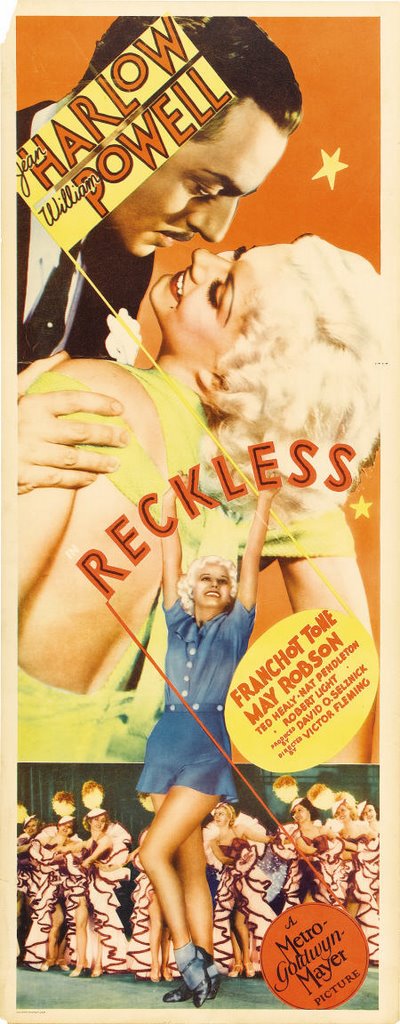
It was a testament to her public’s confidence that Harlow maintained popularity despite the neutering, though a $125,000 loss on Reckless and $63,000 down with Riff-Raff suggested patience might be wearing thin. Metro’s answer was to polish off some rough edges. First, the hair had to change, which was good because it was nearly gone anyway, having been coarsened and ruined over years of mistreatment. The new brownette look went hand in hand with gentler Jean, no longer the barbed wire that wrapped herself around leading men, but an unassuming helpmate, best exemplified by a subdued turn in Wife vs. Secretary. This was 1936, and the adulterous games she’d played onscreen during pre-code years was now a deadly serious business with grave consequences for those who transgressed. Jean’s secretary was a nice girl living at home with Mom and Dad, her gelded suitor a just beginning James Stewart. Whatever sizzle audiences recalled with co-star Clark Gable
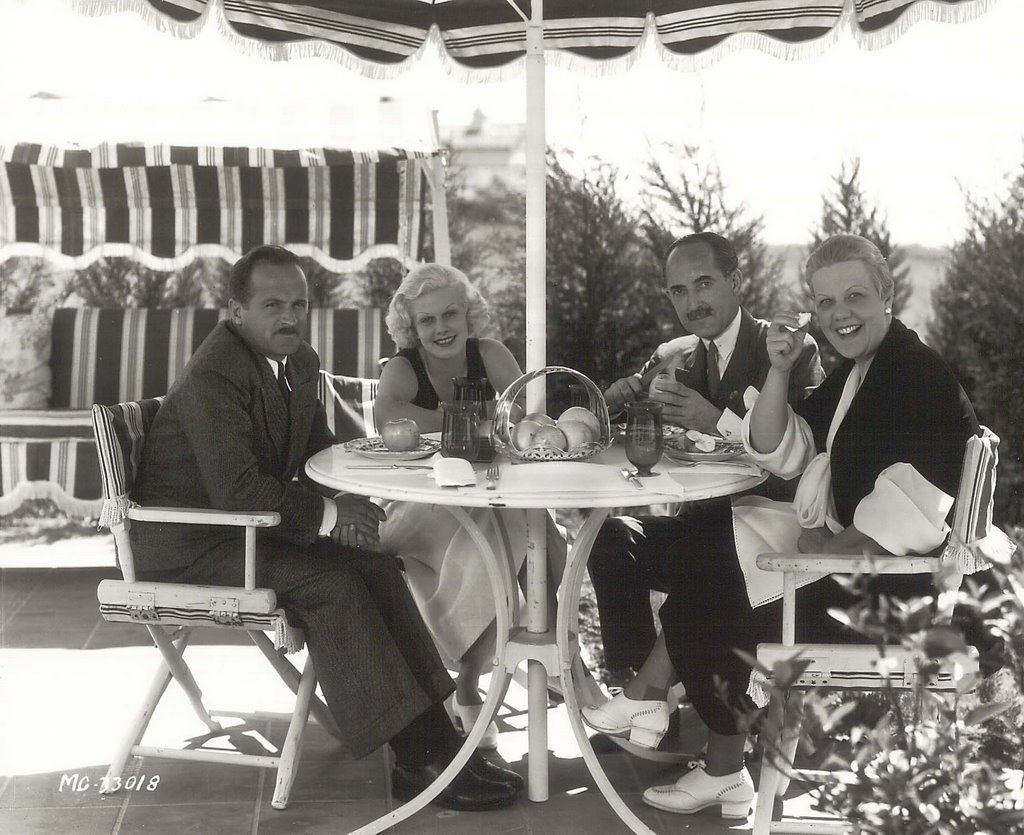
was lost in the mists of time, as PCA prohibitions against re-issues of forbidden titles kept embargoes firmly in place. Harlow’s compensation was now increased ($3,000 a week), but the suffocating mother was a continuing problem, and the star never girded up sufficient will to fight back. Alcohol became the hidden crutch, though it seldom interfered with work, but what about nagging health problems that plagued her? Impacted wisdom teeth led to a procedure that almost proved fatal, and photographers who’d once tabbed hers the flawless face and figure now applied retouching to both. Romance with urbane William Powell held the promise of eternal commitment, only Bill didn't want to commit, and that resulted in public embarrassment for Jean. This was the world’s most desirable woman, after all.


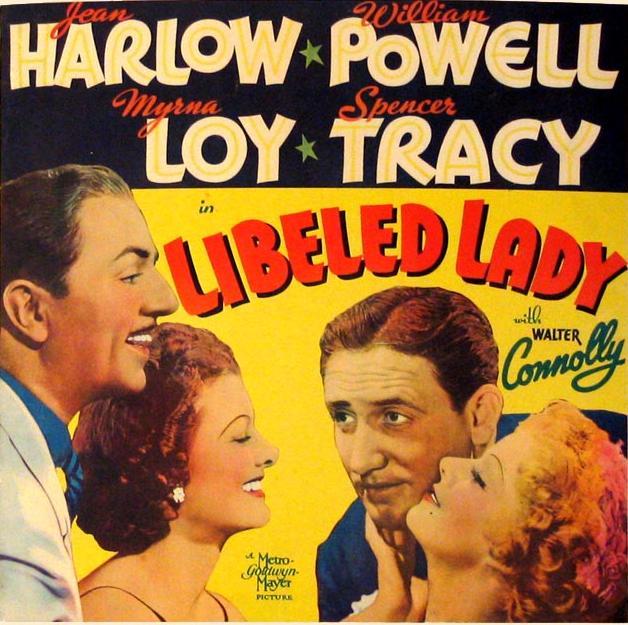
The image modification seemed to have worked. Profits for the next several were up. Suzy ($498,000), Libeled Lady (1.1 million), and Personal Property ($872,000) promised glad tidings to come. Jean was still young enough to sustain at least another decade of success, unlike older thoroughbreds in Metro stables. As Shearer, Crawford, and Garbo were maturing out, Harlow ascended to first chair among female talent. A forthcoming loan to Fox for their spectacular In Old Chicago promised to team her with man of the hour Tyrone Power
. That she would die at this moment was unimaginable, but that’s what happened on June 7, 1937. Her kidneys had been degenerating since that scarlet fever episode in 1926. The crisis point was upon her and nothing could undo years of cumulative damage. A lot of friends and co-workers blamed the crazy mother and her Christian Science-inspired determination to avoid doctors, but Mayo Clinic couldn’t have saved this girl. The shock was all the more palpable because Harlow was genuinely liked among peers, and no one imagined such a dire outcome for her. Death was lingering and painful. The official cause was uremic poisoning --- total organ shutdown and a ghoulish tableau for visitors they’d never get over. She was just 26.


Would Jean Harlow have sustained her popularity into the forties? You ask these questions when pondering the Valentinos, Lombards, Deans, Monroes --- all those who exited early and took promise with them. I suspect Harlow would have aged uncomfortably. She might have been fated to play June Allyson or Gloria DeHaven’s mother, maybe in one of those wartime boosters where she objects to Van Johnson as a suitor or helps put on a camp show with Gene Kelly. Would they have made her do a Lassie? Reunions with Clark Gable would have been unlikely with Lana Turner about, unless it was a character cameo like Mary Astor had with him in Any Number Can Play. Imagine Harlow doing television --- teaming up with Robert Taylor on an episode of The Detectives for old time’s sake. Sometimes a long life isn’t necessarily the best life when it comes to preserving myths. Harlow’s was shattered, then rebuilt, on several occasions after her death. Iconic status was immediately conferred with Metro’s posthumous release of the unfinished Saratoga, which offered the spectacle of both Jean’s final footage and a name-that-double exercise in studio sleight-of-hand. The girl standing in behind glasses, binoculars, and floppy hat was Mary Dees, who died only last year after (nearly) seventy years refusal to discuss Saratoga. Was she haunted by Harlow’s restless spirit? Opportunistic re-issues supplied their own post-mortem. Hell’s Angels was back, but much of her footage was trimmed, while Columbia sustained interest with a Platinum Blonde revival in the late forties. The big noise arrived in the sixties, when writer Irving Schulman offered up a largely fictionalized bio that lit the fuse of many Harlow co-workers who’d loudly declare his perfidy. Even long retired William Powell
issued a statement. Two movies were adapted from Shulman’s speculations, but the three million in domestic rentals Paramount realized from its Harlow had to have been a disappointment for them. A few of Jean’s originals made theatrical rounds as well, but Red Dust and Dinner At Eight were mostly there for a handful of repertory bookings and old-timer matinees. The real Harlow comeback would have to wait for TCM and home video, and here was where long buried treasures like Beast Of The City and Libeled Lady reasserted their presence among fans. As for DVD prospects, Red-Headed Woman is slated for next month, and word is a Harlow box will follow.

Photo Captions

Jean Harlow in Platinum Blonde
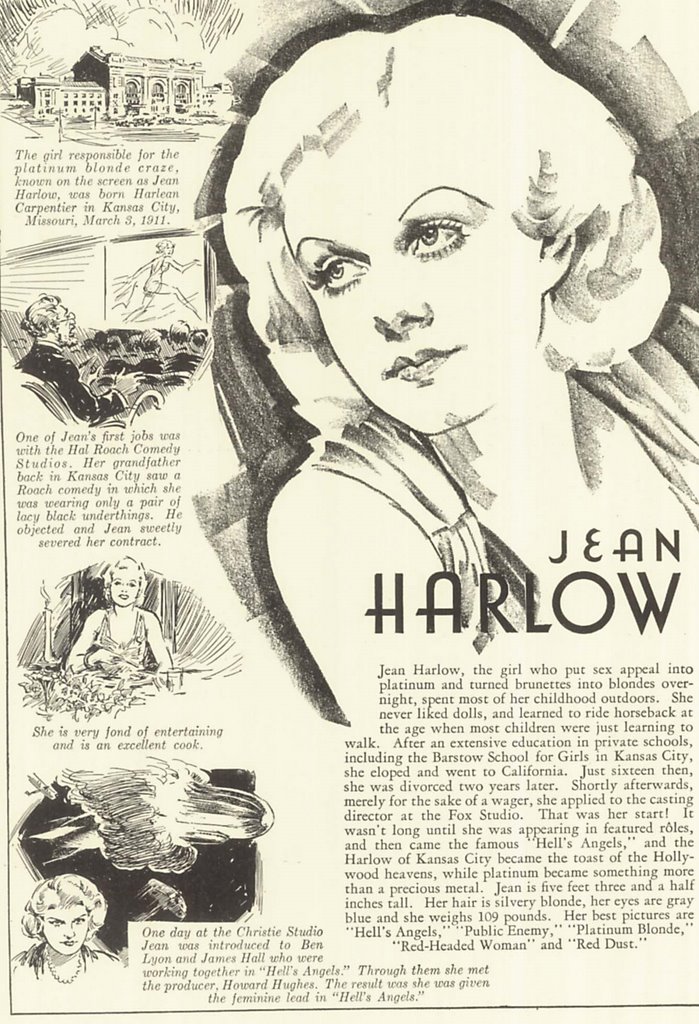
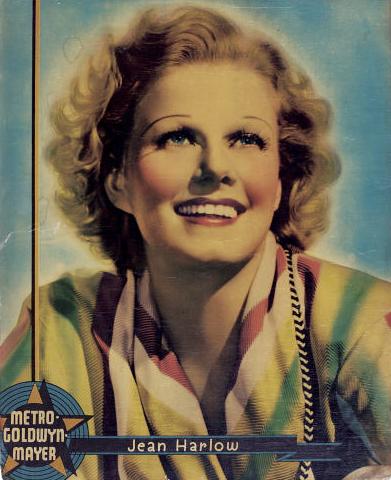
Jean's Picture Personalities Profile
MGM Publicity Portrait
With Wallace Beery in Dinner At Eight
Poster Art for The Girl From Missouri
Reckless Insert
Jumbo Lobby Card from Libeled Lady
MGM Publicity Portrait
With William Powell in Reckless
With husband Harold Rosson, unrepentant gigolo step-father Marino Bello, and her mother.
Publicity for Harlow's new Brownette hair-style
Filming Saratoga with Lionel Barrymore, Walter Pidgeon, and director Jack Conway --- this may have been her last day on that set before she died.


Sunday, October 22, 2006


Monday Glamour Starter --- Jean Harlow --- Part One
Jean Harlow scares me when she shouts, and she shouts a lot. People have said Red-Headed Woman is a funny movie. I'm not one of them. To my mind, it’s the Fatal Attraction of the thirties. Harlow yells in Wallace Beery’s face throughout Dinner At Eight, and cheats on him besides with poor Edmund Lowe, whom she also berates. She’s up more decibels in Bombshell, and later stalks Gable in China Seas. When she crashes Spencer Tracy’s Libeled Lady office in her wedding gown, he and we are reaching for the earmuffs. None of this enhances her sex goddess standing in my mind, and though tastes vary, I wouldn’t recommend her to guys with low thresholds for assertive women. The fact she was anything but this sort offscreen adds to her legacy’s paradox, but how many actresses can boast of a husband allegedly committing suicide because he couldn’t satisfy her? The platinum hook cleared peroxide bottles off many a pharmacy counter, but when did a star hopeful last employ this gimmick? Mamie Van Doren, perhaps? If anything, it distances us from Harlow today. There’s something ghostly about that chalk white hair, with a pallor suggesting imminent collapse. Is it just our advantage in hindsight knowing how tragically things would turn out? Harlow had the misfortune of coming up during those final plague years before modern medicine developed treatments so easily applied to her maladies today. But for the absence of antibiotics, dialysis, and transplants, she might still be with us, a venerable icon of Hollywood’s Golden Age at ninety-five. I realize I’m out of the mainstream in thinking Harlow’s early work was her best. Andrew Sarris talks about inept line readings and an unconvincing British accent in Hell’s Angels. For my money, this is where she fully justifies the sex label. Her delivery is certainly no worse, and maybe a little better, than many celebrated names from early talkers, but who at Metro encouraged her to crank up the volume once she got there? Her neophyte performances are more relaxed and appealing to these tired old eyes.


You’d never think she came from money, but Jean rode many a pony cart in her youth, and was the apple of a privileged family’s eye. She contracted scarlet fever at summer camp when she was fifteen and that essentially sealed her fate, as kidney disease initiated a deadly ten-year plan that would go undiagnosed until its progress was way beyond reversal. The last days of silents found her adorning extra ranks, with the occasional rewarding bit. One look at Double Whoopee in 1929 and you knew she was going places. Clara Bow recognized the new line of It even as her own was approaching decline. Harlow’s merely background in The Saturday Night Kid, but commanded attention on those primitive sound stages, even if transition movies weren’t yet equipped to best exploit her. The Hell’s Angels momentum seemed likely to stall for those uncertain years Howard Hughes had her contract. Imagine a sensational debut followed by months of forced idleness. Hughes had neither the time to develop her, nor the inclination to let others do so. Profitable (for H.H.) loan-outs put her in two Metro law-and-order pics, The Secret Six and Beast Of The City. Both these are red meat thrillers, particularly the second, and that hair photographed strikingly. Too bad for Harlow, as the barbaric ritual necessary to maintain the unnatural look poisoned her scalp with horrific combinations of peroxide, ammonia, Clorox, and Lux flakes, these applied during weekly torture sessions at the hands of inaptly named "beauticians." Again I’m at odds with Sarris about another of her loaners, Columbia’s Platinum Blonde. If this is a stiff and stilted performance, then he and I must have been watching different movies. Frank Capra knew how to package her sex lure --- we’d most of us succumb as readily as leading man Robert Williams does here (a subdued Lee Tracy type --- how tragic he died so young). Hughes finally sold her to Metro, opening doors for the studied merchandising she’d needed all along. If you watch her first starring vehicle, Red-Headed Woman, from her character’s point-of-view, it’s a pre-code sex romp worthy of that outlaw reputation, but looking at it through Chester Morris’ beleaguered eyes, the thing plays like Olivier’s Carrie ordeal, with Jean’s shrieking harpy as opposed to Jennifer Jones’
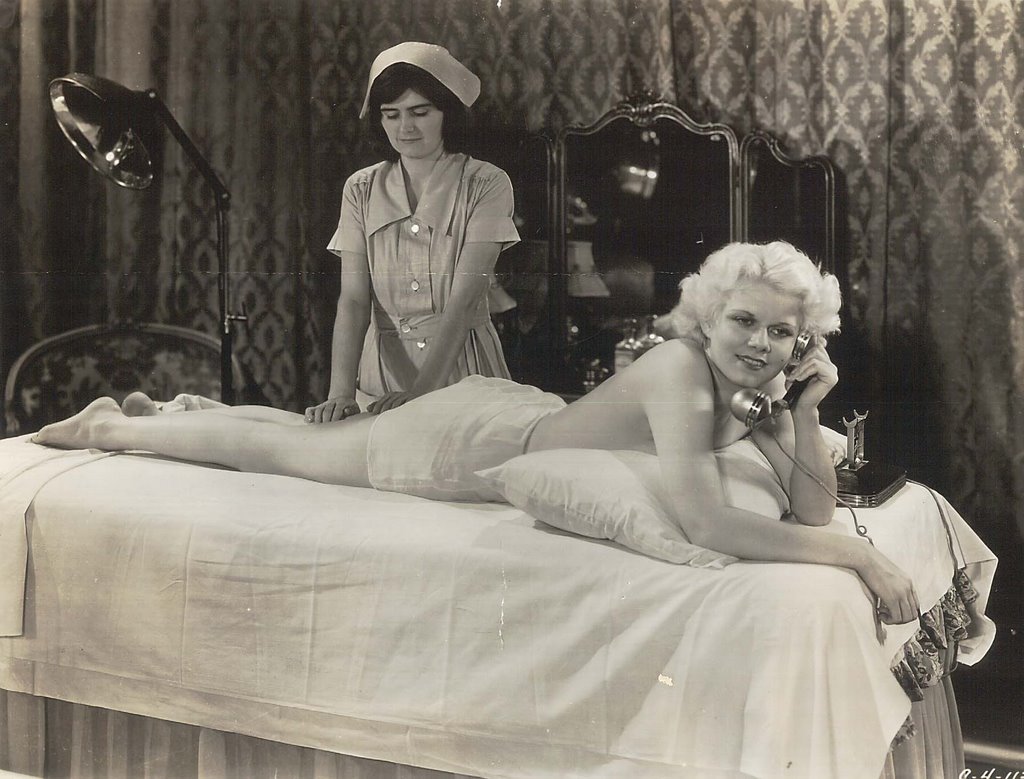
softer temptation. Writer Anita Loos must have felt those men had it coming, because they sure bear the brunt of Harlow’s malevolent gold-digging here.


The suicide of second husband Paul Bern was either the worst calamity, or the best break, she ever got, depending on one’s personal/professional viewpoint. Marrying this guy, even for the career boost it promised, was adjudged sheer lunacy by those who knew both parties, as Bern was one of those still water run deep types. In his case, the water got plenty murky when it came down to secret common-law wives and a seemingly non-existent libido. Clear enough as to what Harlow expected of him, but what in the deuce did he want with her? The ultimate trophy bride, perhaps, but Bern appeared to have no intention of consummating the union, and insider talk was rampant. Metro's build-up was well in progress anyway, so she needn’t have bothered. David Stenn’s definitive biography says the former "wife" crashed gates one night and confronted the couple. Scandal that promised left Bern no alternative but to press a gun to his temple, Harlow downstairs all the while. A note he left fit nicely with a Byzantine cover story studio publicists cooked up during several hours they ruminated over the bloody corpse before calling police. Jean would be packaged as unknowing siren for whom this impotent parody of manhood crashed upon the rocks over that terrible wrong he’d done her (his cryptic note having also ignited public imagination by referring to the previous night's events as only a comedy). Anxious days followed, but Harlow’s public stood fast, her standing actually enhanced in the aftermath. A pre-code peak was achieved with her next, Red Dust, one of a handful of titles best able to convey for modern audiences what the fuss among us Forbidden Hollywood devotees is all about.


Harlow’s ascendancy to stardom was firmly acknowledged by the Bombshell title casting and her character's identification as biggest name on the fictional Monarch lot. It took a player with real stature to be assigned a plum like this --- Harlow had indeed arrived. A tendency to brass things over the top begins to reveal itself here. Bombshell is less funny than frantic, and though Harlow’s effective at the lower registers, she’s too often drawn into rat-a-tat competition with seasoned co-stars Lee Tracy and Pat O’ Brien. When it comes to this kind of accelerated dialogue, she’s just not in their league. I hadn't mentioned the dominating hell-spawn of a mother that bled Jean white as her fabled hair. Mama Jean was universally despised among Harlow husbands, both actual and intended. Several marriages went on the shoals as a direct result of her meddling. Maniacally possessive, she was herself possessed by a gigolo scoundrel who curried favor with gangland overlords and introduced Jean into bad company. In this, the daughter’s judgment was no less impaired than the mother’s, as witness a romance of some duration with one Abner Zwillman, a mob confederate of notorious "Bugsy" Siegel. Prizefighter Max Baer was another conquest. His wife was all set to name Jean as co-respondent in her divorce action, until Metro got busy and arranged for Jean to propose marriage to a shocked and delighted Harold Rosson, her favorite studio cameraman. Hal must have thought he’d fallen into that proverbial field of four-leaf clovers, but their marriage lasted not even a year. Pretty cynical arrangement, and it would appear she was, at least on this occasion, less a passive victim than a willing participant in such studio machinations. Drat such nuance when we’re casting our rose-tinted romances of celluloid, but Harlow, like anyone in the business, did what it took to remain on top. She’d not be half so interesting otherwise. Whatever the compromises, Harlow didn’t have coming what happened to her within a few short years. Of all the exits any star ever took, this had to be one of the roughest.

Photo Captions

Jean Harlow with Laurel and Hardy in Double Whoopee
With Clara Bow and Jean Arthur in The Saturday Night Kid
In the Two-Color Technicolor sequence from Hell's Angels
With Edward Woods and James Cagney in The Public Enemy
With Warren Hymer and Spencer Tracy in Goldie
Color-Tinted Portrait Courtesy Tom Maroudas of Dream Pin-Ups
With Anita Loos on the set of Red-Headed Woman
With husband Paul Bern
Lobby Card from Platinum Blonde
MGM Publicity Photo
With Lee Tracy in Bombshell


Your Radio Guide For A Few Thousand Weeks Ago


Here are some programs you could be listening to this week if you were living in 1941-43. Actually, there are radio stations that still play these shows as "nostalgia" features, though after all these years, I wonder who listens. Old radio seemed to have peaked two or three decades ago when its original listeners were still young enough to enjoy looking back. Now it’s a matter of another generation recalling the golden age of radio nostalgia. Those who experienced it all first hand are fast disappearing from the scene. Have young people come along to take up the banner of radio fandom? There’s a lot of activity on the Web --- many fine websites are devoted to vintage radio. It’s like serials. Unless you grew up experiencing these things new, there’s just no way of understanding what the effect was like. You have to imagine the initial impact when you listen to old broadcasts. Still, there are many treasures to be found in these old programs. Thousands, in fact. The Sirius satellite radio group has recently added a station devoted to old radio. I should take more time to listen. The problem is, I’m just not oriented toward radio as a regular habit. It was all over by the sixties when I was growing up. Kind of a shame, really. I know I’m missing out on a lot.


Saturday, October 21, 2006


Metro's Class Of 1954


Here’s a remarkable assemblage of MGM players gathered on a Brigadoon soundstage at the twilight of Hollywood’s studio dominance. You can check the name captions to identify these faces (a few on one side were clipped off, but only a few --- this was a big image to scan!). It was probably made around the beginning of 1954, as films in production (judging by costumes and actors present) include Deep In My Heart, Executive Suite, Green Fire, The Last Time I Saw Paris, Rogue Cop, Jupiter’s Darling, and no doubt more. Metro wanted to emphasize their status as a healthy, bustling concern, even in the midst of studio decline. This may have been the last such gathering to take place on the lot, unless someone knows of a group photo from a later date.


Thursday, October 19, 2006


Is The Lost Patrol Still Lost?


Got in a mood last night for one of those hopeless siege pictures where men get picked off one by one, and realized I hadn’t checked out The Lost Patrol, John Ford’s 1934 actioner from Warner’s recent DVD box dedicated to his films. I’d once seen a truncated 16mm print long since come and gone, but this DVD was supposed to be a restoration of sorts, including footage not seen for decades. All of that piqued my interest, so I watched. The running time of the DVD was 71 minutes and around thirty seconds. If this was the complete version, it was still coming up a little short, according to information available in various 30’s publications. Variety clocked The Lost Patrol at 74 minutes in an April, 1934 review. The Motion Picture Almanac indicated 75 minutes in its 1935-36 annual. The movie was re-issued in 1939, from which time subsequent editions of the Almanac were amended to reflect a running time of 73 minutes. Were those first cuts made in 1939? Certainly there were revisions later. Television prints generated for syndication were down to 66 minutes. This seems to have been the length of 35mm prints prepared for the 1949 re-issue as well, when The Lost Patrol played tandem bills with a revival of Gunga Din, another film notoriously cut at the time. The great film historian William K. Everson played The Lost Patrol in January 1969 as part of his ongoing Theodore Huff Film Society program. Everson prepared notes that are still definitive references today. On this occasion, he called upon another expert, Richard Craft, to provide background on the differing versions of The Lost Patrol he'd encountered over years of Manhattan moviegoing. Kraft’s contribution is a priceless account of one fan’s ongoing dedication toward keeping the record straight on films otherwise dismissed as ephemeral. He wrote of having gone to see The Lost Patrol at the Beacon Theatre in 1940-41. He recalled it was "complete" at that time, but in light of that entry in The Motion Picture Almanac, is it possible he saw a 1939 re-issue print with those apparent initial edits?


Kraft spoke of seeing The Lost Patrol several more times throughout the forties. He was satisfied the picture was intact. The point at which he began to notice cuts was when he saw the film again in the early fifties with Gunga Din. RKO began to nibble away at it, he said, and after a handful of disappointing 42nd Street encounters, he stopped going altogether. There seemed to have been about eight minutes removed at this point, Kraft recalled, and he cited a still he’d seen depicting a fight scene between Sammy Stein (playing an ex-prizefighter named Abelson) and Alan Hale (as the troop’s cook). This highlight was in the source novel, and appears to have been filmed, but Kraft could not remember ever having seen it, not even in those 1940-41 engagements. Could this missing sequence account for that two-minute difference between the 1935-36 Motion Picture Almanac entry and later editions of same? Kraft did provide specifics as to what scenes had been excised from the 1949 re-issue prints. There was major dialogue between Victor McLaglen and Wallace Ford, as well as several incidents involving Boris Karloff’s character. Having been deprived of this footage for so many years, it’s no wonder the film’s critical reputation has suffered somewhat. I wonder if John Ford
was aware of what RKO had done to The Lost Patrol. Certainly, if he ever caught the film on television, he’d have noted the loss. The director did go public with bitter complaints about the horrific butchery perpetrated by local stations when they ran old movies. Ford felt the viewing public had a right to see these intact on TV. Satellite and cable subscribers often forget what a dreadful circumstance it was between the fifties and eighties when you’d tune in to watch a favorite, only to find the mutilated husk remaining. Ford did own 16mm prints of many of his films. I understand The Lost Patrol was one of these, and he did screen it from time to time. Chances are if Ford requested his print sometime in the thirties or forties, which is more than likely, it would at least have been the more complete 1939 version. Indeed, he may not have even had an occasion to watch The Lost Patrol on television.


John Ford did happily realize a nice profit from his film. The initial fee for directing The Lost Patrol was a modest (even then) $15,000, but his contract also called for 12% of all net profits generated after twice the negative cost ($262,000) had been recovered. Domestic rentals totaled $343,000, and foreign was $240,000. Profit for the 1934 release was $84,000. Additional return on Ford’s participation came in 1939 on occasion of its first reissue. At that time, The Lost Patrol earned $61,000 domestic, with additional foreign of $13,000. Profits were $52,000. The director would, of course, receive his 12% of that action. Again in 1949, Ford saw a payday from The Lost Patrol, this time more substantial than any money he’d received thus far. Being an evergreen action show, The Lost Patrol had a ready audience in grindhouses and small-town situations where bargain rentals usually dictated booking policy. This time, the movie brought back $225,000 domestic, and $50,000 foreign. Profits added up to a hefty $135,000, from which (presumably) Ford got his share. Unfortunately, when RKO’s library went to television in 1956, all those 16mm C&C prints derived from the cutdown 1949 negative, and this version was what home audiences would endure for the next fifty years. Longer prints of The Lost Patrol became mythical and sought-after objects. There was a 16mm screening at the 2001 Cinefest in Syracuse, NY, but that was a one-time event for a comparatively small audience. As to the origin of that print, it was most likely one of those generated for the benefit of a cast or crew member, much like what Ford had. I’d guess Merian C. Cooper got one of these, and possibly Victor McLaglen. It’s remarkable how many such estate prints survived. Some of them are the only record we have of complete versions otherwise lost (The Sea Wolf of 1941 is a notorious example of this --- John Garfield’s 16mm keepsake was made for him before the film was hacked up for subsequent reissue --- now it appears to be the only one left intact). Warner’s recent DVD of The Lost Patrol is likely as complete as any version seen since 1939. With its running time at just under 72 minutes, there are probably scenes missing that were there in 1934, though we are lucky to have at least a lion’s share of this outstanding Ford classic. If you’ve hesitated picking this up, by all means grab the whole set. Warners turns in the usual exemplary job on presentation, and considering what's included here (five features in all), it's one incredible bargain.


Wednesday, October 18, 2006

National Screen Service and Collecting Days Gone By


Forgive my drifting back to a collecting life long past, but these glimpses of the inner workings at National Screen Service call up a lot of treasure hunting memories. Imagine yourself standing at the counter shown here in the early sixties. I think I’ll have ten Vertigo one-sheets, four Rebel Without A Cause lobby sets, and about a dozen Forbidden Planet inserts, please. The nice man rings up your purchase --- That’ll be seventeen dollars, sir. The legend at the bottom says Return To National Screen Service, but a lot of theatres kept these posters. I’m sure I would have. Upon making my purchase, that venerable time machine would carry me to the present day where I’d realize around thirty-five grand for my NSS goodies, then back to the sixties I’d go for another load. That counter clerk would be thrice a millionaire if he’d carried home each night what they tossed in those dumpsters each day. As it is, he probably earned fifty dollars a week and was happy to get it. These people worked in King Solomon’s mines without a clue as to riches surrounding them. A lot of National Screen retirees no doubt kick themselves every time Antiques Roadshow features some guy making thousands off a Frankenstein six-sheet he found lining a dresser drawer.


Moon Mullins was a fifty-year collector who lived in the town where I went to college. He used to search through the woods for Native American artifacts. His backyard museum looked like Dances With Wolves. Moon was also into movies. He built a theatre up the stairs from his indian relics. There was 16 and 35mm equipment, plus racks of film, nitrate and safety. I used to visit Moon’s all the time. We’d go on road trips to search out attics and chicken houses for movie stuff. Scored a 35mm print of Laurel and Hardy’s Utopia in a tool shed thirty miles from the nearest stoplight. This is what collecting was like in North Carolina during the early seventies. Moon had a buddy who worked out of National Screen when they had a terminal in Charlotte. Every week his friend brought Moon a stack of posters and grocery bags filled with trailers. This went on for years. Sometimes I’d stop by Moon’s on a summer day when it was a hundred degrees in the shade and he’d be cleaning nitrate film in a concrete storage bunker with his shirt off. All that alarmist stuff the American Film Institute put out about flammable stock was the bunk as far as Moon was concerned. Guys used to pull up in the yard sometimes and offer him features out of their station wagon. One had a 35mm print of The Searchers he offered to sell for fifty dollars, but Moon gave him the breeze. He figured it was hot, and besides, he didn’t know the guy. Ward Bond stopped in one day during the late fifties. Somebody had told him about Moon’s collection and he wanted to check it out. Moon was never star-struck. When Sunset Carson was down on his luck hosting a yokel UHF kiddie cowboy show, he hung around Moon’s to the point of getting on the man’s nerves.

There was a rival collector who lived not far from Moon. He had a mole at National Screen as well. Actually, Charlotte was full of depot loaders willing to liberate 35mm titles for a modest price. That’s how Homer wound up with a thousand or so features stored above a singularly inhospitable pool room he operated. I gathered up three Warner cartoons and a 35mm Horror Of Dracula one night as Homer dispensed grilled burgers and cue sticks. The cost --- seventy-five dollars. Gone are the days. There was an old theatre downtown he’d corrupted into a porn house. I saw Deep Throat there my freshman year. What a sad, forlorn place this was. Homer used to flush out drunks and somnambulants at closing time by putting on renegade prints of Sergeant York and Treasure Of The Sierra Madre he’d bought years before from the old Dominant franchisee that handled WB re-issues in 1956. Now they were chasers for porn flicks. I guess in a queer sort of way you could call it a repertory house, though I doubt Homer saw it in those terms. Legend tells of a time in the early sixties when he hosted a traveling Freaks show Dwain Esper was running through the Southeast after leasing the negative from Metro. The front of the theatre was dressed up like a fairground, and original cast members ballied on the street. The promotion had a real Nightmare Alley flavor about it. Daisy and Violet Hilton got stranded when Esper split with the receipts. Word is they ended up working for a grocer in Charlotte. One checked and the other bagged. Pretty sensible arrangement when you’re Siamese twins …


Didn’t mean to digress so far from National Screen, for their story is an amazing one and largely unknown today. These folks never got into the film history books, but there were 1200 employees nationwide, and they produced trailers, posters, and most accessories for virtually every movie released in the US. Their warehouses had to service titles going back at least ten years. Movies remained in service long after their initial release. Drive-ins would pick up flat rentals on four or five oldies a week to fill in double and triple programs. Our own Starlite Drive-In finally got Elizabeth Taylor's Cleopatra in 1964, but who would have dreamed they’d back it up with 1937's Way Out West as a second feature? I remember my sister coming home from the Starlite one night in 1974 after seeing Red River (1948). Two weeks later they ran The Outlaw! National Screen was called upon to provide paper and ad art for all these. It’s a miracle they generated so much product in-house (many of the posters were actually created by lithograph companies outside of NSS). The artists and letterers shown here came up with those neat graphics we see on old prevues, and check out these austere working quarters --- to think some of the most stunning poster art of the twentieth century originated from places like this! Elderly ladies like the one seated here at the rewinds were responsible for inspecting trailers when they came back from runs. Of course, a lot of these were never returned. One time Moon and I checked out an old theatre in Gaffney, SC where the guy had a roomful of trailers, and was willing to sell. I came across a 35mm original release preview for Curse Of The Demon there. When the man said he wanted five dollars for it, Moon snatched the film out of my hand, loudly declaring that no trailer was worth over fifty cents. I’ve never seen it anywhere again to this day. Columbia couldn’t even locate one for their DVD. As for posters, check out these NSS staffers as they file away inventory. When the Charlotte branch closed, they hauled every bit of that stuff to a landfill. Policy dictated that none of it be sold or given away. That was at least twenty-five years ago. Someone with a transfer truck and a stout back could have put themselves by way of a lifetime annuity that day. Of course, these things wouldn’t be such e-bay magnets now if they'd had greater foresight then.


Tuesday, October 17, 2006


Critics --- Who Needs 'Em?


After the way I hauled 4 For Texas to the Dumpster yesterday (didn't mean to be harsh on Frank or Dean --- I'm actually a fan of both), I thought it only fair to take stock of how inconsequential critics really are in the overall moneymaking scheme of things. Here’s a Nebraska exhibitor having a little joke at the expense of "Mr. Kountze," a local scribe whose efforts to spray-can business at the Orpheum and Omaha Theatres were rebuffed by second week holdover crowds laughing themselves silly at Take Her, She’s Mine and Palm Springs Weekend in late 1963. That sourpuss caricature in the middle is presumably Mr. Kountze, whose reviews as excerpted in the accompanying article really weren’t all that corrosive, but showmen can be unforgiving sorts, especially when someone’s trying to get between them and a patron’s coin, thus the drubbing. Don’t know about Take Her, She’s Mine, as I’ve only seen parts of it, but Palm Springs Weekend has a place in my heart by virtue of having played on the old CBS Thursday Night Movie many years ago. Lively promotion and imaginative ad art from those waning days of grassroots salesmanship.


Monday, October 16, 2006


Part Two Of Robert Aldrich and 4 For Texas


Should you want to introduce a civilian to the joys of Rat Pack frolicking this Christmas, take my advice and give them CD’s. You’ll gain few friends handing out 4 For Texas on DVD. In fact, most of those Frank n’ Deans from the sixties would amount to so much coal in my stocking, though I suppose they have their adherents. I can still enjoy Ocean’s 11, and of course, Some Came Running rests comfortably on a fifties pantheon, but what of Sergeants 3 (seemingly deadlocked within Sinatra’s estate and out of circulation for decades), Robin and The Seven Hoods, Marriage On The Rocks, and today’s object of scorn, 4 For Texas? Their humor seldom aspires beyond the level of Playboy Party Jokes, and as often evokes dog-eared back pages from Adam or Nugget. Rat Pack movies were in no way to be taken seriously, least of all by their stars. You needed burnouts like Lewis Milestone or tackle dummies with Gordon Douglas’ stamina to endure Frank’s abuse. Aldrich was way too good for such an enterprise. When I read that Sinatra got $750,000 against 10% on 4 For Texas (to Dean’s 250,000), it was clear a lot of money had been paid under false pretenses, especially when you observe how little he actually does in the film. The director initially touched off Frank’s fuse when he scheduled ten days on a desert location for that opening stagecoach pursuit. Sinatra replied he’d be there for five, then faded two days ahead of that commitment. He’s to blame for the ruination of this show. Aldrich spoke well of Dean in hindsight, but he was ready to litigate on Frank. Estimates suggested the recalcitrant star worked only eighty hours over thirty-seven days. Martin’s clearly hauling the load for both, especially in an excruciating second half. He’d been on board with Aldrich’s script from early on, hoping to lure James Stewart or Robert Mitchum as co-star. Cruel fate gave them Sinatra at the eleventh hour. The star lived down to his reputation --- arriving late and unprepared, demanding pages be lopped from the script, insistance upon a personal hairpiece handler, etc. If the director thought he’d had a bad time with Davis and Crawford, he was about to find out how things could be worse.


I always thought Aldrich was better doing serious with comedy than comedy with serious. 4 For Texas opens with a scene that would challenge the commitment of Dean Martin’s most forgiving admirers. He’s on a besieged coach with meek little Percy Helton, forever the figure of fun in a thousand shows, unceremoniously shot dead by the villains, and having his pockets picked by a the same callous Dean who moments before identified himself as the good guy. This gallows humor has a particularly nasty smell, and it pervades much of the action to come. It also reveals the cruelty that underlies much of the Rat Pack’s humor. Would Vegas Dean react similarly if some poor chump at Sands concert ringside pitched forward with a bourbon induced coronary? You wonder as he steals Helton’s watch and smirkingly reads the inscription. Was this really the sort of image Dean wanted to project? Nothing makes you squirm like comical anti-heroes who go too far. This one disturbing scene sent my mind in a dozen directions --- like maybe I’m poolside at the Tropicana in 1962 and the Pack walks by. They say Dean projected Look, But Don’t Touch. With Frank, it was Don’t Even Look. Must have been disillusioning for a lot of fans that tried to approach these two.


Frank goes in for petty meanness as well, though it’s more expected coming from him. There’s a scene wherein corpulent Victor Buono reports to town boss Frank for his marching orders. Poor Vic is swaddled in wool suits and strangulating ascot ties. DVD clarity reveals beads of perspiration in virtually all his scenes. You wish this discomfited man could have played it all in gym trunks with a glass of ice tea in his hand, an admittedly less engaging visual prospect, but a merciful alternative to the costumes he wears. Fat people are there to be ridiculed in a Rat Pack universe, so bullying Frank takes pains to remind Buono that he doesn’t fit the bill with regards servicing Anita Ekberg, her own Amazonian proportions ironically more congenial to a man of Vic’s size as opposed to shrimpy Frank. This is the sort of condescension that goes on between Sinatra and everyone he shares scenes with, providing unintended parallels to behind-the-camera rancor provoked by the star’s imperious attitude. Dean had to be annoyed at times, but at least he takes pride of place in the matter of romantic pair-offs (as if romance could have any application to these Rat Pack smoker reels). Ursula Andress, fresh off Dr. No’s Jamaica beach, must surely have quickened the pace of roue Dean's forty-six year-old heart, while alleged cock-of-the-walk Frank is cruelly paired with hulking Ekberg, she of bat-wing eyelashes fluttering beneath hornet nest wigs. Her summons to Frank for intimate dalliance plays more like a threat to his comparatively delicate frame, as she looks fully capable of wrestling him to a standstill.

Sinatra lies around the whole time getting shaved and manicured. How does such a sedentary figure become top dog in Galveston? Dean’s slightly less plausible as a lawyer turned amoral thief and gambler, shading his characterization by making preposterous gifts to an orphanage. Gee, Bob; let’s do at least one scene to make me sympathetic. Three Stooges fans are well aware of the boy’s belated cameo during the last thirty minutes, though you get the impression neither Dean nor Aldrich had caught their act before. Jules White should have been along to wave the baton, for their pallid clowning here makes the Stooge’s own Sappy Bullfighters look like The Gold Rush by comparison. Arthur Godfrey shows up momentarily, but that gag lays flat today, as who remembers Arthur Godfrey? More engaging guests may well have been four Texas beauty contest winners exiting the shiny Plymouth shown here. Part of their pageant bounty was a week doing extra work on 4 For Texas. Boy, I’d love to sit down with one of them today. The four occupied barstools on Dean’s gambling ship. From what I’ve read, there were Sinatra imported call girls filling period gowns as well. Were those Lone Star innocents despoiled by an encounter with seasoned pros? Champ seducers Frank and Dean must surely have put in bids as well --- it was almost compulsory with these two. No doubt the Texas girls took home insights, if not wisdom, they’d have been years coming by otherwise.

Two longtime friends of the Greenbriar, Edwin T. Arnold and Eugene L. Miller, have contributed a pair of outstanding books to the Aldrich canon. The Films and Career Of Robert Aldrich is analysis based largely on reflections of those who worked with the director, as well as thorough research by the writers. Robert Aldrich Interviews is a collection of these representing Aldrich at various stages of his life and work. Both books are a must, and can be got HERE and HERE.


Sunday, October 15, 2006


Monday Glamour Starter --- Jane Greer


I wonder what it was like for dedicated noir fans when they met Jane Greer. Let’s say you’re among those who revere Out Of The Past. One day you’re at the Egyptian theatre on Hollywood Boulevard and there she is. You know this is more than some ordinary movie star encounter because classic noir dwellers somehow transcend mere celebrity. The word itself becomes commonplace when you’re referring to surviving cast members of certain shows. That black-and-white parallel universe was something too vivid for mere mortals to have occupied. Meeting Jane Greer would have been akin to a face-to-face with some figure out of literature or mythology. We know they never existed, but because these characters are so etched in our consciousness, it seems to us they should have. Kathie Moffat in Out Of The Past went beyond the ordinary boundaries of one actress’ performance and became an icon among noir followers. This spider woman of our shared imaginations would become a polite, if bemused, object of a hundred tributes. Greer lived long enough to appreciate what she meant to these people. Were it not for that one defining role, I doubt many of us would recognize her name.

Greer’s not alone for having had one remarkable credit and little else. Others managed immortality on as few noir appearances. I can’t offhand think of another major Ann Savage besides Detour. Peggy Cummins was incredible in Gun Crazy, but no one invited her back for more. Luckless Faith Domergue must have walked past a hundred noir stages at RKO, but the one time she paused, for Where Danger Lives, resulted in a film not well regarded, despite Mitchum’s presence and John Farrow’s direction. Jane Greer seems to have resisted femme fatales after Out Of The Past. That was ill advised, for those roles were her strength --- a dozen players could have as capably handled her performances outside the genre. Like a lot of contract talent, Greer’s looks were her undoing. A girl so beautiful was less likely to be taken seriously. What chance did any aspiring actress have with studio cheesecake like this 1947 Christmas pose in circulation? You’d not be cast as Madame Curie in the wake of publicity like this. Progress was ever slower, but it could hardly be otherwise at RKO, whose own corporate convulsions made it near impossible to mount sustained career promotion for any artist. Jane had gotten in with Rudy Vallee’s help. They'd once been wed, hard as that is to imagine, but his bedroom peccadilloes, among other things, made domestic life unbearable for Bettijane (her real name), and prospects on the lot were equally dire. Being made of stern stuff (she’d once mounted a heroic effort in overcoming a teenage onset of Bell’s palsy, which completely paralyzed one side of her face), Jane played opposite Tom Conway, cowboy James Warren, and erstwhile Dick Tracy Morgan Conway. All this was getting her nowhere, but it was doing so at $100 a week, and that was lots more than she’d had as a depression-era kid, when Mom used to give Jane and her twin brother lemon-flavored hard candies to ward off hunger. Career starvation was finally abated with They Won’t Believe Me, a noirish meller that unexpectedly (and effectively) cast likeable Robert Young as a heel. Jane was fine, as nice girl perfs go, but she’d need something with more bite to make her presence felt …


Out Of The Past was nothing special at the time. Seems incredible to us now. RKO got more prestige, and money, out of Crossfire, which ended 1.2 million to the good, by far their biggest hit of the year. An also-ran like O.O.T.P. eked out $90,000 in profit. Noir before it found its name got no respect. These were all just grubby little thrillers, unless one like Crossfire happened to tie into a social conscience, which was very fashionable that year. The movie that made Jane Greer’s old age a happy one took decades to arrive at immortality's portal. We owe those French a lot for waking us up to these pictures. Pity none of that came in time to do Jane any immediate good. Station West was a smart western with Dick Powell. Was she or wasn’t she treacherous? That would be the question for leading men to come. Robert Mitchum appreciated her willingness to co-star with him despite a recent reefer bust, but The Big Steal found her long tresses cut, and frankly, some of her allure went with them. One-time suitor Howard Hughes was now in charge at RKO, and helpfully informed Jane that she was, despite her assurances to the contrary, quite unhappy with second husband and father of her children, Edward Lasker. Greer’s demurral aroused Hughes’ determination to checkmate her career. She was off the screen for two years after The Big Steal, and whatever momentum she’d had was now scattered to the winds.


Employment came by fits and starts after this. There were long breaks during the fifties that suggested retirement. Judging by the little work she was getting, that may have been the more viable option. Dore Schary had been a friend at RKO, but the lifeline he tossed at MGM was more like an anchor. Things like You For Me and Desperate Search were the kind of program fillers that backed up the Metro specials Jane wasn’t getting. A supporting role in one of them came closest, but The Prisoner Of Zenda wasn’t likely to add laurels to anyone’s resume, most critics merely pointing out how much better the old Selznick version had been. From here on, every Jane Greer appearance amounted to a comeback. Man Of A Thousand Faces found her a calm oasis amidst seas of emotion bestirred by James Cagney and a peculiarly hysterical Dorothy Malone, who seemed to have abandoned all restraint in the wake of having acquired an Academy Award for Written On The Wind. Sixties work included television and support in Where Love Has Gone, where she’d play Joey Heatherton’s probation officer. Build My Gallows High, indeed. Against this background, Out Of The Past was slowly but surely having a resurgence. Noir appreciation was finding currency on campuses and in revival houses. The golden age of reparatory walked hand-in-hand with the rediscovery of American movies buried too long in late-night syndication. 16mm rental exchanges were getting calls for Out Of The Past, and people started wondering whatever happened to Jane Greer. Stunt casting for a 1984 remake of O.O.T.P. found her playing Rachel Ward’s mother, but Against All Odds was otherwise devoid of interest to fans who much preferred asking Greer about the original during promotional appearances she’d agreed to make. Talking about Out Of The Past became a second career. When Robert Mitchum hosted Saturday Night Live in 1987, he asked Jane to come along for what proved to be an elaborate take-off on their co-starring hit of forty years previous. "Jeff Bailey's" gas station was lovingly reconstructed on an NBC stage, and though the sketch wasn't very funny, at least it signaled a younger generation's firm embrace of the old film. Right up until her death in 2001, Greer continued to appear with Out Of The Past --- at screenings --- on TCM --- though by now it all seemed like something that had happened to another person. That’s often the way of it after fifty years. I’m just sitting here for the last three minutes trying to remember what I had for lunch yesterday.

Photo Captions

Sunday Rotogravure Portrait of Jane Greer
Jane's Letter to Santa for Christmas, 1947
with Robert Young in They Won't Believe Me
with Robert Mitchum in Out Of The Past
Again with Mitchum in Out of The Past
Ad Art for Station West
Ad Art for The Big Steal
One-Sheet for The Company She Keeps
with Gary Cooper in You're In The Navy Now
with Stewart Granger in The Prisoner Of Zenda
with Red Skelton in The Clown
with James Cagney in The Man Of A Thousand Faces


Saturday, October 14, 2006


A Surprise and A Footnote


Maybe some of you have seen this image at the top, but not me. The visitor to the set of Universal’s Nice Girl? in 1941 needs no introduction. That’s a young Robert Stack he’s with. Wonder how many stages JFK dropped in on during those early years. Anyway, it’s the first shot I’ve seen of him making the Hollywood scene. The color pose shows nurse’s aide Jennifer Jones volunteering at Walter Reed Hospital in Washington. I would have published it with this week’s Glamour Starter, but ran across it just this morning.


Friday, October 13, 2006


Unsung Masterpieces


If the subject matter hadn’t been considered so ephemeral, these paintings of Thelma Todd, Gloria Swanson, and Norma Shearer might be hanging in museums right now. As it is, the canvases were probably junked years ago, their artists long forgotten. Like so much of the talent behind those great old pulp magazine and paperback covers, the people who contributed art to movie fan magazines never got the recognition they deserved. Graphics and mastheads obscured a lot of their work as well. Readers would sometimes go to torturous lengths to cut around these images on the cover in order to preserve them. As nice as these reproductions look, you can imagine how beautiful the original paintings would have been. Some of them are bound to have survived. They’d be highly collectable now.


Thursday, October 12, 2006


Robert Aldrich Blog-A-Thon ---Part One


Official date for the Robert Aldrich Blog-A-Thon is Monday, October 16, but Mondays are for Glamour Starters here at Greenbriar, so I’m jumping the gun with Part One of my Aldrich contribution today. Part Two will publish on Tuesday. In the meantime, Blog-A-Thon headquarters is at Dennis Cozzalio’s excellent webpage, Sergio Leone and the Infield Fly Rule (HERE). Go there and check out his links to all the other Aldrich contributors. There’s sure to be some great reading there …

A lot of well-intentioned critics feel a certain shame in their enjoyment of The Dirty Dozen. Some recent DVD reviews I’ve read firmly state that Robert Aldrich was there to expose the true ugliness of war, seizing upon violent images as a means of showing his abhorrence for man’s inhumanity to man. The director has no interest in macho platitudes or conventional heroics, they say. How can a twenty-first century dweller with all the right liberal sensibilities embrace such wanton carnage as this? Surely Aldrich was revolted by battlefields he depicted. Otherwise, we couldn’t permit ourselves to celebrate The Dirty Dozen. So is it anti-war? The better question might be, aren’t they all? Has anyone seen a serious war movie that wasn’t anti-war? I don’t consider Keep ‘Em Flying or Caught In The Draft anti-war, and for obvious reason, but I wouldn’t call The Green Berets pro-war either. The thing that makes The Dirty Dozen such a dangerous narcotic is the fact that it’s so much fun. If you had to single out a pro-war specimen, this one might be it. Other Aldrich shows railed against military abuses with as much efficiency, but something like Attack left no doubt as to its sour disapproval of high-ranking cowards and undeserving heroes. Kubrick's Paths Of Glory, great as it is, marches relentlessly toward a foregone conclusion we’ve divined within the first ten minutes. The Dirty Dozen is a lot more insidious. I saw it in 1967 and was flattered by Aldrich’s in-the-know cynicism he imparted to a theatre full of thirteen-year-old boys who wanted to get the real inside stuff about war. His willingness to kick his audience in the face (Look, you little bastard …) really woke us up to joyous potential in military hangings, casual indifference to protocol (you let somebody see you do it …), and even mass slaughter of enemy officers and their women. The You Are There sensation of pouring gasoline over helpless Nazis before setting them ablaze was a guilt-free incursion into bloodthirsty adulthood for a lot of us who’d grown tired of all those noble depictions of reluctant warriors. Did our fathers do stuff like this when they fought? If so, then at least some of it looked to be pretty cool. Oliver Stone missed the boat when he had Born On The Fourth Of July’s Tom Cruise watching Sands Of Iwo Jima before rushing off to enlist. If he’d substituted The Dirty Dozen, I might have found the scene more convincing. John Wayne makes a softer target for post-60’s filmmakers scoring political points, but the truly insidious pied piper might well have been Robert Aldrich. No wonder viewers still have to make excuses for liking this movie.


Everybody dismisses Bosley Crowther as a hopelessly out-of-touch fuddy-duddy. His review in The New York Times deriding Bonnie and Clyde stands at the precipice of that enlightened new age where youth took over and it was good riddance to repressed old men like Bosley (and the Times' dismissal of him soon after would confirm it). The Dirty Dozen was something Crowther particularly hated. A brazenly anti-social film, he said, and I do agree with him --- only, he missed one essential point. A lot of us were primed for anti-social films, especially those that revealed the Greatest Generation as a lot of psychotics and/or craven incompetents. Crowther’s larger beef lay in the fact that this was his peer group we were talking about, and much of what went on in The Dirty Dozen reflected very badly on the men who’d fought the last good war. Something like The Graduate was at least marginally more palatable to old-line critics. Bad behavior among youthful leads was more what they expected, but certain restraints had to be observed when you dealt with American men at war, and The Dirty Dozen violated them. Writer Nunnally Johnson submitted a script that played by the rules, which is precisely why Aldrich brought in Lukas Heller to rewrite him. Pictures like Attack differed by assailing the command with a narrower brush. Yes, there were venal officers, but men in the field understood a few rotten apples need not contaminate the whole barrel, and besides, Attack was a serious examination of war and worthy of respect for all that. The Dirty Dozen was a gauntlet laid before a then-large segment of the population, including Crowther and others of his generation, who still regarded themselves as having been essentially decent and humane, even in combat. Adolescent boys like me cared not a lick about such. We were just a lot of disrespectful brats cheering Up Yours! along with Lee Marvin and the dozen as they stuck it to corrupt Army brass.


Which brings me to Lee Marvin. Talk about your thirteen-year-old’s role model! The man’s career blossomed at precisely the right moment for me. The Dirty Dozen and The Professionals came along within months of each other. Lee was the unflappable leader of men in both. Even Robert Ryan seemed impotent beside him. Professionals co-star Burt Lancaster was for once upstaged, and everyone else just carried Lee's bags. Marvin gained more authority with age. In the fifties, he was too lean and just mean, menacing Randy Scott and slinging coffee at Gloria Grahame. Sometimes he clawed at scenery in the sixties. His Liberty Valance always seemed a little overstated, and a freak turn in The Comancheros was the best thing about that western, but still he seemed to be straining for effect. Donovan’s Reef was an excess of drunk scenes and bar fights, while Cat Ballou suggested a future wasted in (too) broad comedy. The Dirty Dozen came to the rescue and finally gave us the Marvin we’d waited for. He’d been a marine during WWII, island hopping and shot up for real while taking one of them. Lee’s qualification to lead the Dozen was absolute. We’ll not get another Dirty Dozen because there are no more Lee Marvins, and events are not likely to provide us with adequate substitutes for him. His steely gaze is mimicked today with smirks borne of immaturity and inexperience. Since when have contemporary actors taken knocks that would entitle them to stand beside him? Should we impose compulsory military service for all aspiring players in the hopes of developing future Lee Marvins?


The Dirty Dozen had a negative cost of 5.3 million. This was one of the year’s bigger expenditures for Metro. Grand Prix had been more, at 9.8 million, but lost 1.5. Aldrich’s show brought an astounding 20 million in domestic rentals, with 11.1 more from foreign. The final profit was 10.1 million. We had The Dirty Dozen going in and out of drive-ins for years to come. I saw it combo’ed with Point Blank in 1968, and you had to wade through 400 cars just to get a corn-dog. My friend Robert (Thornhill Entertainment) Cline was an exhibitor with the ABC theatre chain in the early seventies, and they picked up a double-bill of The Dirty Dozen with True Grit for a Summer 1972 outdoor saturation booking. The drive-ins paid twenty-five dollars flat for each feature and played them to capacity business for most of the engagement. When the MGM booking office got wind of the grosses, they instituted a new policy for all Metro prints --- no more flat rentals. An evergreen like The Dirty Dozen just couldn’t help making money, and that continued into television. The syndicated version had minor cuts. These were actually made in the negative, so each station running the picture had a sanitized print. We saw Lee Marvin kick John Cassevetes in the face, but Look, you little bastard was removed. This and other snippets were years getting back into television presentations of the film. The recently released HD-DVD offers the best looking Dirty Dozen yet, and is, of course, fully complete. We’ve come a long way from those tanned eastman 16 and 35mm copies that circulated on this title for so many years.


Wednesday, October 11, 2006


Tarzan Triumphs Despite Paramount Perfidy


There is nothing so forlorn as a good picture tossed upon the scrap-heap. Worse yet is when it happens twice. Sy Weintraub was formerly in television. Viewing independent production as the great frontier, he plunged forward with partner Harvey Hayutin and purchased controlling interest in Sol Lesser Productions in April 1958 for $3.5 million. When did the independent ever have the opportunity he has today, when the industry is really bouncing? Indeed, as Weintraub mapped out his first venture in association with Paramount, it seemed as though skies were the limit. It just wasn’t possible to lose money on a Tarzan picture, according to Sy, and thanks to recent acquisition of those character rights from Lesser, he was set to dive head first into a money well with Tarzan’s Greatest Adventure. We’re going to take advantage of the Summer boxoffice by putting it into release across the country on June 17 (1959), when we’ll have at least 300 prints in circulation. What happened next could not have been to Weintraub’s liking. Tarzan’s Greatest Adventure opened in support of Don’t Give Up The Ship, Jerry Lewis’ latest comedy and a far more valuable asset to Paramount. Weintraub had hoped his mature approach to the renewed series would broaden its appeal to the adult audience he sought. Now his grown-up Tarzan was being dumped into the kiddie wastebin. Motion Picture Herald recognized the producer’s effort --- Fresh concept … the best Tarzan in yearsbound to attract a greater segment of the adult ticket buyers. But how many of these were prepared to stand on line with a lot of screaming Jerry moppets? Paramount’s real investment was its relationship with Lewis (but check out a previous Greenbriar story HERE about how that relationship deteriorated later). June 1959 saw a new pact between them involving a minimum sum in excess of ten million. Don’t Give Up The Ship would be launched June 16 with a Navy League sponsored opening in Washington, with government officials and VIP guests in attendance. Next day it would go wide with saturation bookings across the country. NYC neighborhood double bills found Tarzan’s Greatest Adventure bringing up the rear.


Not As Special As They Were Made Out To Be, read Pete Harrison’s headline in his report to exhibitors dated June 27. From the ballyhoo that continues to pour out of the Paramount publicity department, and from the review treatment given to the picture in several of the trade papers, one could get the impression that "Tarzan’s Greatest Adventure," which the company is releasing, is something very special. Our own review indicated that it was no more than a fair program picture of its kind. Harrison went on to damn Tarzan with faint praise, implying (correctly, as it turned out) that the company had little faith in the product. That Paramount itself shares our review opinion is evidenced by the fact that the picture skipped a first-run showing in New York City and opened instead at the Brooklyn Paramount Theatre as a supporting feature to "Don’t Give Up The Ship." Harrison also cited a "mild" notice from the New York Daily News, and warned fellow exhibitors to bear all this in mind when the Paramount salesman tries to sell you either of these pictures as something extra special (he’d given the razz to Jerry’s feature as well). Clearly Paramount was trying to extract better terms for Tarzan’s Greatest Adventure on the one hand (citing positive reviews), and unceremoniously deep-sixing it on the other. Either way, showmen were skeptical. The "warm weather blockbusters" Paramount was pushing hardest were Last Train From Gun Hill, The Five Pennies, and Lewis' picture. Final rentals reflected the sort of distribution politics that doomed the Tarzan show --- Don’t Give Up The Ship took a whopping 3.1 million --- Tarzan’s Greatest Adventure ended with $933,000.


Down south, Tarzan got more respect. We always know great movies when we see them. Besides that, we had the man himself --- Gordon Scott canvassed Dixie in a whirlwind tour during the latter part of June that covered Nashville, Atlanta, Little Rock, Greensboro, and dozens of smaller venues where Tarzan’s Greatest Adventure ran as a single. Our own Liberty Theatre played it solo for three days (alas, sans Gordon). According to the Motion Picture Herald, Tarzan left fans bug-eyed with awe. The half-naked giant opened the tour in Birmingham, where he dropped in on various TV and radio personalities clad only in his loincloth, then thrilled five thousand underprivileged children at the local zoo before sharing cages with lions, monkeys, and elephants. In Durham, North Carolina, he checked out a Liggett & Myers cigarette factory. The appearance shown here was at Harvey’s Department Store in Nashville, where the jungle hero met fans and signed autographs. An acquaintance of mine encountered Scott in Lexington, NC and still remembers that day. I only wish I’d asked Gordo about his tour the couple of times I spoke with him at Courts shows back in the nineties.


If Paramount was at all chastened over their shabby treatment of Tarzan’s Greatest Adventure, they clearly took no steps to atone the following summer, for July 1960 found Tarzan the Magnificent occupying yet another lower berth, and again with Jerry Lewis! This time it was The Bellboy in first position, Jerry’s biggest earner up to that time (3.4 million), and as before it was a saturation opening. Two days of personal appearances at eighteen NYC Loews houses brought Lewis before an ocean of juve fans, and somewhere at the bottom of those marquees (as shown here) was Tarzan the Magnificent. Audiences couldn’t help feeling a sense of déjà vu as they filed into a double feature seemingly identical to the one they’d experienced the previous summer holiday. There was a difference, however, but not a favorable one. Tarzan The Magnificent was significantly down from Greatest Adventure, with $679,000 the extent of domestic rentals for Sy Weintraub’s second producing effort. Clearly the adult spin on Tarzan wasn’t working. Weintraub would adopt a kid-friendlier approach when he took the series to MGM (native boy sidekicks, comical baby elephants, etc.). Paramount’s thoughtless and indifferent handling had scuttled a pair of gallant attempts at a literate, first-quality Tarzan. I don’t know how these pictures might have fared with a dedicated campaign, but I do know they deserved better than they got. A number of kids had their first adult movie-going experience watching these. Many recall them yet as the best chapters in the whole Tarzan series. Finally catching them myself in the late seventies, I was blown away. Tarzan’s Greatest Adventure and Tarzan The Magnificent never play down to their audience. Kids were no doubt flattered by two movies that for once gave them credit as thinking viewers --- and just look at those supporting casts! Between the two, there’s Anthony Quayle, Niall MacGinnis, Sean Connery, John Carridine, Lionel Jeffries, Jock Mahoney --- fantastic people --- and don’t let anyone mislead you as to Gordon Scott’s prowess in the title role. He is just great --- hands down the finest Tarzan yet put to film. I do so wish these pictures could arrive on DVD. Unless I’m mistaken, Warners owns them, along with most of the other series entries. Widescreen editions would be a revelation for a lot of people. The critical reputations of these remain stagnant because there haven’t been decent presentations in many years. Here’s hoping that will soon be rectified.


Your Best Choice in 1929 Home Entertainment


Next time you fire up the home theatre with HD-DVD, or Blu-Ray, or whatever technical marvel you might have access to, think of those humble beginnings in movie collecting, as illustrated here. The 16mm projector and turntable unit above was introduced in 1929. It was a sort of crude Vitaphone set-up wherein you could synchronize your own record pictures on the living room screen. There were later experiments along these lines. A company called Americom offered 8mm subjects along with a record to be played on a turntable and (hopefully) in tandem with images on your wall. Take it from me, it seldom worked. You had to play the film at precisely 16 frames per second and set your needle down at exactly the right moment to have any hope of a properly synchronized show. One out of twenty times, it might work, and even then, the voices and images would drift away from each other as the 200-foot reel ran down. The competing Castle films, with their magnetic sound tracks, were much to be preferred. What frustrated lives we 8mm collectors led!


At least the content was good on the Americom offerings. They had things like Horror Of Dracula, Curse Of Frankenstein, Fox Laurel and Hardy highlights, and the Fu Manchu reel shown here. All you had to do was listen to the record first, then run the movie and transport your consciousness back to the experience of hearing the record, merging the two in a sort of out-of-body viewing experience. This kind of heightened Zen state achieved perfect synchronization every time, and no doubt prepared many young collectors for 70’s drug experiences to come. Parental warnings might well have been issued on those 8mm boxes, for I suspect there are consumers to this day still spinning in that alternate universe Americom introduced us to …


Monday, October 09, 2006


Jennifer Jones --- Part Two


With Jennifer Jones and David O. Selznick now separated from their respective mates, they could proceed with collaborations that would hopefully confirm Jennifer’s status as the screen’s finest actress. That Selznick elected to do so with Duel In The Sun reflects those wildly contradictory impulses that ruled him. It was anybody’s guess as to why he’d set out to produce the world’s most expensive smutty western, but reason and restraint were strangers to DOS, and Duel In The Sun emerged as a lightning rod for censors that surpassed even The Outlaw and Forever Amber. Prissy critics and clergymen felt betrayed by the actress who’d once been their Saint Bernadette, and reviews were withering. All of this was partly tempered by huge grosses, but so much money had gone into Duel In The Sun that getting it back out would take massive infusions of marketing cash. Jennifer’s performance went unrecognized by mainstream critics at the time (though Selznick's campaign did manage to wangle another Academy nomination for his star) --- well, it was just too far ahead of that time --- one of the boldest and most uninhibited turns to come from any actress during the forties. Selznick would dither at other projects. Several started, then stopped. A Little Women with Jennifer would die on the vine, but not before much money was spent amidst months of pre-production and at least several week’s actual shooting. Portrait Of Jennie had to be finished, despite everyone’s conviction that it wasn’t working. Bankers were simply tired of seeing their cash advances go down Selznick ratholes. Jennie was another venture that might better have been abandoned. Good as the finished picture was, it was wildly expensive, and couldn’t hope to get back its negative cost. The ordeal of shooting, and re-shooting, was nearly the death of its leading lady. Reports suggested she tried to jump out a hotel window at one point to escape it all.

Selznick was still a comparatively young man in 1950 (48), but he’d been in the business since silents, having started out with his father as a teenager. Now he felt outmoded and acknowledged as much. It was a business he no longer pretended to understand. Selznick did appreciate the impact of foreign films, however, and supported them by way of production support for The Third Man, which became an unexpected mainstream hit. His idea was to merge the realism of the art pictures with his own Hollywood know-how to create something new in American movies. A collaboration with Michael Powell and Emeric Pressburger would result in Gone To Earth, another of their Technicolored experiments quite unlike anything else being done in 1950. Jennifer Jones would assure the boxoffice, but Selznick lost his nerve in the eleventh hour and hacked down the completed feature for stateside release. Portions were reshot, much of Powell’s footage was jettisoned, and a new title was imposed (The Wild Heart). Still it was deemed unreleasable (scant US distribution several years later confirmed as much). Selznick was undaunted in his quest for a perfect filmmaking marriage between the shores. He financed a neo-realist drama to feature Jennifer under the direction of Vittorio DeSica, one of Italy’s most honored names. White-hot leading man Montgomery Clift
would co-star. Again Selznick panicked and Terminal Station was mutilated in post-production. The domestic title, Indiscretion Of An American Wife, emerged with barely enough footage to qualify as a feature. Its utter failure to recoup ($607,000 in domestic rentals) finally convinced Selznick to give up his European experiment. Having served as lure for these risky ventures, Jennifer sought the refuge of a three-picture deal with 20th Fox in the mid-fifties. Her biggest money show of that decade, Love Is A Many-Splendored Thing, would emerge from this group. As for the ignoble Gone To Earth and Terminal Station, both would be exhumed and restored for DVD in the twenty-first century, and both would finally be recognized for the excellent films they always were, before Selznick’s tampering compromised them.


Jennifer Jones might have had a bigger career without Selznick’s interference, but not necessarily a better one. Her resume is stellar --- Since You Went Away, Duel In The Sun, Portrait Of Jennie --- each outstanding. Carrie for director William Wyler was more fine work, but failed largely due to its extraordinarily depressing subject matter (one million in rentals against a negative cost of 2.1). Ruby Gentry was a steamy hit, but Beat The Devil failed. Directors knew they’d be bombarded with Selznick memos should they work with her, and this may have cost the actress jobs. All the while, her husband sought re-entry into active production. A Farewell To Arms in 1957 would bring him back, only this time it was Fox’s money, and their control, not Selznick’s. The resulting disaster was particularly galling, as the studio took what little profit ($365,000) was to be had, leaving Selznick with nothing. Jennifer had been miscast with Rock Hudson. Her age was an issue now, as the part called for a younger actress, and critics felt she’d been imposed upon the project by virtue of her husband’s participation. She might have continued on, but there would be only one more (Tender Is The Night, with losses of four million) before Selznick’s death in 1965.


Whatever possessed her to do The Idol and Angel, Angel, Down We Go must remain Jennifer’s secret, but neither had many bookings, minimizing embarrassment to some extent. There was another marriage, this time to gadzillionaire Norton Simon, whose obsessive art collecting must surely have evoked Selznickian memories for Jennifer. Both thought it might be good therapy for her to make another movie, but talk about ordeals! The Towering Inferno found the actress dangling off collapsed stairwells and pitching backwards out of scenic elevators (still the biggest shock in the movie). It was as though old Hollywood had been reborn. The all-star cast even locked arms for one of those walking toward the camera publicity shots they used to do back in the days of Libeled Lady
and BoomTown. Unlike those last two she’d done, people actually went to see The Towering Inferno, and Jennifer got flattering notices. Maybe it was time to get back in the game. She bought Terms Of Endearment as a vehicle for herself, but was persuaded to cede the leading role to a younger actress (Shirley MacLaine). Norton Simon built an art museum in Pasadena and Jennifer conducted tours. Otherwise, she couldn’t be bothered about her old movies. The Bernadette Oscar was blithely handed over to a hairdresser who admired it (fortunately returned later), and there have been several appearances at Academy Award ceremonies, the most recent being 2003. One would like to think she’d have a change of heart and give us the revealing interview we’ve waited for, but that becomes less likely with each passing year. Maybe there’s just more drama here than she’s comfortable recalling. The fact that Jennifer Jones has survived it all is some kind of remarkable. What a book she could write were she willing.

Photo Captions

Jennifer Jones with Joseph Cotten in Duel In The Sun
With Joseph Cotten in Portrait of Jennie
With Van Heflin in Madame Bovary
Jennifer in Gone To Earth
With Laurence Olivier in Carrie
Jennifer as Ruby Gentry
With Humphrey Bogart in Beat the Devil
With William Holden in Love Is A Many-Splendored Thing
With Gregory Peck in The Man In The Gray Flannel Suit
Travelling with husband David O. Selznick
Jennifer in The Towering Inferno


Sunday, October 08, 2006


Monday Glamour Starter --- Jennifer Jones --- Part One


Permit me, if you will, to recast the story of The Devil and Daniel Webster with Phylis Isley, Robert Walker, and David O. Selznick. Phylis is the young actress burning with ambition to become a great star. So far, she’s only managed some stage parts and a brief contract with Republic Pictures, but Phylis isn’t satisfied playing support to serial stalwart Ralph Byrd in Dick Tracy’s G-Men, so her Tulsa exhibitor father uses his influence (along with that of his theatre chain) in persuading Herb Yates to release her from "B" studio bondage. Bob Walker’s the boyish thesp who met Phylis back when they were struggling in New York --- but wait, Phylis never had to struggle, at least not in the sense most actors do --- well-to-do parents bankroll performing ventures and set her up nicely in Gotham. Bob and Phylis (now married) eventually settle in Hollywood, but so far it’s Bob getting the plums, via $400 a week on radio. Enter the estimable Mr. Scratch --- in the person of David O. Selznick --- bearing contracts, fur jackets, and promises of glittering success for a newly christened Jennifer Jones. His Faustian bargain --- allow me to guide your destiny and I shall make of you the most cherished and sought-after name in motion pictures. And so Phylis submits herself to Selznick’s handling, and basks in a waiting public’s adulation. She has to sacrifice Robert Walker, but what’s that against an Academy Award? Golden coin rains down upon her, but Mephistopheles Selznick exacts a price beyond even the forfeit of a husband. Indeed, he exerts such obsessive control as to take away much of the joy her stardom might otherwise confer, and collaborations like Portrait Of Jennie, Terminal Station, and A Farewell To Arms add up to a price paid in damnation for the unholy compact these two have sealed.


As you may have gathered from that dose of overheated prose, my view of Jennifer Jones’ fame and fortune is more than tempered by an apprehension over just how she came by it. Talent was never at issue. I’ve always considered her one of the best actresses around, but it never seemed as though she got any fun out of it. Interviews were ordeals. Award ceremonies were anathema. Candids reveal a glum, if not miserable, sort of resignation. Now I ask all you Greenbriar readers who have previously won Oscars (and don’t be modest, we know you’re out there) --- is stardom worth all this? Maybe in the short term, but Jennifer must surely have carried that guilt over Robert Walker around like Pilgrim’s Progress. Of course, every cloud has a silver lining. If Bob hadn’t suffered so in his private life, we’d never have had Bruno Anthony, and that, as everyone knows, is one of the great movie performances of all time (and to think, Walker received not even a nomination for Strangers On A Train). No account of Jennifer Jones is complete without a consideration of Bob. After their split, he gave up even trying for normalcy. His was the great post-war epic of self-destruction and fall from grace. This color Screw You publicity pose sums it up nicely, especially as counterpoint to the optimism he projects in the shot of he and Jennifer during happier days. She’s 87 now --- do you suppose she thinks much about the poor guy? There were two sons. One of them is a dead ringer for Bob. A lot of writers have approached Jennifer Jones about books they're writing. Would she co-operate? No chance --- as in no chance in hell. We’ll see Jennifer mulling over the career with Robert Osborne on TCM about the same day Deanna Durbin
checks in for an hour with Larry King, which is to say, none of us are going to live that long.


Selznick wasn’t the sort of producer who’d be checking out the latest Three Mesquiteer westerns, so how could he know that his new protégé had gotten her start, not with him, but in the company of Ray Corrigan, Raymond Hatton, and a pre-major stardom John Wayne (in Republic's New Frontier). This was the shameful past Jennifer tried to conceal for months, though Selznick met her eventual and tearful confession with equanimity. He was by now committed both professionally and personally to the supreme effort of his career as an independent. Established majors abetted in the creation of Jennifer Jones. Fox gave her the coveted lead in The Song Of Bernadette, one of those assignments every woman, outside of Maria Ouspenskaya, desperately wanted. Popular and critical acclaim for a project as sumptuously mounted as this was a lead pipe cinch --- Bernadette fairly reeked of prestige. Jones had volunteered as a nurse’s aide prior to its release. Now she wouldn’t be able to go out of the house. Robert Walker was getting a big push at Metro around the same time. His Boy-Next-Door Goes To War was reassurance to mothers nationwide --- if this timid on-screen recruit could survive the fight, their own sons might as well --- and the gals, particularly teenage ones, went gaga for his non-threatening persona. Bob’s 4-F classification kept him out of the real-life conflict. This might not have been an altogether advantageous thing, for he’d not only co-star with an increasingly distracted wife, but would do so under the close supervision of the very man who had every intention of taking her away from him.


Since You Went Away was to be the home front Gone With the Wind. Jennifer Jones would be one of two teenage daughters (the other was Shirley Temple) representing a Saturday Evening Post concept of the American family. Publicity groupings of she and Temple with Claudette Colbert
might have been captioned What We’re Fighting For, so idealized was this portrait of what screenwriter Selznick referred to as the Unconquerable Fortress, home. The producer’s behind-the-scenes conduct with regards family values, not only the Walker’s but his own, was like some grotesque parody of what he was depicting on the screen, and the emotional fall-out from all of this would be felt by its participants for years to come. Walker had to play Selznick-constructed love scenes with his wife as the usurper of her affections stood on-set and watched. Surviving cast members would recall the almost unbearable tension five decades later. By the time Since You Went Away wrapped, and it seemed at times it never would, Jennifer Jones and Robert Walker were separated and he was laden with a torch and a bottle. He’d carry both for the rest of his short life. Selznick was a reluctant evictee from the home he’d shared with wife Irene Mayer Selznick, daughter of Louis B. Watching Since You Went Away can be a little unsettling when you’ve just come off reading biographies of these folks. What a raw deal Walker got.

Photo Captions

Robert Walker
Jennifer Jones
Phylis Isley with Ralph Byrd in Dick Tracy's G-Men
Jennifer Jones gets some more stage experience after her move to California
Jennifer Jones and Robert Walker
Poster Art of Jennifer as Bernadette by Norman Rockwell
Portrait of Jennifer as Bernadette
Robert Walker and Jennifer with David O. Selznick
Lobby Card --- Since You Went Away
Jennifer reads the novel of SYWA


Rouben Mamoulian Born This Day in 1897


Rouben Mamoulian was an early sound innovator whose films from that period are still modern in technique and design. Applause may be the most revolutionary picture of 1929 --- Dr. Jekyll and Mr. Hyde certainly has more surprises than any horror thriller from that golden era. Mamoulian directed the first three-color Technicolor feature, Becky Sharp, and one of my all-time favorites, The Mark Of Zorro. There was also Queen Christina, Love Me Tonight, and The Song Of Songs. Good as Laura turned out, you wonder what it might have been had Mamoulian finished it, rather than being replaced part way in by Otto Preminger. That happened again with Porgy and Bess in 1959 (doubt if Mamoulian and Preminger hung out much socially after these two). Most of the press Mamoulian received toward the end of his career arose from having been fired from various productions, but these were troubled from the start, and he was undoubtedly better off being shed of them. Most notorious was Cleopatra. Being relieved of that one probably saved his life. Mamoulian happily lived long enough to enjoy the kudos and cult interest his varied career deserved. He died in 1987.


Saturday, October 07, 2006


Just Another Broadcast Day


Looking at this body of talent as they prepare to go on the air, I wondered what it might have been like to be a kid working in the station that day --- you know, running errands, getting coffee, that sort of thing. You’d be in and out of the room as these powerhouse names got ready for their show. Imagine the conversations that went on. So what did they talk about? How well would Gale Sondergaard and Dick Powell have known each other, if at all? Some of these folks may have crossed paths at other broadcasts or benefits, but not in a movie studio. Anyway --- what a thrill it would have been just to eavesdrop that day. From left to right (standing), we have Walter Abel, Ralph Bellamy, Hugh Herbert, Gale Sondergaard, James Cagney, Henry Fonda, Joan Blondell, and Dick Powell. Seated from left to right are Gloria Dickson, Patricia Morrison, and Lionel Barrymore. The date is unknown, but I’m guessing 1941 or 1942.


Thursday, October 05, 2006


Welcome To the Inner Sanctum


Inner Sanctums are neither fish, fowl, nor mammal. They aren’t horror movies, even if their presence on the old Shock Theatre implied they were. They’re not film noir --- we’d be stretching that term beyond its already fragile limits to include them. To a degree, you could call them mysteries, but we think of those in terms of a series format with charismatic continuing characters, like Charlie Chan or Sherlock Holmes. A single common thread weaves its way through all six Inner Sanctums, and that’s Lon Chaney (Jr.). You’d have thought Universal would cast Chaney as the police investigator or private eye that breaks the case and unmasks the killer(s), but detection is only incidental to these pictures. Chaney’s usually the object of suspicion --- brooding, tormented, and often as not, sharing his misery with the audience by way of voiceover monologues labeled Place Exposition Here. Lon’s got to be the most sedentary mystery series lead I’ve ever come across --- an obtuse, long-suffering punching bag for all varieties of sinister machination practiced upon him by revolving casts in support. Evelyn Ankers very nearly frames him for murder in Weird Woman, J.Carroll Naish ruthlessly exploits him in Strange Confession, Patricia Morrison has him bound for the hot seat in Calling Dr. Death. Introduce a best friend or sweetheart for Chaney in the first reel of a Sanctum, and they’ll almost certainly be revealed as the killer in the last. Nobody in movies was played for such a sap as Lon in a Sanctum. Watch all six end to end and you realize Universal pretty much sized him up for one offscreen as well. The Sanctums may have seemed like a welcome change of pace for an actor determined to break the cycle of low-budget horror films, but by the time this series played out, Chaney was wrung dry, all his limitations having been cruelly laid bare…


Lon Chaney always struck me as a man to whom promises were made, but seldom kept. He wanted to be a great actor like his father. Universal led him down a garden path with build-ups that suggested roles along the complex lines Lon Sr. had excelled in, but meanwhile, there were serials and westerns to be ground out, and big, beefy Junior seemed made to order for hoisting stuntmen and emptying saloons. A lot of this went on in his private life as well, once Lon realized they weren’t coming through for him. First it was the Phantom Of The Opera remake. That one went to Claude Rains (a real actor, as some tactless executive no doubt explained to him). Sound stage mentor and adopted big brother Reginald LeBorg said they’d do big things together, but in the meantime, there’s one more Mummy sequel we need to get out of the way. Whatever coinage that remained in his name was being spent in a hurry and Chaney’s alcohol dependence was aging him as well. The Gable mustache he effected for the Sanctums was less evocative of Clark than of James Craig, Tom Conway, and a host of other cut-rate leading men. That Chaney face contorted with anxiety does lend a certain conviction to his performance, though we’re more inclined to attribute it to issues arising out of Lon’s troubled relationship with studio employers rather than hackneyed situations confronting him in these. Star Wears Own Clothes In Movie reads a blurb in the Pillow Of Death pressbook, and if that’s to be believed, there's at least reassurance in Chaney's offscreen fashion sense. He’s trim and fit in the Sanctums --- all the more alarming then to see him just a few years later (Manfish, My Favorite Brunette) so aged and disheveled.


Unpleasant subject matter is the order of the day among Sanctum mysteries. A faithless wife is beaten to death with a poker in Calling Dr. Death, followed by an acid facial. Naturally, Lon gets tagged for the crime. Dead Man’s Eyes finds thuddingly bad actress Acquanetta switching bottles in Chaney’s cabinet and this time he gives himself the acid facial. A distraught Lon cleaves off his tormentor’s head in Strange Confession and carries it about in a valise. All this unwholesome activity is more implied than depicted, and indeed, the heavy hand of the Code is everywhere in these shows. Chaney wives appear to occupy separate bedrooms. Relationships outside of marriage must be accepted on faith, as physical contact is seldom indicated, despite dialogue suggesting all sorts of libidinous activity on Lon’s part. Others have commented on his unlikely status as catnip for women in the Sanctums, but doggone if the big lug doesn’t acquire a certain oafish charm after four or five of them, so I’m willing to make allowances for that elusive and inscrutable Chaney appeal. Where he really breaks down the fourth wall (sometimes literally!) is when Lon loses his temper. All the Sanctums feature at least one scene where the safety’s off and bestial instincts are turned loose. It’s usually a momentary thing, but always unexpected. Someone will annoy Lon, and he reacts out of all proportion. Players expecting to be merely pushed aside are slung across rooms. Guys who get in Lon’s face come away with crumpled lapels and mild whiplash. Rage is always unconfined when you’re Lon Chaney. Actors must have dreaded onscreen confrontations with him.


Based on what I’ve read, Sanctums were a dumping ground for third-tier studio talent. Producers assigned to them were philistine in taste and boorish in manner. Gin rummy games took precedence over script conferences. Get It Done Quick was their only mantra. Astonishing then that the pictures look as handsome as they do, particularly now that we finally have them in beautiful DVD presentations. Again, I'm stunned and delighted at how movie favorites can be reborn when properly delivered in digital format. Universal pictures from the forties have an almost homespun quality. Close your eyes and there’s instant recognition from the title theme’s opening bar. That glittering logo has a way of transporting many of us back to a hundred joyful days and nights in front of the television. Assembly line moviemaking can be a comforting thing as one gets older and tastes regress further toward nostalgia and reassuring familiarity. Why would I sit and look at six admittedly mediocre "B’s" if not to somehow recapture a sensation I felt upon watching them forty years ago? To argue these pictures are "bad" is to miss the point entirely. Certainly for a younger audience they are that and worse --- boring, stupid, banal --- we could rattle off invective for another long paragraph and all the words would fit, but that isn’t what Sanctums are about. Like so many thrillers, mysteries, and monster shows that used to fill TV Guide listings, Sanctums are about isolated moments in childhood and adolescence when school bells weren’t ringing, household chores were done or left undone, and life was a damn sight simpler than it is today.


Wednesday, October 04, 2006


Rudolph Valentino Gets His Start


My eighth grade class once staged a little program for the school wherein, among other things, we spoofed old-time silent movies. The softest target was, of course, Rudolph Valentino. Everyone young and old could laugh at the Sheik. How did audiences ever taken him seriously? My own participation in the show was half-hearted. I’d only been exposed to Valentino via photos in Richard Griffith and Arthur Mayer’s book, The Movies, but something suggested there was more to this actor than the absurd caricature we were kidding so mercilessly. It’s forty years later now, and thanks to remarkable recent discoveries, Rudolph Valentino may finally get his belated due. The real surprise within these buried treasures is how good he was from the very beginning. A look at The Married Virgin, thought lost until 1995, reveals an actor so assured as to single handedly transform not only his character, but also the story itself. Cast as a fortune-hunting scoundrel, Valentino brings nuance and sympathy to a stock role anyone else would have played along standard villain lines. You know an actor’s good when he keeps you wondering how the show is going to turn out, even when you know all along how it’s got to turn out. Valentino spent three or so years transcending stereotypes and defeating efforts at typecasting. I’d read of swarthy gigolos he played in those early films, but that seems too simple a designation. Rudy’s scoundrels were above simple acts of perfidy. His performances work against cliches inherent in these stories and often overcome them. There are layers of yearning and complexity reflecting an offscreen life in close parallel with rogues he impersonates. His own dalliances with scandal and crime prepared Valentino for parts like these. Perhaps Rudy was dramatizing incidents experienced on the fringes of a New York society he’d inhabited just a couple of years before. In those early days of the twentieth century, a man could still run away from an unsavory past and start anew…


Valentino never came of peasant stock, as some biographers would maintain. If anything, he was overindulged as a boy. The father’s death when Rudy was 11 left him without direction or discipline, and a lifestyle given over to indolence and sloth seemed to loom before him. Rudy wanted to amount to something, and toward that end, talked his mother into staking passage to New York at the age of 18. Picking up English where he could, it would become the fourth language he’d master. Rudy liked the high life, and was quite the pretender within a social structure where appearance was everything. He made friends easily. Hanging around cabarets feigning wealth and status was all well and good until the money ran out, then it was odd and often menial jobs, plus occasional nights sleeping on a park bench. Rudy had a way with the latest dances and made himself available for afternoon tango teas where rich and idle women paid for the titillation of swirls around the floor with handsome, exotic strangers. People liked him and wanted to help out, even when he screwed things up. Sometimes the blunders arose from his own good intentions. An effort to assist a society doyen in shedding an unwanted husband made powerful enemies. Rudy served as a witness against the woman’s straying spouse and the man sought revenge. A charge of white slaving lodged against Valentino in 1916 was probably a frame, but it consigned him to The Tombs (New York’s notorious lock-up) for several days and tarnished him among gentlefolk once friends. The finishing touch came when Valentino's divorcee consort went after her estranged mate with a pistol and emptied the chamber into his head. It was time for Rudy to take a trip.


Upon arriving in California, Valentino used his dancing skills to promote a stage career. Success in New York ballrooms might have led to a renewal of those pursuits in Los Angeles, but Valentino now shunned the unsavory occupation of dance partner for hire, itself only one step removed from dreaded gigolo status. Movies were the goal he sought, and again, people went out of their way to lend a hand. Big names like Viola Dana, Gloria Swanson, and the Gish sisters were early boosters, but none took notice of Rudy as lothario or swoon artist. This was one performer who would epitomize sex on screen, while assuming a near polar opposite image off. It really was all just an act. Those lounge lizards he portrayed mirrored the pose Valentino had to maintain for his own survival, but being close to roles he was often obliged to assume in life, they seemed particularly degrading to him now. He was set upon breaking free of these when writer-producer June Mathis caught his seducer act in Eyes Of Youth and committed herself to promoting him for The Four Horsemen Of The Apocalypse, a proposed roadshow special for Metro. Mathis was a capable, but homely, sort --- maybe Rudy was her idea of a perfect lover, but she was his idea of a perfect big sister, and that was something he really needed at this career juncture. For $350 a week (up from the $100 he got for doing The Delicious Little Devil in 1919), Valentino got the lead in The Four Horsemen, but had to provide his own costumes. The elegant wardrobe he wore throughout was courtesy Rudy’s own New York tailor, and it would take the actor two years to pay off the tab for those twenty-five custom suits.


There’d been a marriage, to an actress named Jean Acker. She locked him out of the bridal chamber and vows were never consummated. Seems Jean neglected to tell Rudy she was a lesbian. This wouldn’t be his last dance around that maypole. The union was dissolved before he got into big chips, though Valentino would forever seem incapable of making it work with women in any capacity other than friend. He had a generous bounty of those, plus a coterie of male pals that shared his interest in fast cars and motorcycles. Few in the industry were as well liked, and after The Four Horsemen Of The Apocalypse, none so much in demand. What was his performance here but a distillation of promise shown in the gigolo ghetto from which he’d finally been sprung? It’s a shame so many of those early films remain lost, for I suspect there’s all sorts of good work that would anticipate the riveting performance he gives in The Four Horsemen. For a picture made in 1921, it still plays remarkably modern, and Valentino is at all times natural and convincing in the lead. The big tango sequence represents his grand entrance, and indeed, history tells us this was the moment his star was truly launched. For the five short years he enjoyed as a major name, Valentino would never again be in a picture this big, and certainly not one so successful. The Four Horsemen Of The Apocalypse appears from time to time on TCM. It’s a long show, but an epic one, and well worth 131 minutes of anyone’s time.

Photo Captions

Early Portrait --- Rudolph Valentino
Valentino In The Married Virgin (1918)
With Mae Murray in The Delicious Little Devil (1919)
Valentino in Eyes Of Youth (1919)
Portrait of Jean Acker, Valentino's first wife
Valentino as Julio in The Four Horsemen Of The Apocalypse (1921)
Six-Sheet Poster for The Four Horsemen
Cameraman John Seitz, writer/producer June Mathis, and director Rex Ingram on location for The Four Horsemen
Valentino performs his famous tango in The Four Horsemen
With Alice Terry in The Four Horsemen

A great website devoted to Rudolph Valentino can be found HERE.


Tuesday, October 03, 2006


Missed Opportunities Of 1969


I suppose I let Once Upon A Time In The West go by in 1969 because it didn’t have Clint Eastwood. On Her Majesty’s Secret Service of the same year was also a pass because Sean Connery didn’t play Bond. What was I thinking? Now I consider both classics, and could kick myself for not having gone at a time when they would have had a far greater impact upon my youthful psyche. A lot of Eastwood followers may have stayed away from Once Upon A Time for the same reason I did --- Paramount only realized two million in domestic rentals. This was way down from the 6.0 United Artists captured for The Good, The Bad, and The Ugly a few years earlier (worldwide on that one was 18.4). Even A Fistful Of Dollars doubled Once Upon A Time’s domestic take with 4.2 million. Here’s Sergio Leone directing Claudia Cardinale as to the proper use of firearms.


On Her Majesty’s Secret Service was a disappointment for United Artists. The loss of Sean Connery was really felt at the ticket windows. It’s now my favorite in the whole series, but where was I in 1969 when UA really needed me? Majesty’s took 9.1 million in domestic rentals, plus 15.7 foreign. Final profit was 7.3 million. The previous You Only Live Twice, itself a letdown after Thunderball, was good for 19.3 domestic, while 1971’s Diamonds Are Forever racked up 19.7 domestic and 27.7 foreign. Profits for that one were 16.6. It would be the late eighties before I’d see Majesty’s for the first time, and that was a 16mm scope print shown by a collector friend of mine (hey, Steven, where you been?). Can’t wait for Sony to get this one out in high-definition.


Monday, October 02, 2006


Lugosi's Heroic Chandu


Anyone getting through all twelve chapters of The Return Of Chandu should receive merit badges similar to what Boy Scouts used to award for meritorious service. It is truly a serial for the hardest core among us. A simplistic approach would be to ridicule Chandu with a thousand or so words and move on --- yet there are values here we shouldn’t ignore, for this is no ordinary chapter-play. The Return Of Chandu was seemingly made to languish in an eventual Public Domain. I wonder if it was ever properly copyrighted. Produced by Sol Lesser for an outfit called Principal Pictures, Chandu was released as both a serial and two features. There was even a hybrid version with a full-length story followed by eight weekly chapters. You could thus have Chandu in at least four different menu selections. Being an independent, it kicked around theatres non-stop for twenty or so years after an initial 1934 release, then enjoyed renewed life on stone-age television long before the majors made their feature packages available for broadcast. A lot of fans came by it this way --- sitting cross-legged in front of black-and-white Philcos. Prints were increasingly ragged as negatives wore out and were discarded. Collectors who remembered the glories of Chandu took pains to preserve what remnants were left, though dreadful PD videos made their rounds during the eighties and nineties. VCI’s recent DVD release appears to have originated from a somewhat battered 35mm original, but it will do because it has to do. No one’s likely to initiate (let alone finance) worldwide archival searches for The Return Of Chandu.


Our main point of interest here is Bela Lugosi. The Return Of Chandu was one time he got to play the hero --- forever in pursuit of miscreants bent on sacrificing his Princess beloved to pagan gods. Serials are usually ying-yang affairs. Some article or person is bandied back and forth between hero and villain for twelve to fifteen chapters. Formula variations are difficult to manage within guidelines so rigid as these. In the case of Chandu, it’s Princess Nadji being carried off time and again. Her to-and-fro between warring camps can be trying, but the real gift Chandu has left us is an opportunity to simply observe Lugosi in settings and circumstances unfamiliar to him --- and us. This is a Bela Lugosi Lifestyle Experience --- not a thing to be underestimated nor taken lightly. Measured pacing, particularly in the first half, allows our man to go about a number of routines parallelling his offscreen life. Conversations are prolonged and relaxed. The camera patiently follows as Bela enters and exits a room. One chapter finds him seated in a waterfront barroom, receiving some message of alleged import. For several priceless minutes, he works with various props that were no doubt part of the actor’s daily routine as well. An ever-present cigar is put aside in favor of a note pad with fountain pen, and for the only time I can recall, we see Lugosi writing in longhand, holding the utensil in a manner I’ve not encountered over all my years observing other's penmanship. Sartorial elegance is maintained by way of crisp white trousers and sport jacket, the occasional turban (always a welcome Lugosi accessory), and a natty yachting outfit topped with an admiral’s cap. Bela radiates confidence here. What a pity it all has to be so ruthlessly snatched away in the second half …


Chapters Seven through Twelve relocate to the Island of Lemuria (a more appropriate name might be the Island of Lugubrious). After their shipwreck, our cast is brought ashore dripping wet to endure another round of abductions and torture. This is where one really feels for Lugosi. He’s obliged to wear the same nasty shirt for the rest of the show, and that’s in addition to some alarmingly strenuous exertions called for by the script. Bela’s co-stars are similarly discomfited. Poor Wilfred Lucas (63) and Clara Kimball Young (44 – looks 64) were silent veterans dating back to Griffith, now overweight and down on their luck as both are manhandled and otherwise shoved about by extras no doubt ignorant of how big they’d once been in nickelodeon days. Lugosi struggles during fistic brawls I wouldn’t have wished on a man twenty years younger, and his apprehension in those dark cave passages is all too convincing. It’s as though Bela's worried the set will suddenly give way and he’ll be plunged into an ignominious Poverty Row abyss. Maybe those labyrinths provided Lugosi a glimpse into his own future, for he’d already taken that plunge, and low-grade product of the Return Of Chandu sort would indeed provide most of the sustenance for those last few decades of his career.


"Educational TV" used to be about the only place where you could see really old movies. They ran silents when no one else would. Sometimes there were documentary programs devoted to genres most people had forgotten. One of these was They Went Thataway (anybody remember it?), a ten-part series produced in 1969/70 about "B" westerns hosted by Jon Tuska, a writer who, among other things, gave us the definitive history of Mascot Pictures. The theme for They Went Thataway was a composition by Nem Harkins (for whom my Google search yielded nothing) called S.O.S. It was just another among hundreds of short musical bursts designed to make a "B" viewer’s heart beat a little faster, but I never forgot that weekly opener. S.O.S. turns up several times in The Return Of Chandu, along with other agitatos like Nervousness and The Menacing Foe. Their composers never took home Oscars, but for anyone who’s watched serials and westerns, these accompaniments have a mesmerizing effect. Maybe it’s the harsh recording, or the primitive arrangements --- much of The Return Of Chandu's music was borrowed from radio or rented through the Abe Meyer Synchronization Service, always at the ready to provide an appropriate theme for producers lacking resources to hire an orchestra. The Kalmus Library was another provider of musical mood to low-budget enterprises. Chandu was one of the very first sound serials to feature near continuous accompaniment. Later Universal and Republics had slicker scores, but few with the raw energy of these cobbled together backgrounds.

Your best bet for quality with The Return Of Chandu is the VCI disc, available HERE. A great place to go for updates on serial releases is In The Balcony (HERE), which features reviews and a discussion group as well. Laughing Gravy is the moderator, and his site is a continuous joy to read.


Sunday, October 01, 2006


Monday Glamour Starter --- Jacqueline Wells/Julie Bishop


Back around 1985, I wrote a letter to Julie Bishop. Our little film group was running Sands Of Iwo Jima, and I enclosed a herald we’d put together for the show. There was no reply, but neither was there expectation of one. I’d not requested an autograph nor asked what Bela Lugosi was really like. Besides, chances are a woman in her seventies has better things to do than sit around waiting for fan letters, especially one who was by all accounts very comfortably fixed and firmly entrenched among Beverly Hill’s social elite. A friend had met her once at a wedding, and while she acknowledged a career as Julie Bishop, she steadfastly denied having been Jacqueline Wells! That would have dated her screen work back to the twenties, so I can understand a degree of reticence, but none of this encouraged confidence that Julie/Jacqueline would get in touch. Imagine my astonishment when a trip to the post office --- twelve years later --- revealed an envelope from Mendocino, California, and an address unknown to me. Was this some collector with whom I’d long been out of touch? I had to read the entire four-page letter before realizing --- this was Julie Bishop’s reply! I’ve scanned it here with hopes it will be legible. The postmark read April 28, 1997, so she would have been 82 when she wrote it. Click and enlarge for her report of having been a licensed single-engine airplane pilot at the time.


I don’t know of many actresses with such an uncanny knack for being at the right place at the right time, and with so many of the right people. This is a woman known to every cultist in nearly every genre. B-westerns, two-reel comedies, serials, horror films, Warner "A’s" --- as Jacqueline Wells, she worked with Charley Chase, The Boy Friends, Laurel and Hardy, W.C. Fields, Buster Crabbe, Tom Tyler, Boris Karloff, Bela Lugosi, Roy Rogers, and Gene Autry. Then as Julie Bishop, there were pair-ups with Humphrey Bogart, Errol Flynn, John Wayne, Alan Ladd
, and Charles McGraw. She did a TV series with Bob Cummings, then retired in 1957. Julie Bishop may well have been flying airplanes over my head as I sat and watched The Black Cat and Any Old Port back in the sixties. To have known all these people, let alone worked with them, seems inconceivable. I should think if this lady had ever stopped in for one of those Hollywood Cinecons, she’s have stopped the show cold. No other veteran had a career like this one.


One interviewer got to Julie Bishop during those later years. Greg Mank included her in his outstanding book of profiles, Women In Horror Films, 1930’s (HERE), but queries weren’t limited to the horror parts (actually, there was only The Black Cat, though you could dine out a lifetime with that one). Jacqueline/Julie spoke of them all as if it were no big deal. Had she but known. Consider this Saturday scenario, as any number of us growing up no doubt experienced it. You get up in the morning and wrestle with the antenna to bring in Laurel and Hardy from some distant station --- there’s Jacqueline Wells singing to the boys in one of those two-reel cut-downs from The Bohemian Girl. That afternoon, they’re running Tarzan The Fearless, wherein she plays a Jane-inspired heroine opposite Larry "Buster" Crabbe. The other channel may well be showing Back In The Saddle, in which she’s paired off with Gene Autry. If you’re up late enough that night, chances are you’ll catch her with Karloff and Lugosi in The Black Cat. Something for everyone. Had I actually been lucky enough to meet her, I wouldn’t have known where to begin.


All of this was a day’s work for an actress who never hit in the big leagues. The Jacqueline Wells period bore little fruit. She’d been around since the silents, doing kid parts at first, but stars weren’t born playing ingenues in three-day oaters and chapterplays. Worse yet was a contract period at Columbia, one undistinguished "B" after another. There was little else to do but go back into stock and somehow reinvent herself. When Julie Bishop returned in 1941 with a Warners contract, many imagined her a newcomer, so complete was the transformation. Trouble is she had to start all over. Warners sent her out on starlet duty as though she were a neophyte, and much of the work was little more than bits. Female leads in Action In The North Atlantic and Northern Pursuit
was much more the exception than the rule. Julie Bishop came no closer to headliner status than Jacqueline Wells, but as she was married with a family by then, likely as not it didn’t matter. Jacqueline Wells/Julie Bishop remains a minor name(s) among the footnotes of conventional film histories, but for a lot of us she’s enshrined among the immortals, if not for her own considerable talent, then at least for the extraordinary company she kept.

Photo Captions

Jacqueline Wells with Stan Laurel, Oliver Hardy, and Walter Long in Any Old Port
Poster Art from Tarzan The Fearless
With Larry "Buster" Crabbe in Tarzan The Fearless
Lobby Card with W.C. Fields in Tillie and Gus
With Bela Lugosi in The Black Cat
With Glenn Ford and Bruce Cabot in a Columbia "B", My Son Is Guilty
With Gene Autry in Back In The Saddle
Julie Bishop with Humphrey Bogart and Raymond Massey in Action In The North Atlantic
With Errol Flynn in Northern Pursuit
With John Wayne in Sands Of Iwo Jima
Julie Bishop's 1997 reply to my fan letter of 1985
grbrpix@aol.com
  • December 2005
  • January 2006
  • February 2006
  • March 2006
  • April 2006
  • May 2006
  • June 2006
  • July 2006
  • August 2006
  • September 2006
  • October 2006
  • November 2006
  • December 2006
  • January 2007
  • February 2007
  • March 2007
  • April 2007
  • May 2007
  • June 2007
  • July 2007
  • August 2007
  • September 2007
  • October 2007
  • November 2007
  • December 2007
  • January 2008
  • February 2008
  • March 2008
  • April 2008
  • May 2008
  • June 2008
  • July 2008
  • August 2008
  • September 2008
  • October 2008
  • November 2008
  • December 2008
  • January 2009
  • February 2009
  • March 2009
  • April 2009
  • May 2009
  • June 2009
  • July 2009